
Chinese Dining Etiquette: How to Use Serving Chopsticks
When a Chinese restaurant provides serving chopsticks, they move food from a shared dish to your own bowl or eating plate. Your personal chopsticks are the ones used at your mouth.
The confusing part is recognising which pair is which, then remembering to switch. This guide starts at a shared table and follows one portion through that whole sequence, using real restaurant photographs and close-ups from a dining demonstration.
Recognise 公筷 and 私筷, see what to ask when the pairs are unmarked, or follow the food-transfer photographs. Colours and positions vary; the labelled red-and-black example is not a national colour code.
Separate your own place setting from the shared dishes
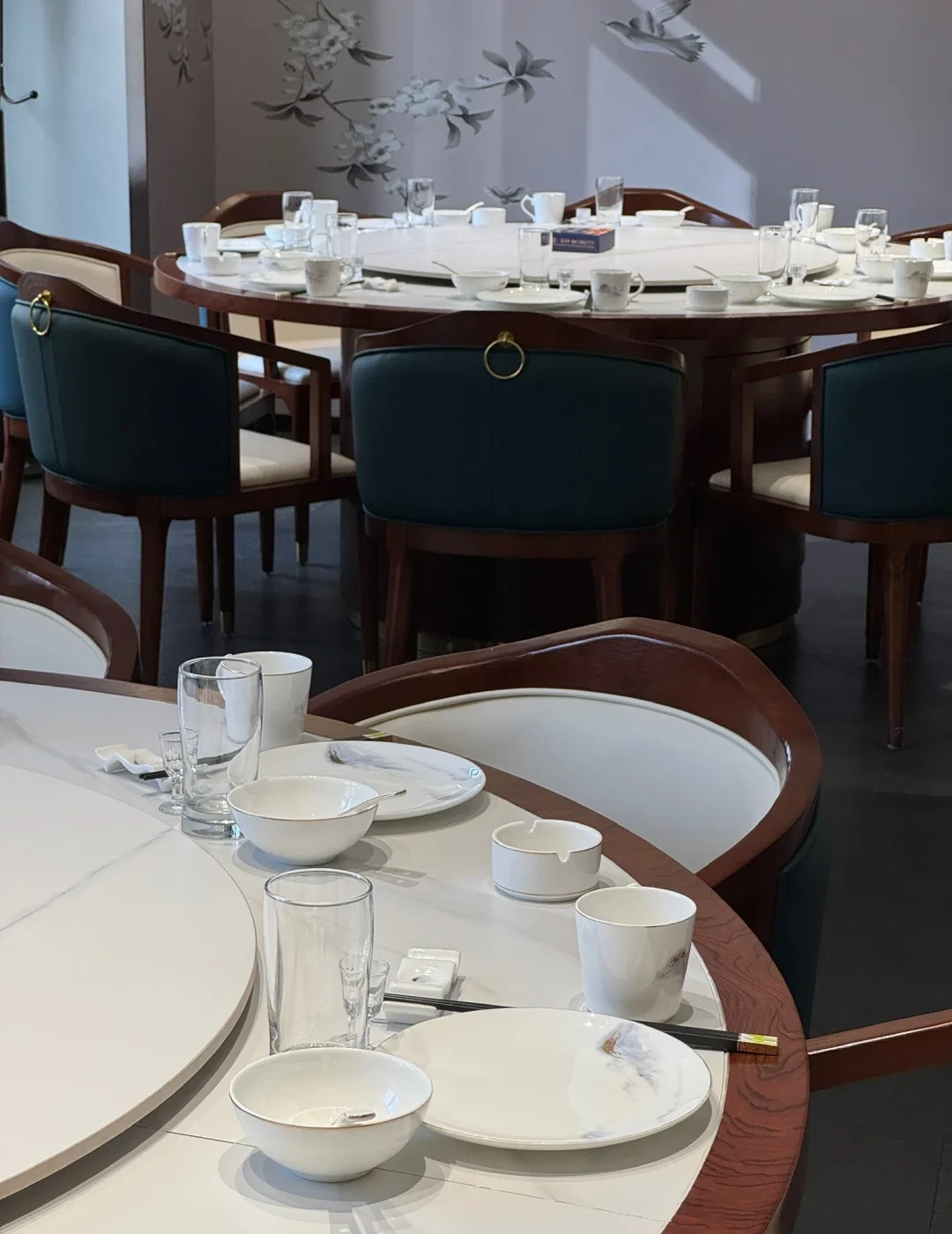
A Chinese restaurant table can have several bowls and plates within reach. The useful starting distinction is between your own eating bowl or plate and the dishes shared by the table.
In the restaurant photograph below, the individual bowl, spoon and plate sit in front of each chair. The large circular glass surface belongs to the middle of the table, where shared dishes can be presented.
For the serving sequence in this guide, your own bowl or eating plate is the intermediate stop: food comes from a shared dish to your place, then reaches your mouth with your personal utensils. The Hubei CDC’s explanation of serving utensils describes this same separation.
A more elaborate restaurant may use several stacked plates. Their purpose can differ between establishments; the photograph is an example of a place setting, not a universal diagram assigning every plate one fixed role.
Recognise 公筷 for serving and 私筷 for eating
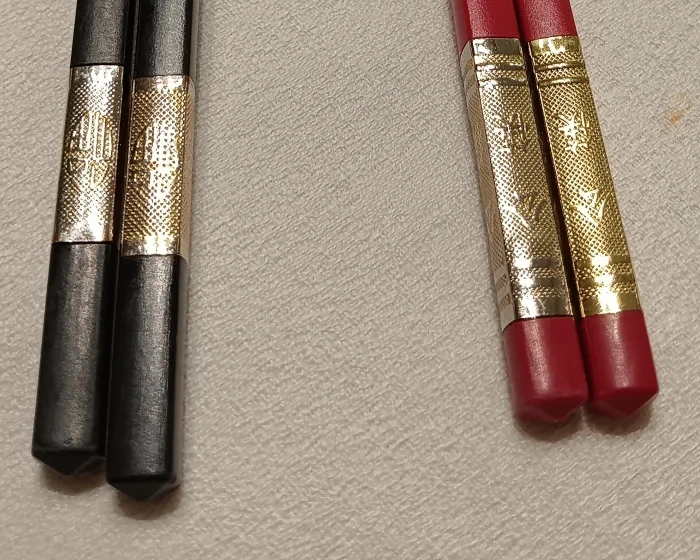
公筷 / gōngkuài means serving chopsticks. 私筷 / sīkuài means personal chopsticks. The purpose matters: the serving pair transfers shared food; the personal pair is the one used at your mouth.
This visitor’s photograph is particularly helpful because the handles are marked. The red pair is labelled 公筷, while the black pair is labelled 私筷. The writing is on the gold-coloured handle ends, shown close up below.
The source describes this restaurant’s colour coding as useful. It does not establish that every restaurant in China uses red serving chopsticks. A market-regulator description of Hanzhong’s local serving-utensil standard discusses several possible distinctions, including wording, colour, length and shape.
The accompanying Chinese words give you something more reliable to recognise than a rule such as “always choose white” or “always choose the pair on the right.”
If the pairs are unmarked, clarify which one is for serving
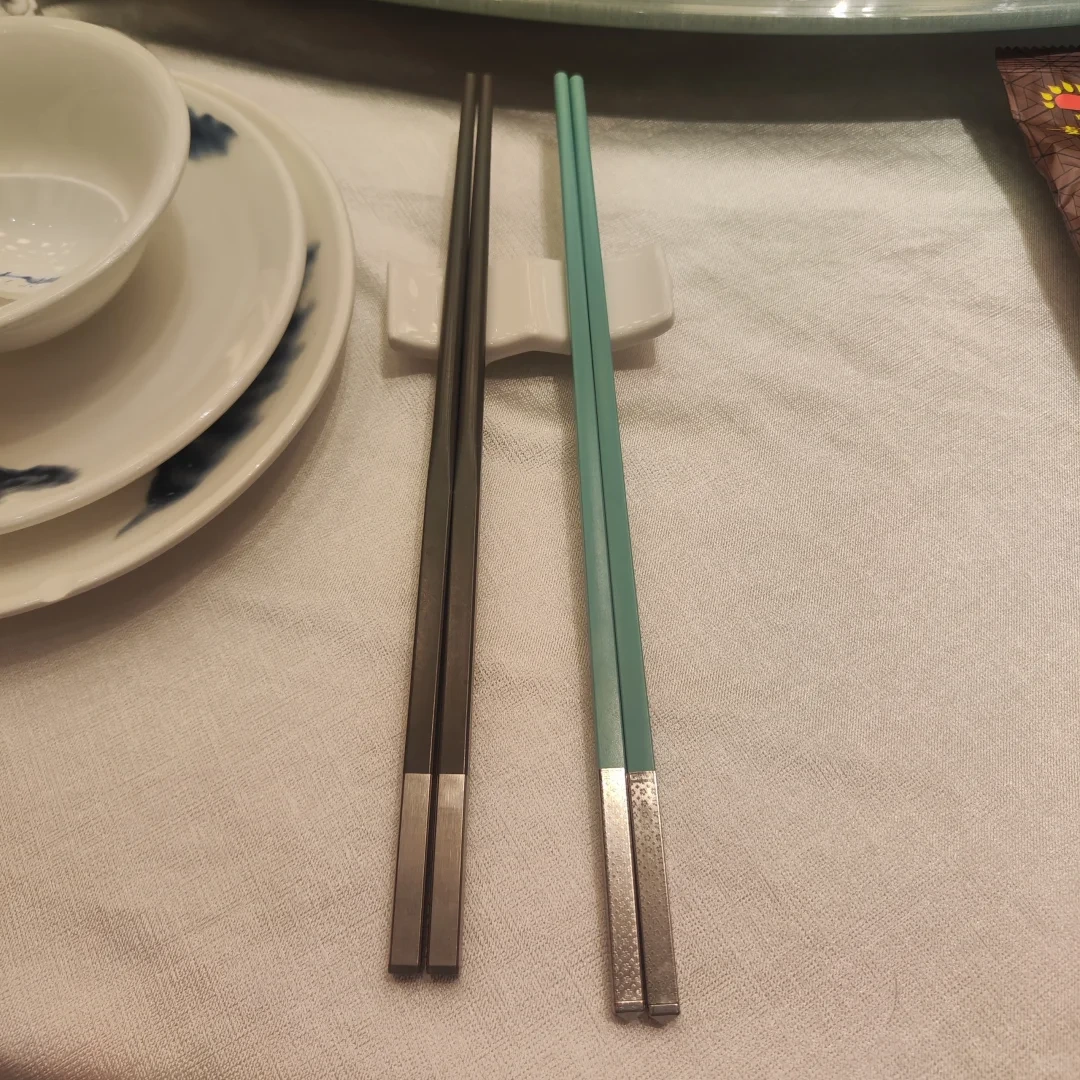
The green-and-dark pair photograph below shows why colour alone can be confusing. There are two pairs on one rest, but no readable 公筷 or 私筷 marking in this view.
Before using an uncertain pair, a short question to your host or server is enough: “哪双是公筷?” / Nǎ shuāng shì gōngkuài? / “Which pair is for serving?” The words are included so you can show the question on your phone.
What you need established is the pair’s purpose, rather than simply a colour name. Once the serving pair is identified, the illustrated sequence below applies. If the arrangement is still unclear, that identification remains unfinished; the photograph alone cannot settle it.
Some places provide a shared pair with each dish instead of giving every diner two pairs. The same distinction still matters: a serving tool stays out of your mouth.
For this demonstration, identify the red serving pair first
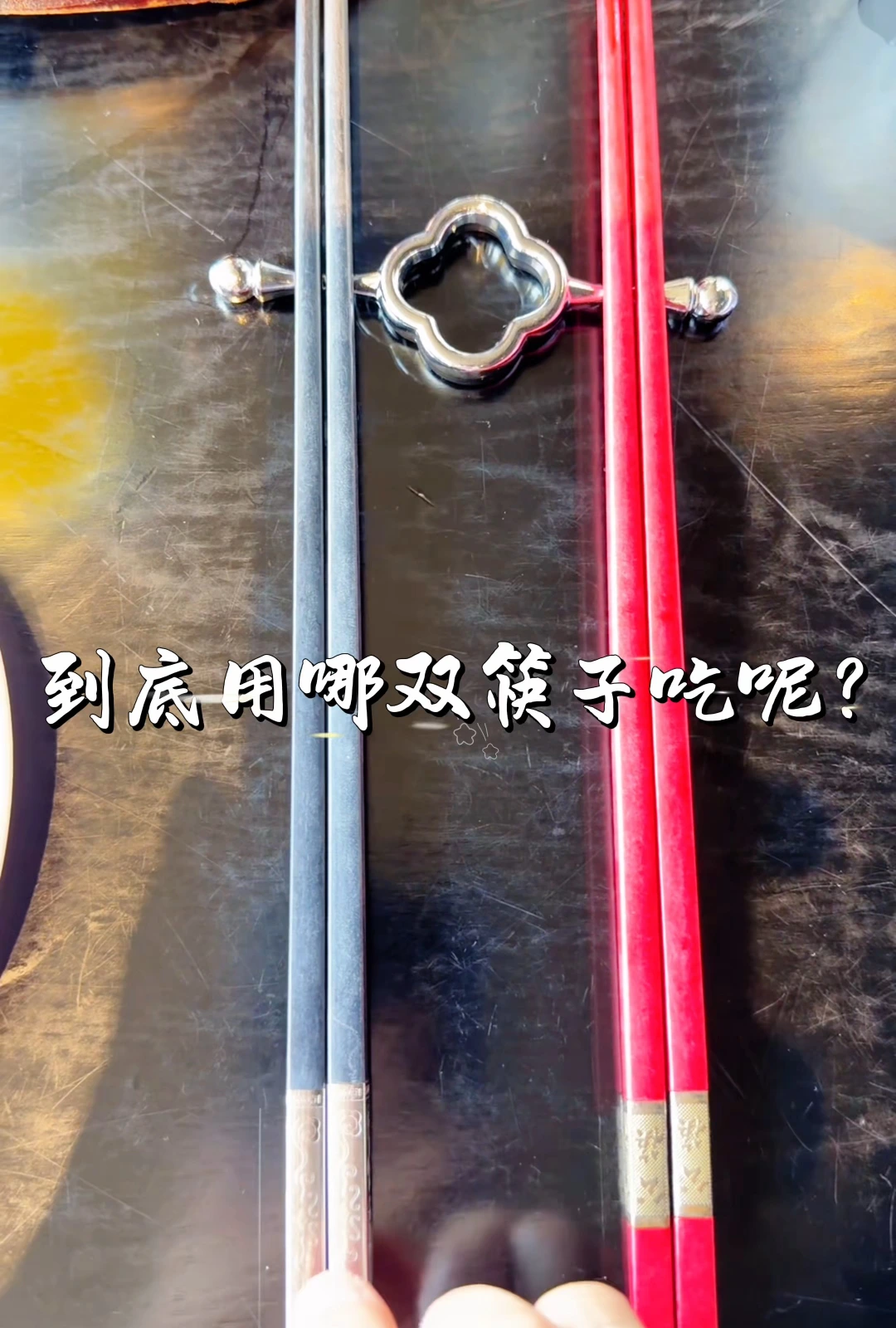
The following close-ups come from one dining demonstration, so you can follow the same food transfer through to the personal bowl.
In this particular setup, the red outer pair is for serving and the dark inner pair is for eating. The inner pair is nearer the diner’s plates. Both pairs begin together on the small rest.
That description identifies this example. Your own table may have different colours or positioning, as the previous photographs illustrate. The instruction is to use the pair whose purpose is established, rather than copy the red colour in isolation.
The resting position also provides a useful reference: the chopsticks lie flat. The China Culture guide to chopstick etiquette advises against leaving them upright in a bowl of food.
Use the serving pair to lift a portion from the shared dish
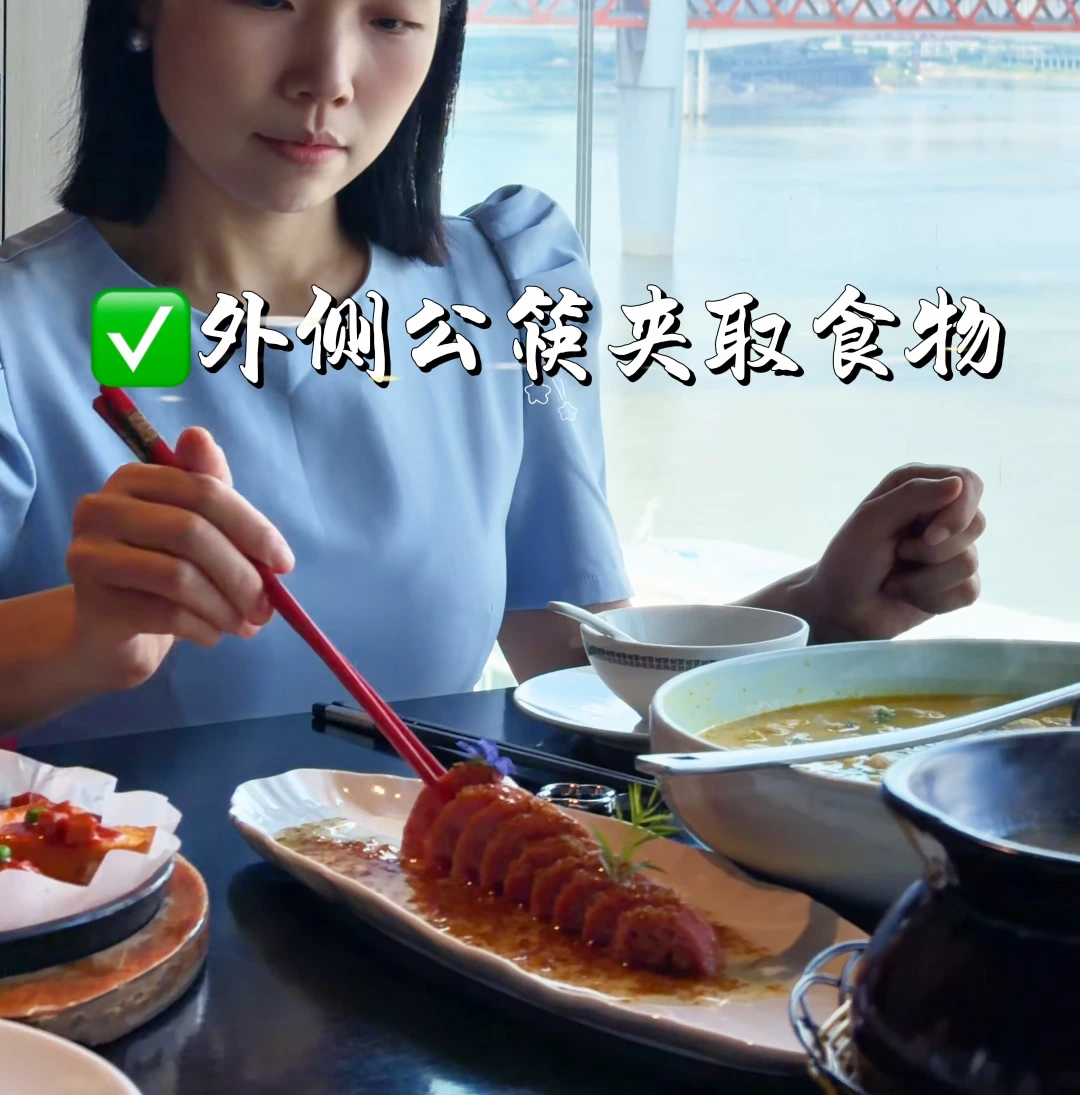
The demonstrator now uses the red serving pair to lift a piece from the shared platter. The dark personal pair remains down by her place.
This is the first half of the movement. The serving chopsticks handle food from the shared dish; they do not carry it straight to the diner’s mouth.
The image below shows the red tips at the food on the platter, with the personal bowl still beside the diner. The next photograph shows the destination.
Put that portion into your own bowl or eating plate
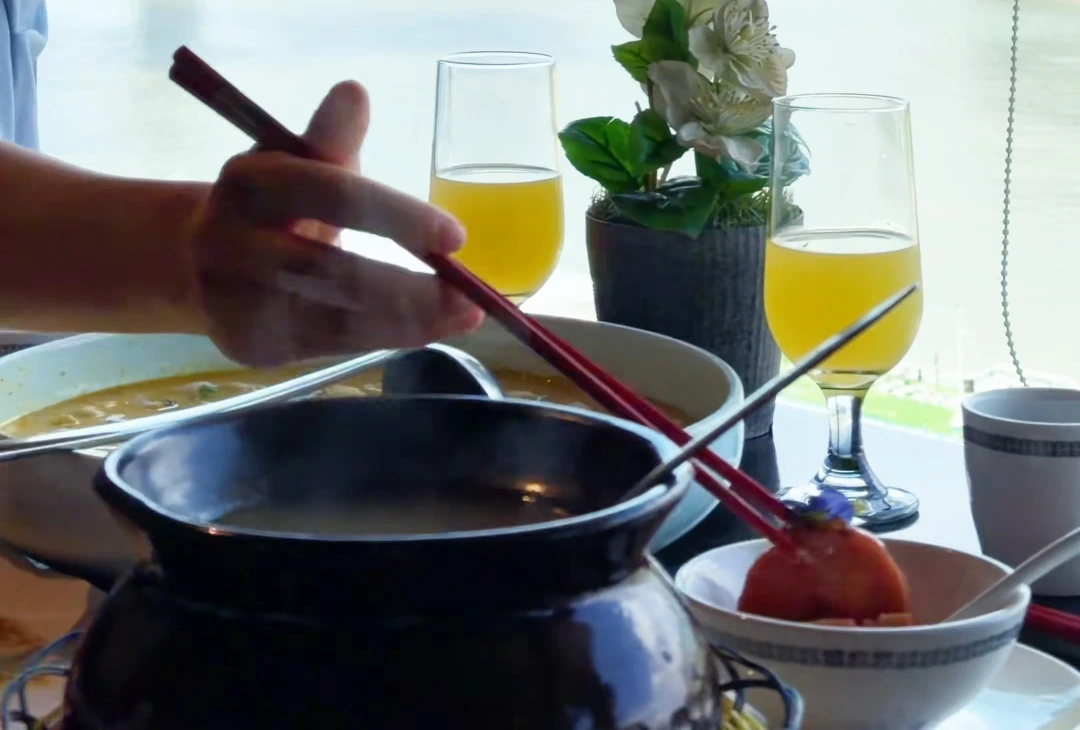
The next close-up shows the same red pair lowering the food into the diner’s small individual bowl. This is the missing middle step that is easy to overlook.
The movement is shared platter → own bowl or plate. The serving pair has done its job when the portion is at the individual place setting.
The destination in this demonstration is a bowl. At a table using individual eating plates, the equivalent destination is the diner’s own eating plate. The distinction is between the shared dish and the personal portion, rather than a requirement that every restaurant supply an identical bowl.
Put the serving pair back before switching tools
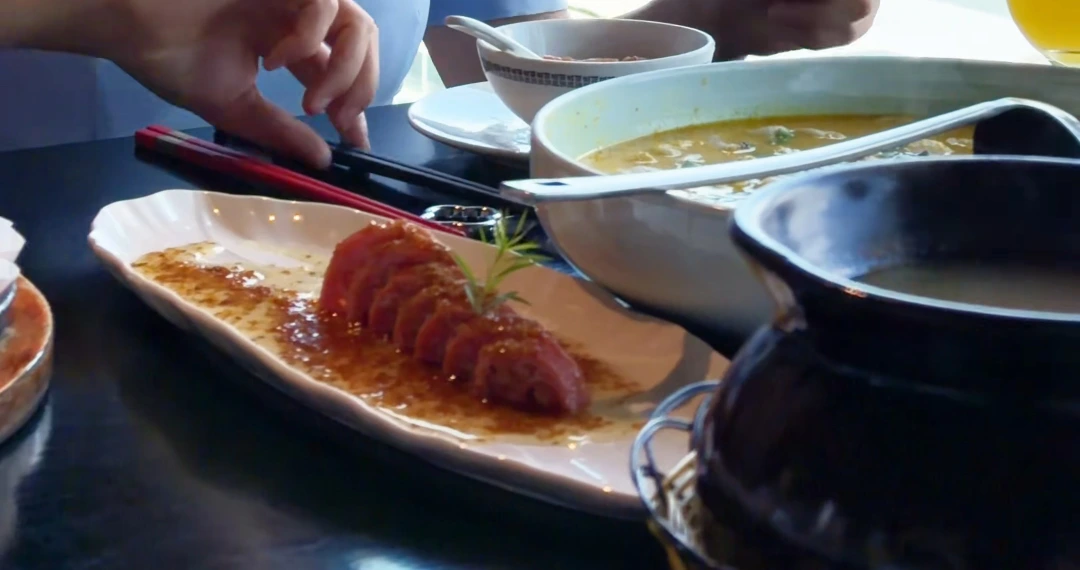
With the portion in her bowl, the demonstrator puts the red serving pair back down on the rest. The red handles are visible below her hand in this close-up.
Her hand is now reaching for the dark personal pair. You do not need to use two pairs simultaneously or hold one in each hand to copy this sequence.
The useful checkpoint is simple: the public pair is back in its resting position, the food is at the individual place, and the next tool is the personal pair. The serving utensils have not been used for a bite.
The China Culture explanation similarly describes returning serving utensils after transferring food, with personal chopsticks used for eating.
Use your personal pair to pick up food from your bowl
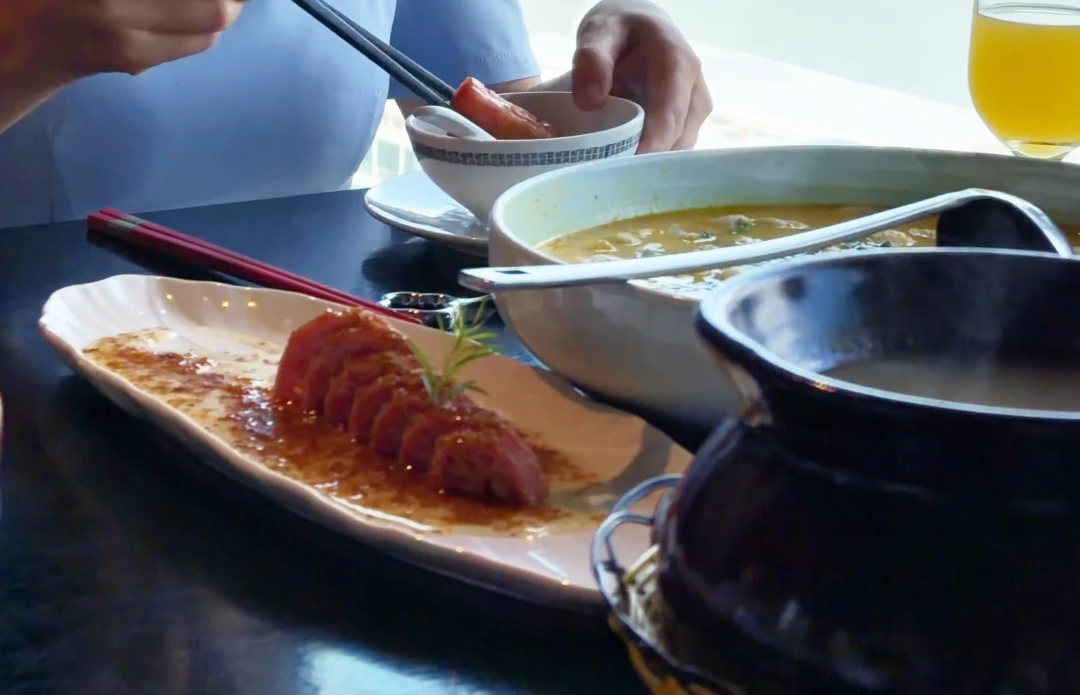
The dark personal chopsticks now lift the portion from the diner’s own bowl. The red serving pair stays down in the foreground.
This close-up is worth comparing with the earlier transfer picture. The food is the same portion, but the tool has changed. The public pair brought it from the shared platter; the personal pair takes it from the individual bowl.
For the next shared portion, the same division applies again. The personal pair is not interchangeable with the serving pair simply because both are sitting beside your plate.
Bring the personal pair to your mouth
The final frame shows the diner bringing that portion towards her mouth with the dark personal chopsticks, while holding her own bowl. The red serving pair remains down on the table.
You can now recognise the complete sequence: the shared platter was served with one pair, the food stopped in the personal bowl, and a different pair brought it towards the mouth.
For a first shared-table meal, that is a useful piece of Chinese dining etiquette to have clear. It avoids the most immediate two-pair confusion without requiring you to memorise a restaurant’s entire banquet layout.
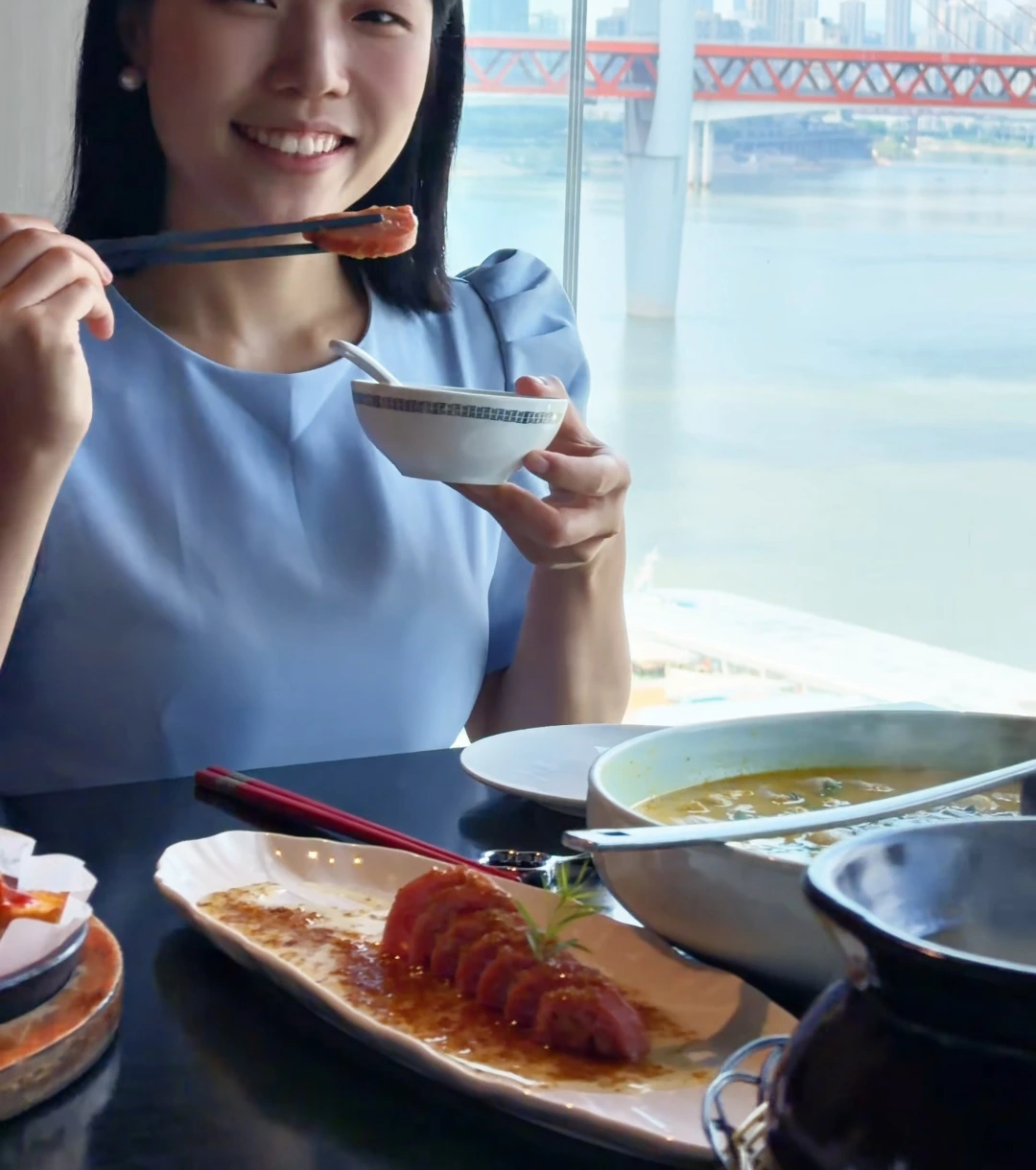
The completed sequence is shared dish → own bowl or plate → mouth, with a change from serving utensils to personal utensils. The serving pair stays out of your mouth and returns to its rest.
The handle labels in the first example make the distinction explicit. The unmarked green-and-dark example shows why a colour guess is less useful than knowing the pair’s purpose. Once that is clear, the same food-transfer sequence is straightforward to recognise.
Sources checked 19 November 2026. Photographs and video demonstration frames are credited to their respective creators. The illustrated sequence concerns shared cooked dishes and distinct serving and personal utensils.


Questions and updates
Comments may be reviewed before they appear.
Your comment and chosen name may be published. We store your IP address and browser details to help moderate comments.