
Best Time to Visit Xiamen: Autumn Coast, Spring Skies and Summer Rain
Late October–November would be my first window to investigate for a Xiamen city-and-seafront trip. March–April is another option if you accept changeable skies and a sea that may look grey. Winter can suit a cooler city break.
For fixed summer dates, heat and rain need more weight. A beach photograph can explain why you want to visit, but it cannot promise the light, temperature or transport conditions for a future day.
Choose the experience that matters most
- General city and coastal sightseeing
- Start by comparing late October–November dates.
- Fixed spring dates
- Accept variable skies and visibility; attractive coastal moments can still occur.
- Fixed summer dates
- Weigh heat, rain and changing weather against an outdoor-heavy trip.
- Winter city break
- Choose it with cooler weather and coastal wind in mind.
The Gulangyu view, spring shoreline and rainy-season sea show different possibilities. Finish with the actual dated forecast.
For a first city-and-seafront trip, start with late October–November
Late October–November would be my first window to investigate for Xiamen sightseeing. It offers a useful comparison with the hotter summer and the wetter parts of spring and early summer.
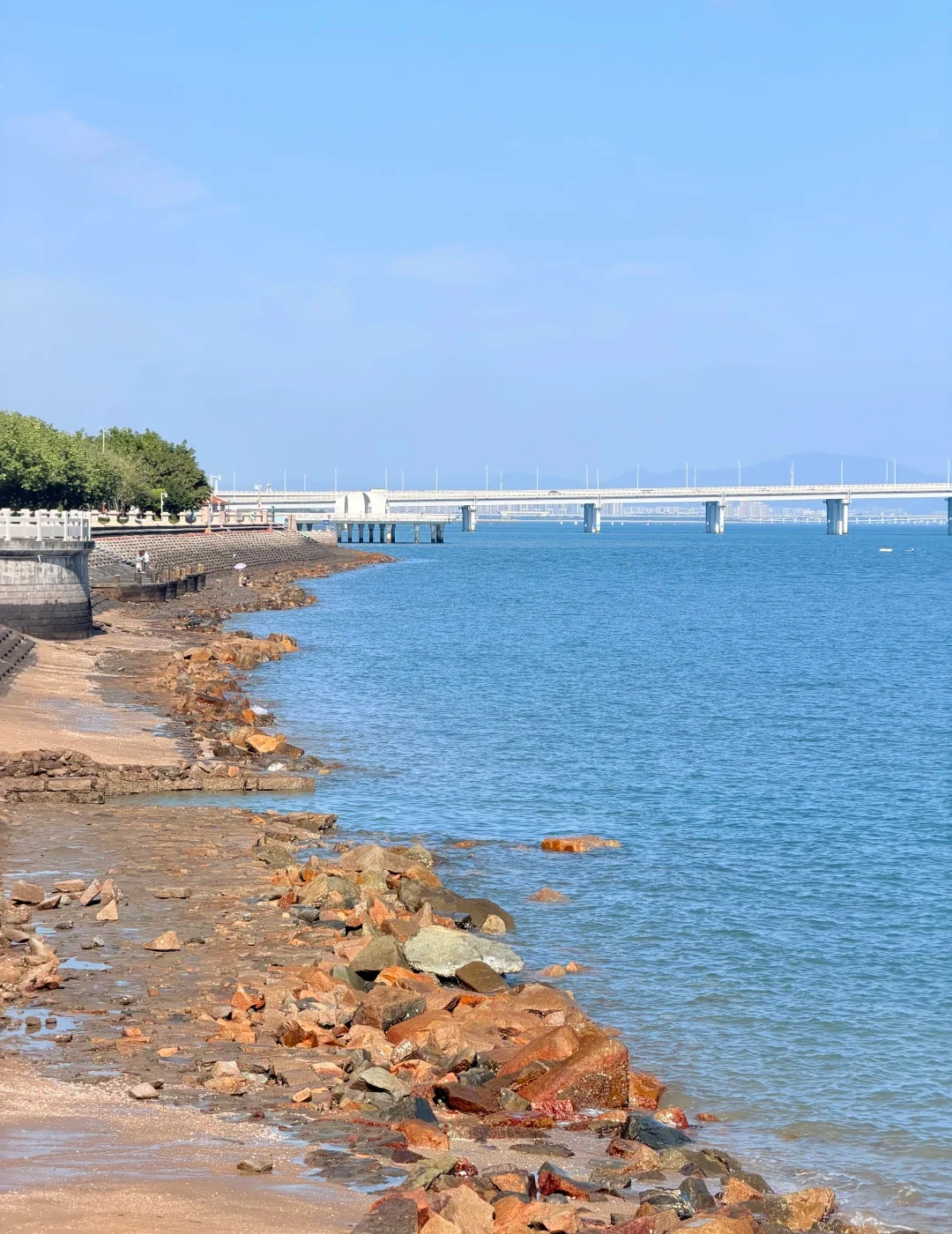
The photograph below is the Jimei waterfront / 集美海边, from a collection shared on 8 November. Blue water, a rocky shore and a long bridge show the appeal of an autumn coastal visit.
The writer describes feeling comfortable in short sleeves. That is their experience of the trip, not a temperature measurement or advice that the same clothing will suit every November day.
A 2 November 2026 local weather report gives a long-term November mean of 19.8°C and monthly rain of 36.7 mm. The mean is not a daily high. The actual November forecast example is considerably cooler than the sunny photograph might suggest.
The autumn climate comparison is about two months together
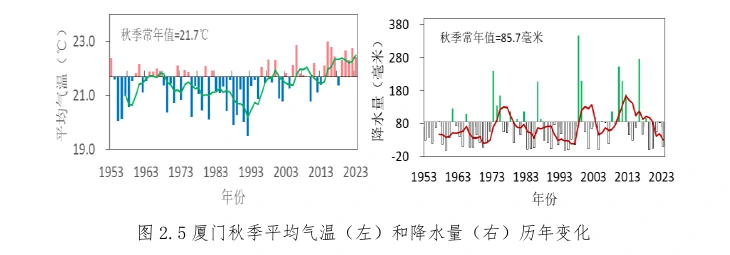
The official 2023 Xiamen Climate Bulletin uses 1991–2020 for its long-term averages. For the Xiamen station, its autumn period is October–November, with a mean of 21.7°C and combined rain of 85.7 mm.
That is useful background for an autumn shortlist. It does not mean 85.7 mm in each month, or that a particular October afternoon will be dry.
I would give the particular month and travel days more weight as the trip gets closer. Someone choosing a late-October visit may get a different experience from a visitor arriving during a November cold spell.
Gulangyu’s autumn views are a reason to consider that window
This Gulangyu / 鼓浪屿 collection was shared on 25 October. Red roofs and green trees fill the foreground, with the mainland skyline across the water and warm light behind the clouds.
For a trip built around island scenery and photography, it helps explain the attraction of later autumn.
The author describes comfortable weather and quiet streets, but comments beneath the post include visitors who still found it hot. I would treat comfort as something to refine by the actual dates, rather than assume late October has one fixed temperature.
The frame also does not establish a viewpoint’s admission arrangements or closing time. It is evidence of a scenic possibility, not a ferry or attraction timetable.

Spring is an option if you accept a greyer sea and changeable skies
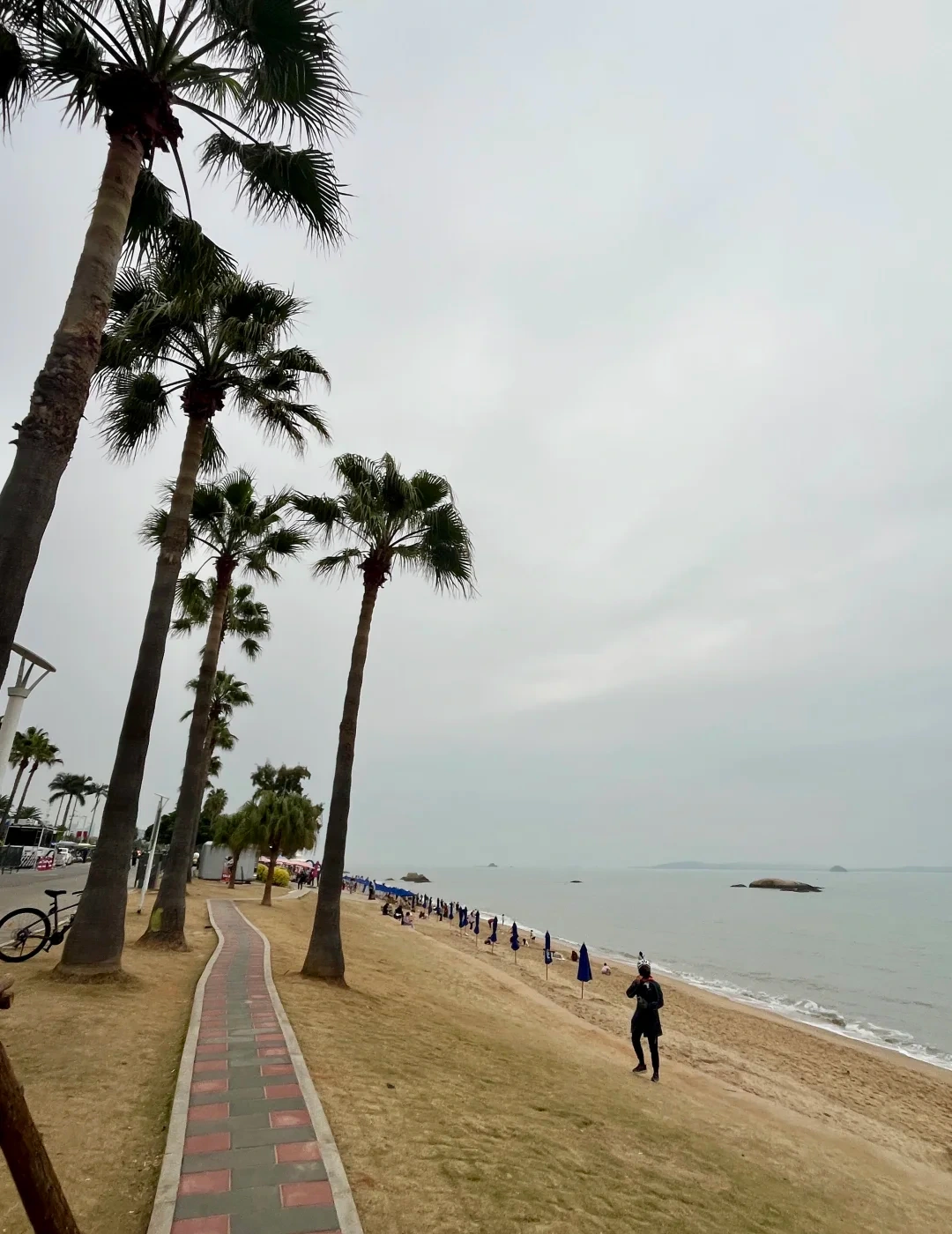
This Huandao Road seafront / 环岛路沿海 scene comes from an account shared on 20 March. Palm trees and the beach sit beneath a pale grey sky.
Another visitor explicitly describes 28–29 March as hazy-looking days by the sea. A third account, covering 28–31 March, describes a mixture of cloud, rain and brighter intervals.
I would keep March–April in consideration for a city break if the main wish is time by the coast and in the city, rather than reliably blue water.
The photographs do not make a grey day a failed trip. They do make it worth deciding whether a bright seaside look is essential before choosing a spring visit.
A spring trip can also include attractive beach light
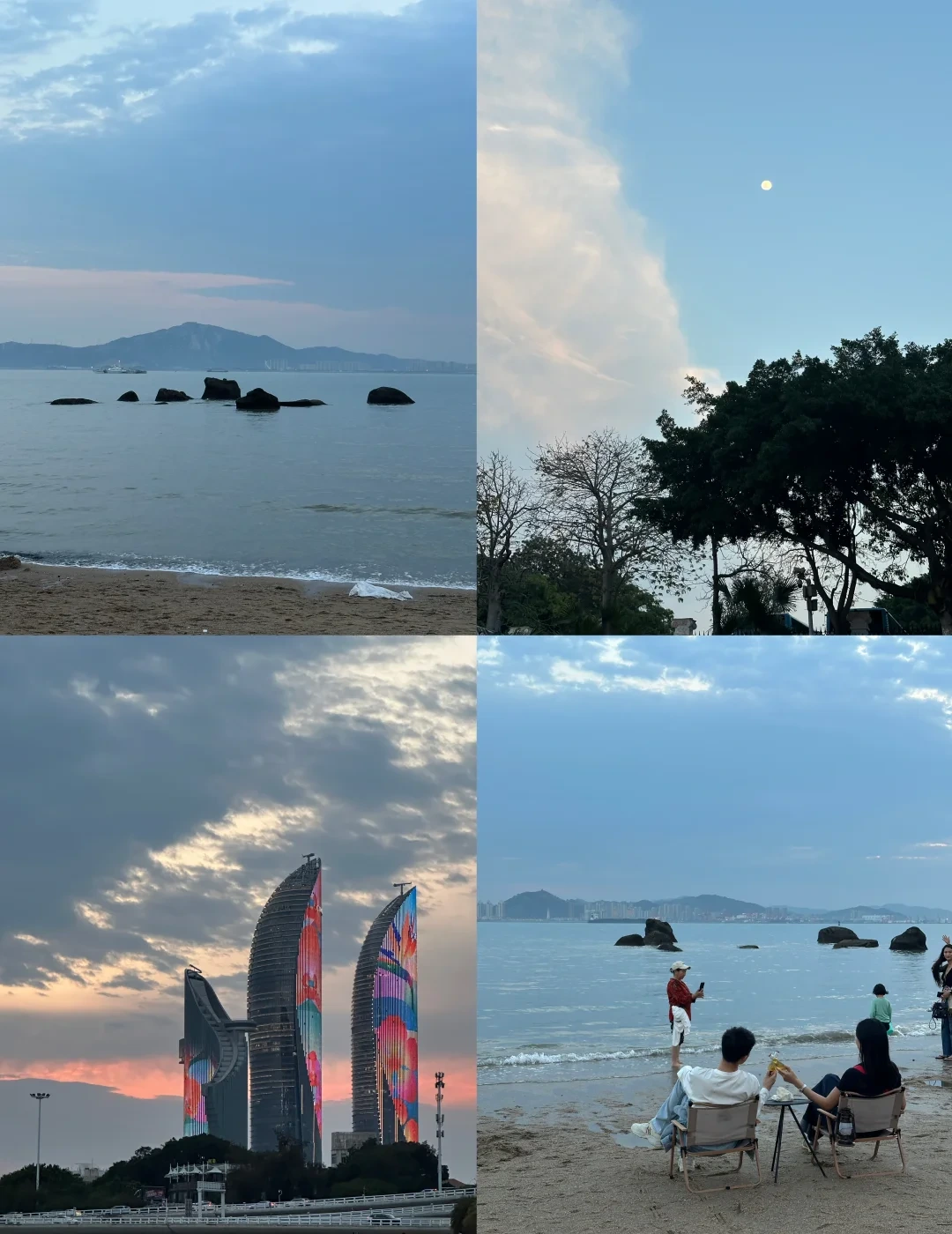
These Baicheng Beach / 白城沙滩 images come from another account shared on 2 April. The original four-frame collage includes the shoreline, changing clouds and the twin towers in warmer light.
The writer says they were fortunate to have several dry days. They also describe missing a hoped-for sunset on a different outing because of fog.
I would use both the grey coastal photograph and this collection when weighing spring. Neither represents every March or April day.
If spring dates are fixed, varied light can still be part of an enjoyable city trip. I would keep expectations flexible about the sea’s colour, distant views and a particular sunset.
For fixed summer dates, weigh the heat as well as the scenery
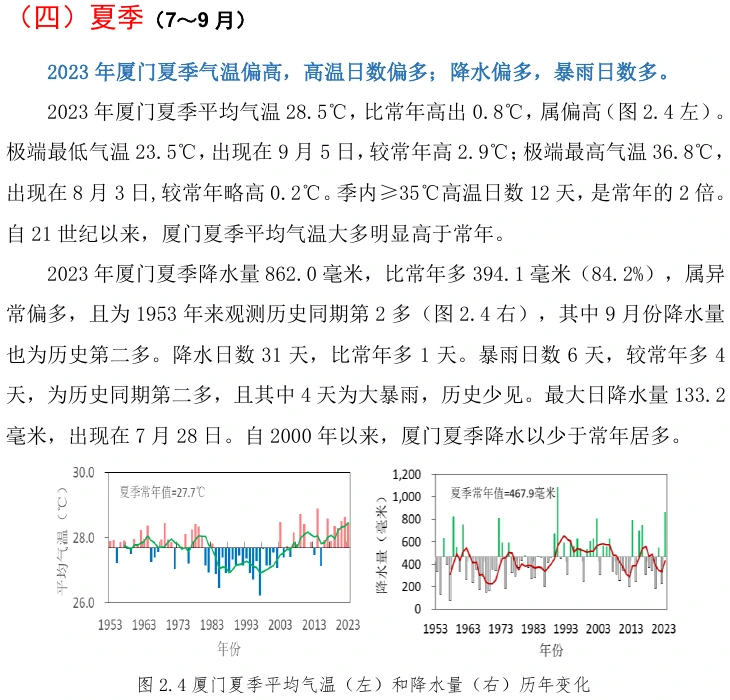
The bulletin’s July–September long-term mean is 27.7°C. In 2023, that season averaged 28.5°C and included 12 days with highs of at least 35°C.
Those figures explain why summer would not be my first choice for a trip built around long outdoor sightseeing days. The mean includes nights as well as days.
The 2023 heat figures are a historical example. They are not a warning for today or a prediction of how many hot days another summer will contain.
If summer dates are fixed, the useful decision is whether hotter weather and the possibility of rain suit the kind of city break you want. A sunny beach photograph alone cannot answer that.
Rainy-season sea views can still be memorable, but the light is uncertain
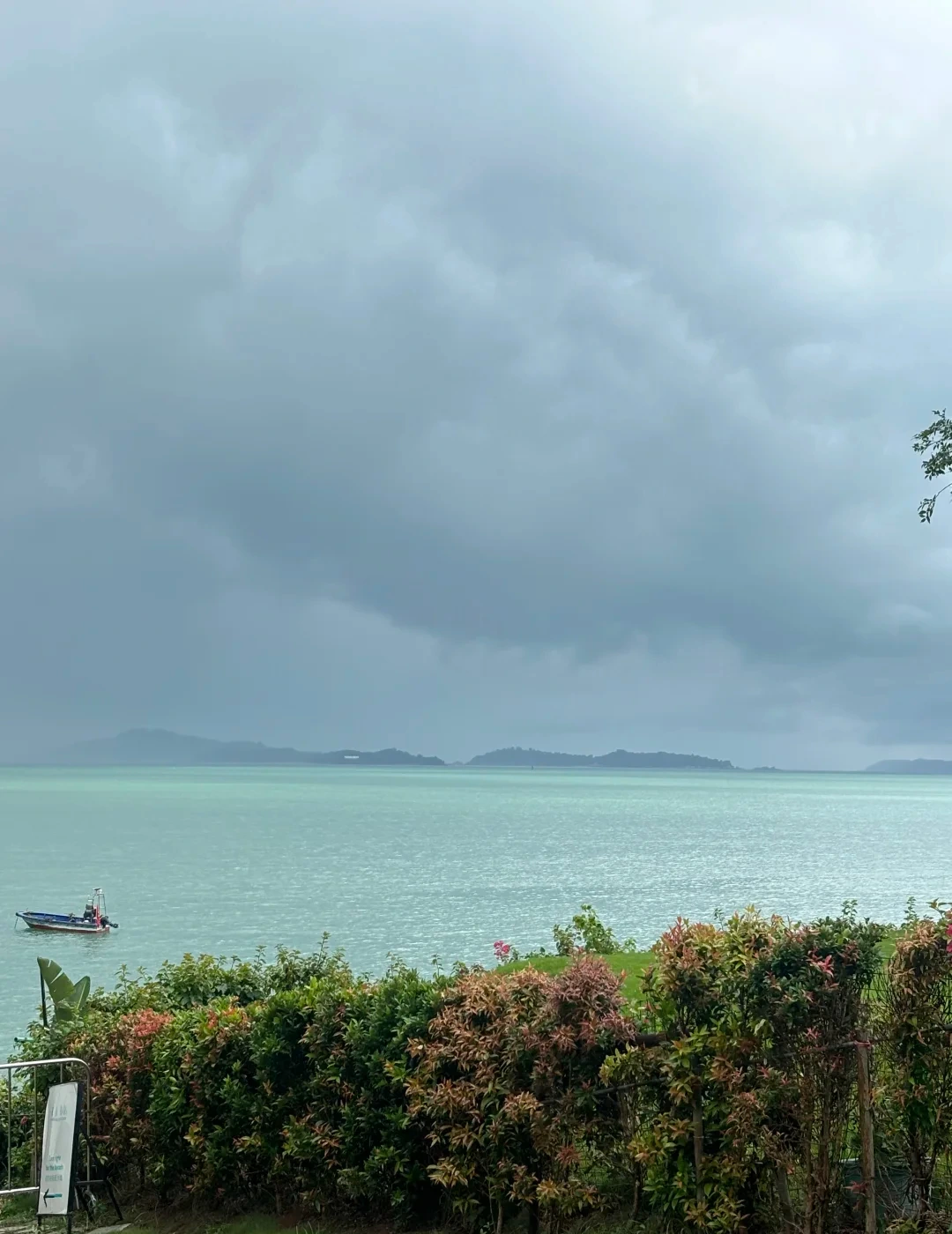
The writer of this 29 June account describes three rainy days and missing the sunrise and sunset they had hoped for.
Then, around midday, they noticed this striking combination of pale turquoise water and dark cloud. Their wider collection shows the same coastal scene from several angles.
For a fixed wetter-season trip, I would regard a moment like this as a possible pleasure, rather than the expected appearance of the sea every day.
The source colour treatment is retained. The photograph is not a measurement of water colour, a weather forecast or evidence that conditions are suitable for a boat outing.
Do not treat an administrative season-end date as a weather guarantee
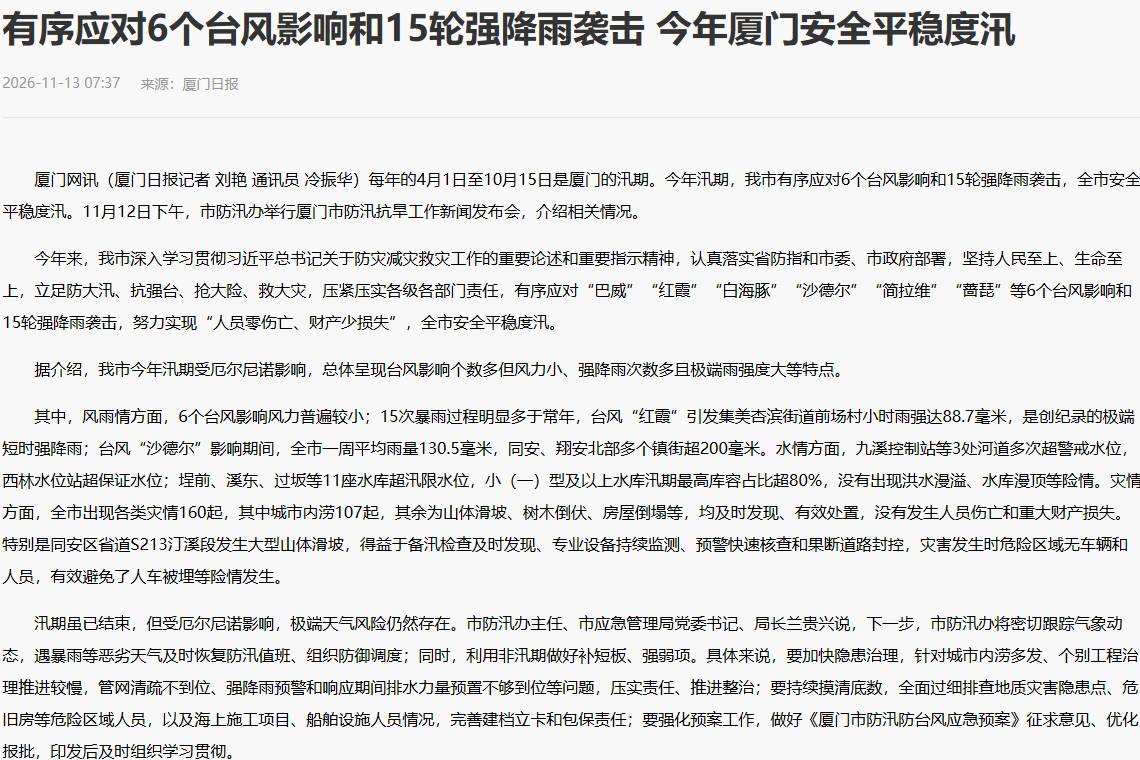
A 13 November 2026 report from the city’s flood-control briefing describes an administrative flood season of 1 April–15 October. It records six typhoons affecting the city and 15 heavy-rain episodes during that year’s flood season.
“Affecting” does not mean six direct landfalls. The same report says extreme-weather risks can remain after the flood season ends.
I would therefore choose later autumn for its overall appeal without assuming that 16 October switches weather risk off. The city’s historical climate summary also records typhoon activity outside the main summer months.
For date selection, this is a reason to keep the actual forecast relevant in any month. It is not a current storm warning or a statement that today’s ferries are cancelled.
Winter can suit a cooler city visit
Winter is worth considering if you want a city-and-coast trip and are comfortable with cooler weather.
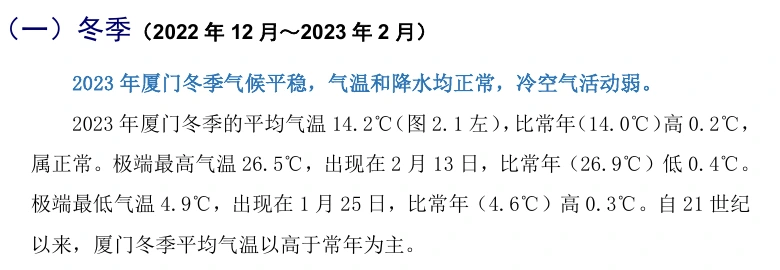
As a dated example, the bulletin records a 14.2°C mean for December 2022–February 2023 and a lowest temperature of 4.9°C on 25 January 2023.
Those are observations for that particular winter, not a prediction for the next one. I would not choose December–February on the assumption that a coastal city always feels warm.
The municipal climate summary also describes the coast as windy. The near-travel high, low and wind forecast matter more to a real day out than a photograph of someone in short sleeves taken on a different visit.
Compare the preferred season with the 2027 holidays
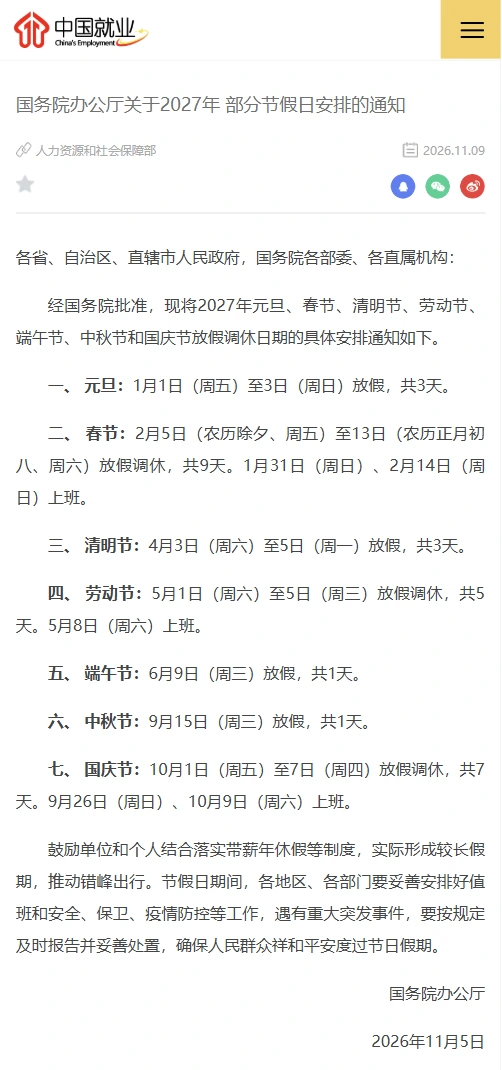
For 2027, the official mainland calendar lists Qingming on 3–5 April, Labour Day on 1–5 May and National Day on 1–7 October.
For a flexible autumn trip, I would begin the comparison after that October first-week holiday. That is a calendar preference, not a promise of empty streets.
For winter, New Year is 1–3 January and Spring Festival 5–13 February.
The year matters. A traveller’s quiet October photograph, an administrative weather season and a public holiday are different pieces of information; none of them alone tells us the crowd level or hotel price for your dates.
Finish with the actual printed date, high, low and wind
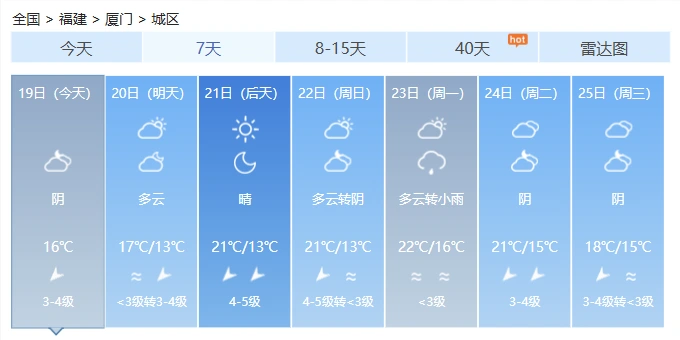
The Xiamen urban forecast below was captured after midnight on 20 November 2026, while the page still labelled the 19th “today” and the 20th “tomorrow”.
The printed 20日 gives 17°C / 13°C, 多云 — partly cloudy. The printed 21日 gives 21°C / 13°C, 晴 — clear, with the 4–5级 wind notation below it.
The place reads 厦门 → 城区, the urban area. The single 16°C in the printed 19th column is the remaining overnight forecast, not that day’s high.
A finished date choice connects the scenery you want with the heat, rain or cool conditions you can accept, the correct holiday year and this kind of actual-day forecast. The November waterfront photograph explains the appeal; the forecast explains why the travel dates still matter.
For a flexible first visit, later autumn is where I would begin. If spring, summer or winter dates are fixed, the useful question is which weather trade-offs suit your trip.
Your final choice should identify the scenery you want, whether dry or clear conditions are essential, the heat or cool weather you are comfortable with, the correct holiday year and the actual-day forecast. A grey seafront can still suit a city break; a beautiful wet-season image is a possibility to enjoy, rather than a look to count on.
Checked 20 November 2026. The official 2023 bulletin defines its normal baseline as 1991–2020. Historical observations, long-term averages and current forecasts are distinguished in the text. The holiday calendar is for 2027. Individual photo dates are qualified; source colour treatment is retained. No personal visit is claimed.
Questions and updates
Comments may be reviewed before they appear.
Your comment and chosen name may be published. We store your IP address and browser details to help moderate comments.