
Best Time to Visit Harbin: Ice-Park Dates, Winter Cold and Summer Streets
 JamesArticle updated
For the outdoor ice city, January would be my first month to investigate. Late December is another option once that season’s opening is confirmed. For architecture and greener streets, I would also consider late spring or summer.
The key is deciding whether Ice and Snow World / 哈尔滨冰雪大世界 is essential. Snow in the city, a winter festival programme and the outdoor park’s actual operating dates are different things.
Start with the experience you want
- Outdoor ice buildings and lights
- Begin with January; late December is conditional on the confirmed opening.
- Fixed November or early-December dates
- Think winter city visit; do not assume the new outdoor park is open.
- February ice trip
- Keep the actual closing announcement decisive.
- City architecture without deep winter
- Compare May or June–August, accepting variable temperatures and summer rain.
For the forthcoming season, the current official report gives a planned mid-December 2026 opening, without an exact day. The actual paragraph and last season’s closure explain what that means for choosing dates.
For the outdoor ice city, January is where I would start
If the illuminated outdoor ice sculptures are the reason for your trip, January would be my first month to investigate. Late December can also work once that season’s opening is confirmed.
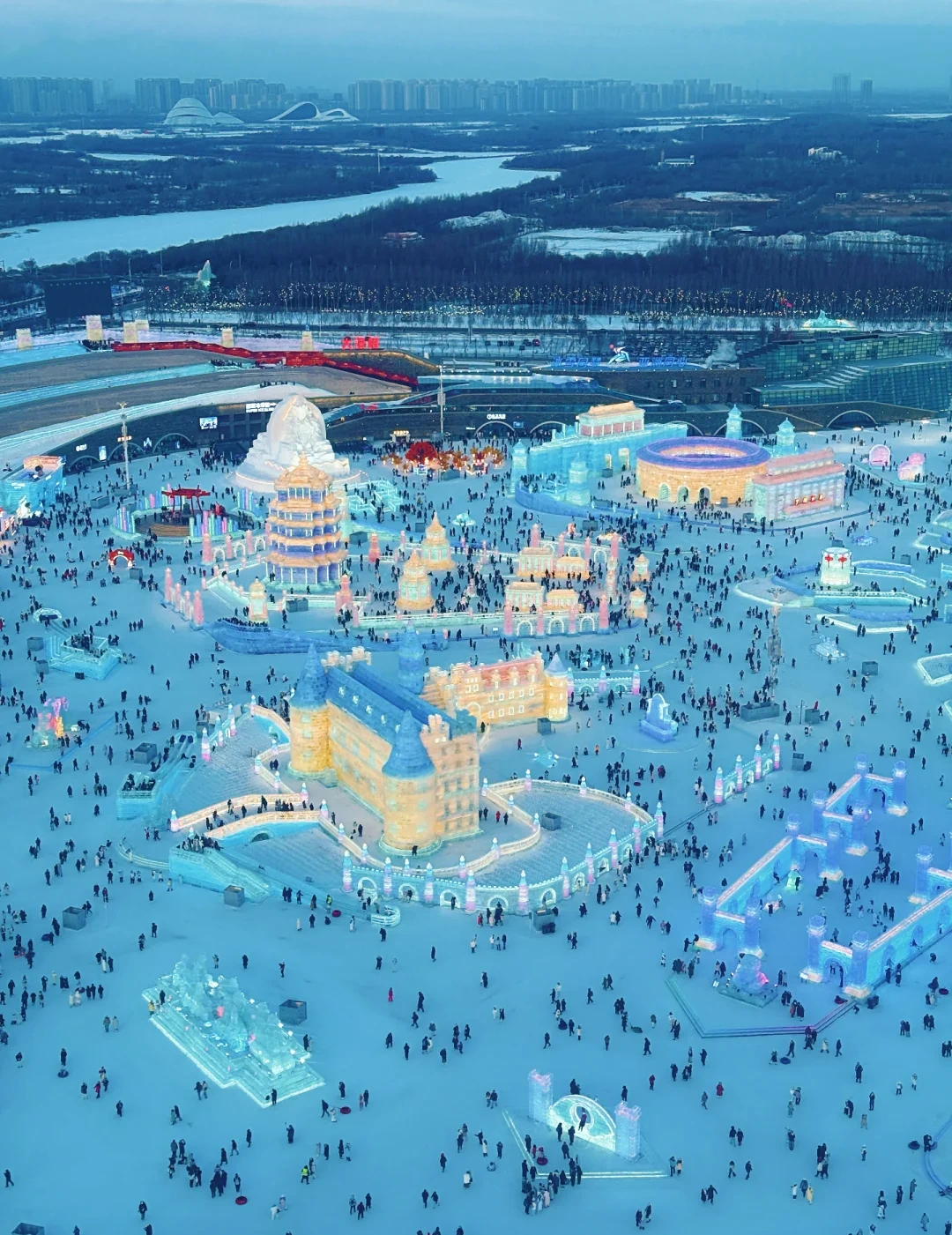
The photograph below shows Harbin Ice and Snow World / 哈尔滨冰雪大世界 during a previous winter visit: a large outdoor landscape of ice buildings, lit sculptures and visitors spread across the snow.
That is a different trip from visiting Harbin for its architecture in warmer weather. It is worth making this choice first, because snow in the city does not mean the outdoor ice park has opened.
As of 20 November 2026, the current official plan points to mid-December 2026 for the new season’s opening. January is a planning preference after that expected start, not a guarantee that every attraction or activity will operate on any particular day.
For December 2026, the official wording is still “mid-December”
The 11 November report of the city’s winter-season press briefing places the 28th Ice and Snow World opening in mid-December. The briefing itself took place on 10 November.
The paragraph shown below starts with 12月中旬 — mid-December. It gives a planned period, rather than an exact opening day.
For a trip whose main purpose is the outdoor park, I would not treat 1 December, a date suggested in a comment, or the opening day of a previous edition as confirmation for this season.
There is also a difference between the park and the wider city’s decorations: the same briefing plans the first core street displays by the end of December, with other displays appearing after New Year. An early-December city visit may therefore have a different look.

November snow can be beautiful without being the full ice-park season
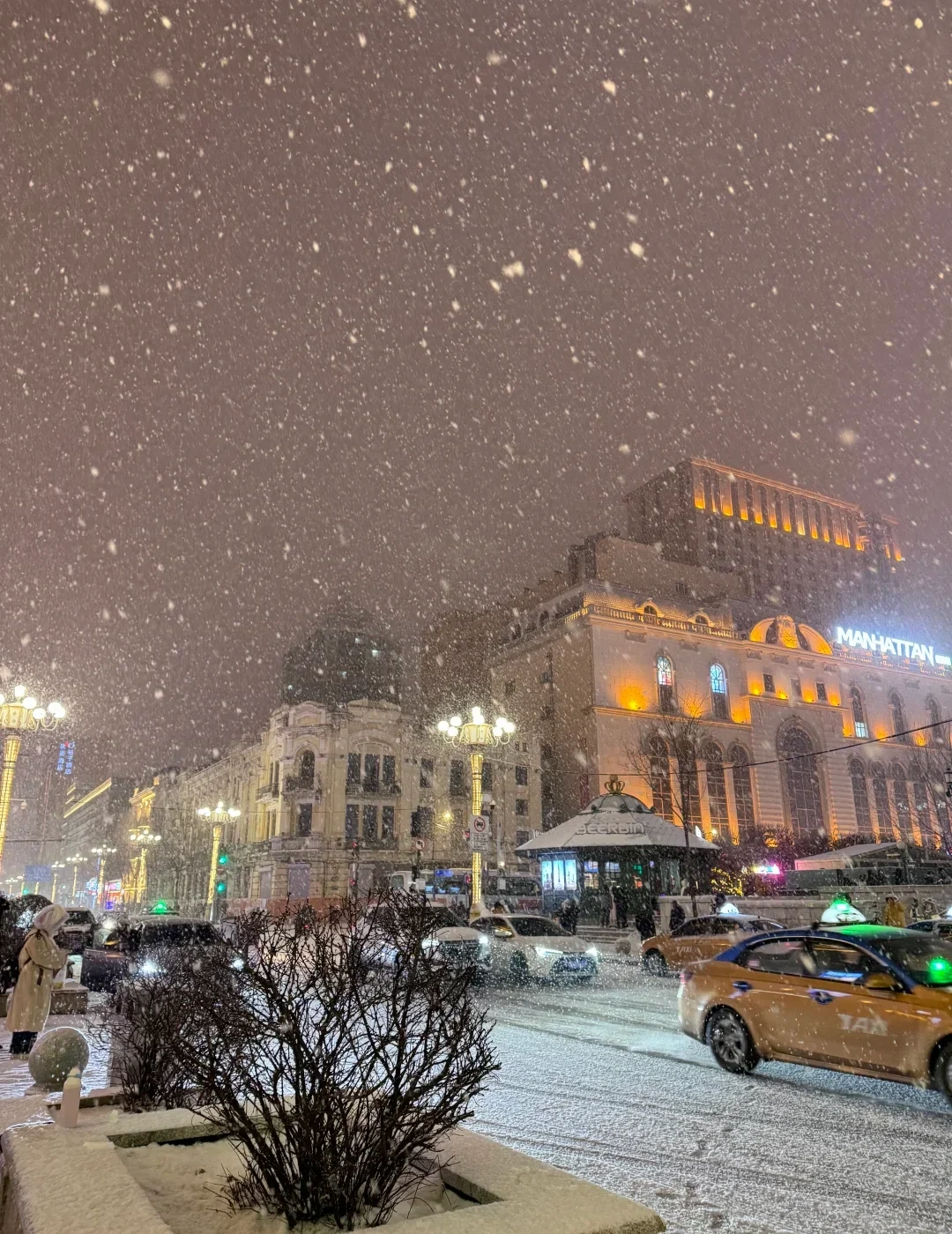
This snowy city photograph comes from an account titled “Returned from Harbin on 15 November”. Large flakes, lit buildings and snow on the road give a convincing picture of an early-winter city visit.
If the hope is winter streets and architecture, that may already be appealing. If the outdoor ice city is essential, the park’s own seasonal timetable still matters.
The account also mentions experiences at Ice and Snow World without establishing when those took place. I have not used that part as evidence that the new outdoor park was open in November.
The individual frame’s capture day is not stated. It shows a possible early-winter city experience, not a promise of snowfall on your dates.
If the lit ice scenes are the attraction, the evening experience matters too
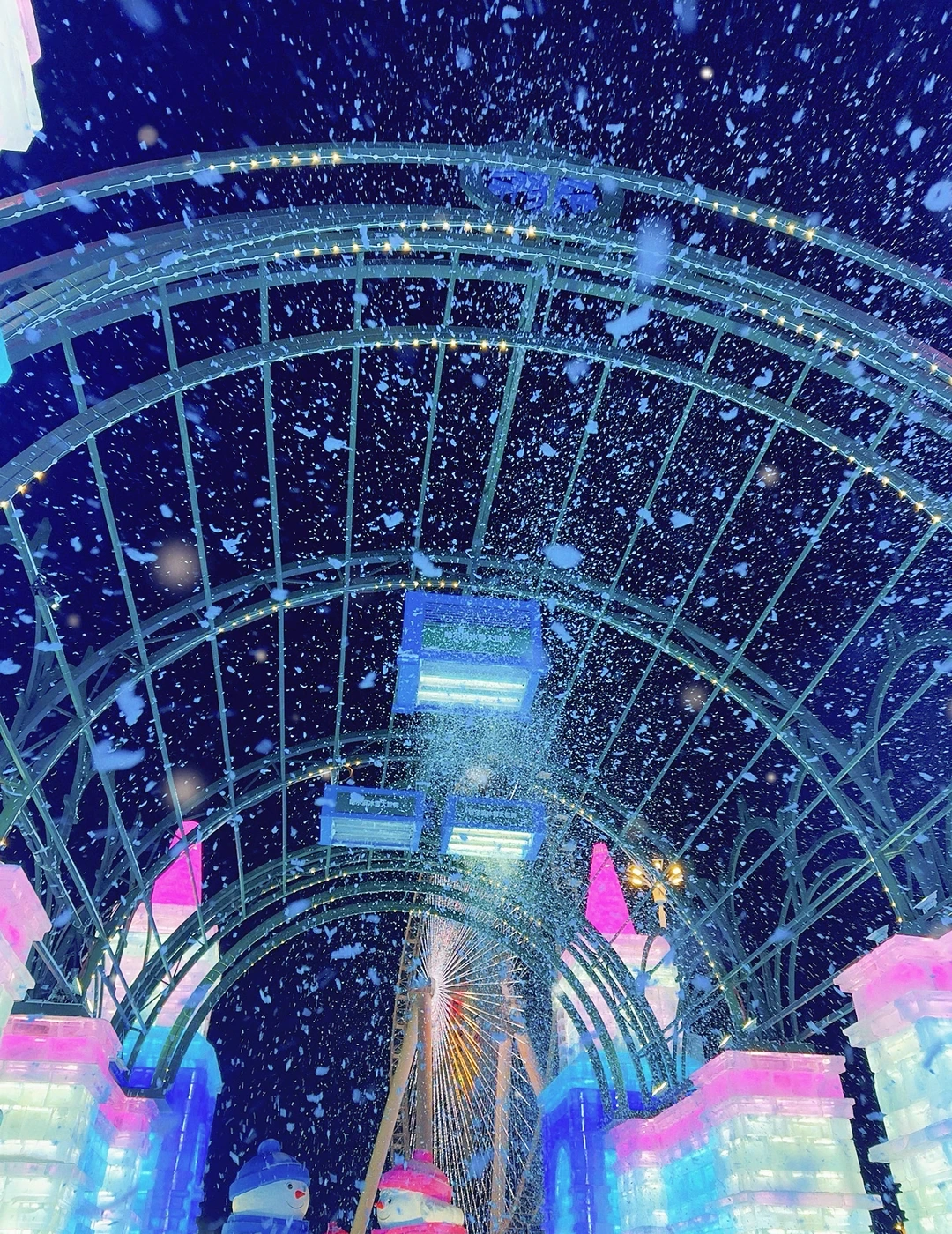
CICI’s wider winter collection includes this illuminated ice passage, with the Ferris wheel visible behind it. It looks very different from the elevated overview of the park.
The writer describes finding the evening scenery especially memorable. They also describe becoming very cold after a long visit and finding opportunities for a warm seated rest limited on that occasion.
For date selection, that is a useful personal account to weigh against the wish for a long outdoor evening. The appeal of the lights and your willingness to spend time outside in severe cold belong in the same decision.
The old collection does not establish this season’s lighting times, ride-reservation system, fireworks schedule or layout. None of those older operating details is a promise for 2026–27.
February needs a current check: the last outdoor season ended on 21 February
I would not assume that the outdoor park will last until the final day of February.
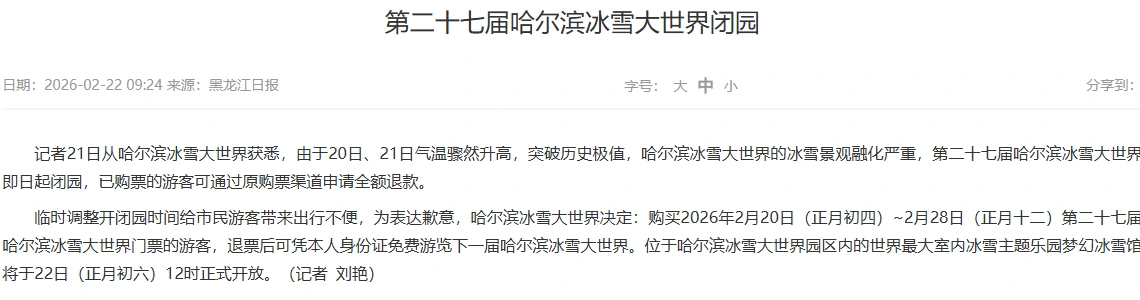
A 22 February 2026 official government-hosted report records the operator’s announcement on the 21st: warming on 20–21 February had seriously melted the ice scenery, and the 27th edition closed immediately.
That later closure announcement is the important one. An earlier notice had discussed reopening on the 22nd after a temporary closure; it was superseded.
This does not predict the 2027 closing date. It explains why I would keep a February trip conditional on current outdoor-park operation, particularly if the park is the main reason to go. A city visit can still be worthwhile, but it answers a different wish.
An April visit can still feel wintry
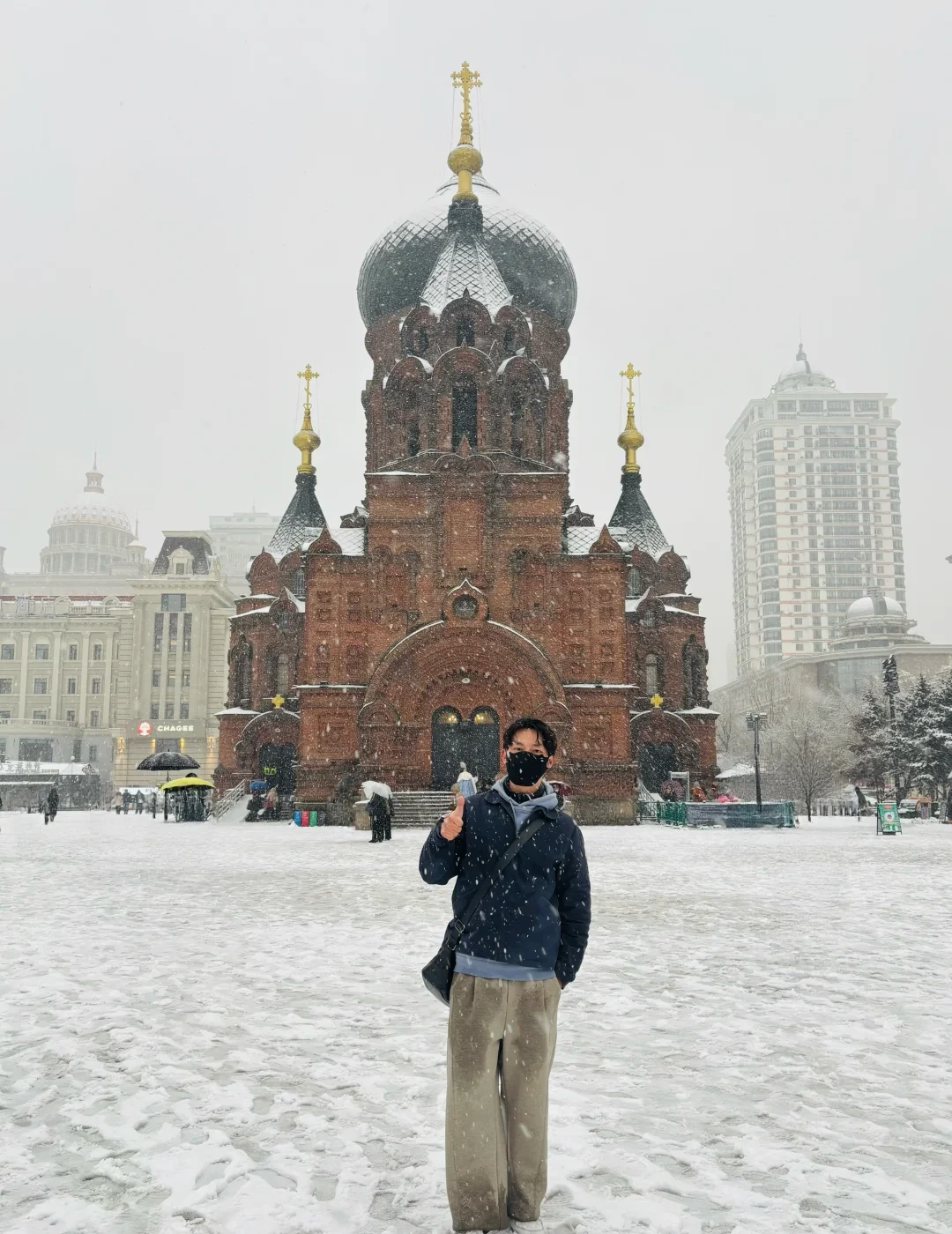
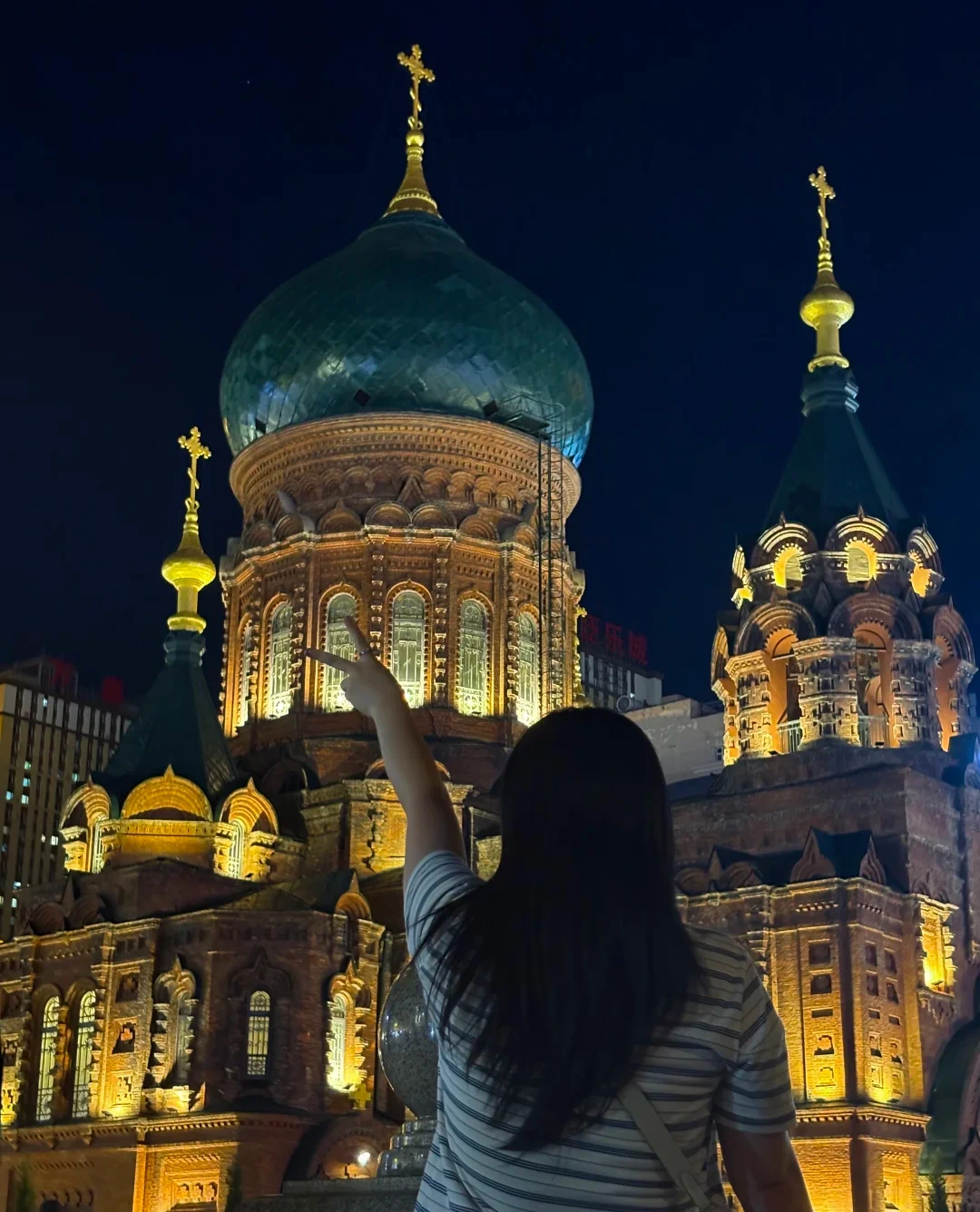
This Saint Sophia Cathedral / 圣·索菲亚教堂 photograph comes from the account titled “3 April, heavy snow in Harbin”. Snow covers the square and the cathedral’s dome.
The author says they had not expected an April snowfall and describes feeling very cold. It is a useful reminder that “spring” is not a reliable shorthand for mild conditions here.
The CMA city climate description characterises spring as changeable, with rapid warming and frequent strong winds.
I would consider April for a city trip with expectations adjusted to the actual forecast. I would not choose it to recreate the winter ice park, or assume this particular snowfall will happen again.
May offers a different picture: blossom and architecture
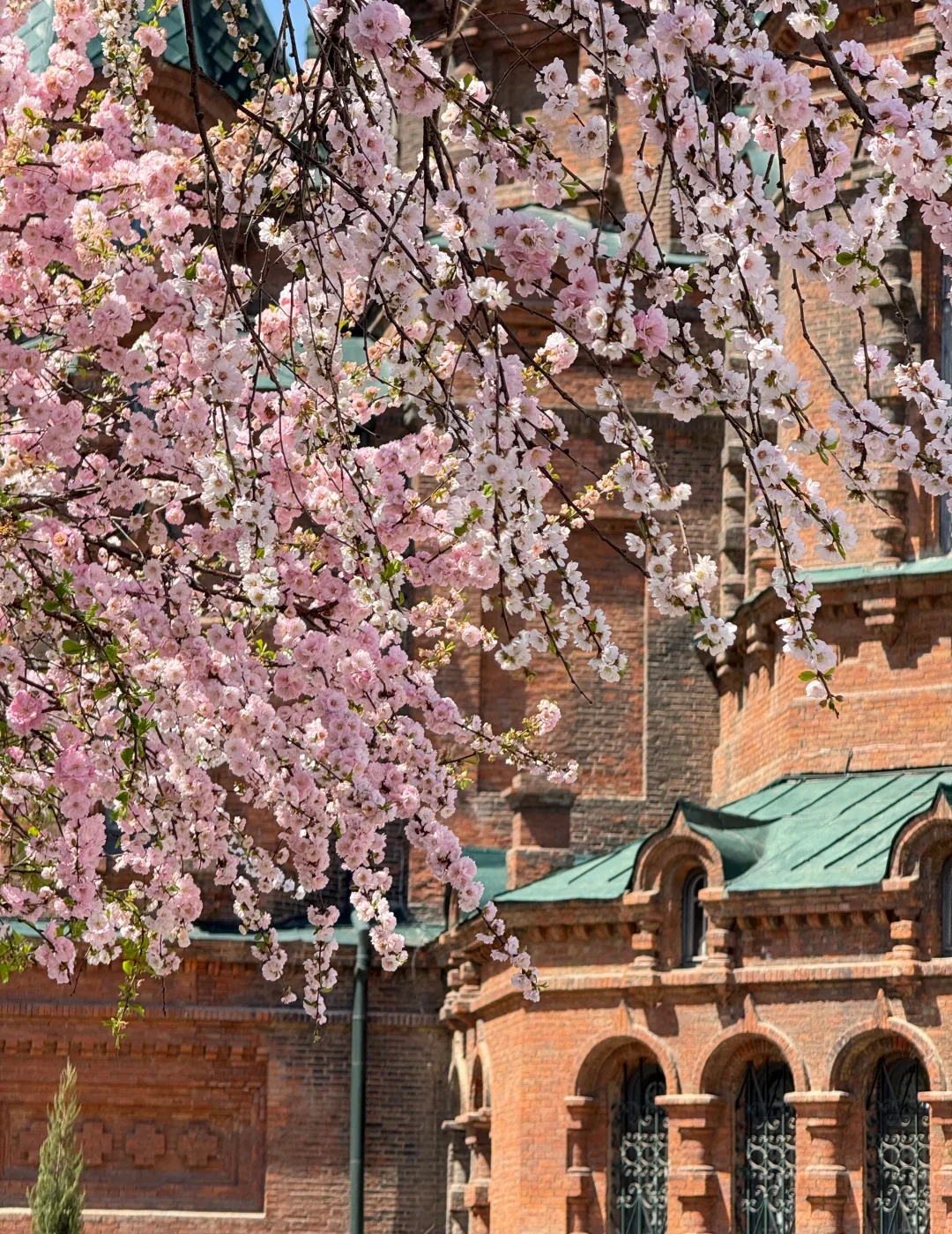
The 10 May collection below shows pink blossom against Saint Sophia’s brickwork. The author identifies this frame as the cathedral with peach blossom.
The wider collection combines leafy streets, several kinds of flowers and Harbin’s architecture. It makes late spring an attractive alternative if the city itself interests you more than ice sculptures.
The exact capture day of each frame is not stated. I would treat May as a month to investigate for that kind of trip, rather than promise the same tree will be flowering on a particular date.
This is also a different spring experience from the 3 April snowfall. The change within the season is part of the decision.
For architecture and leafy streets, consider June–August
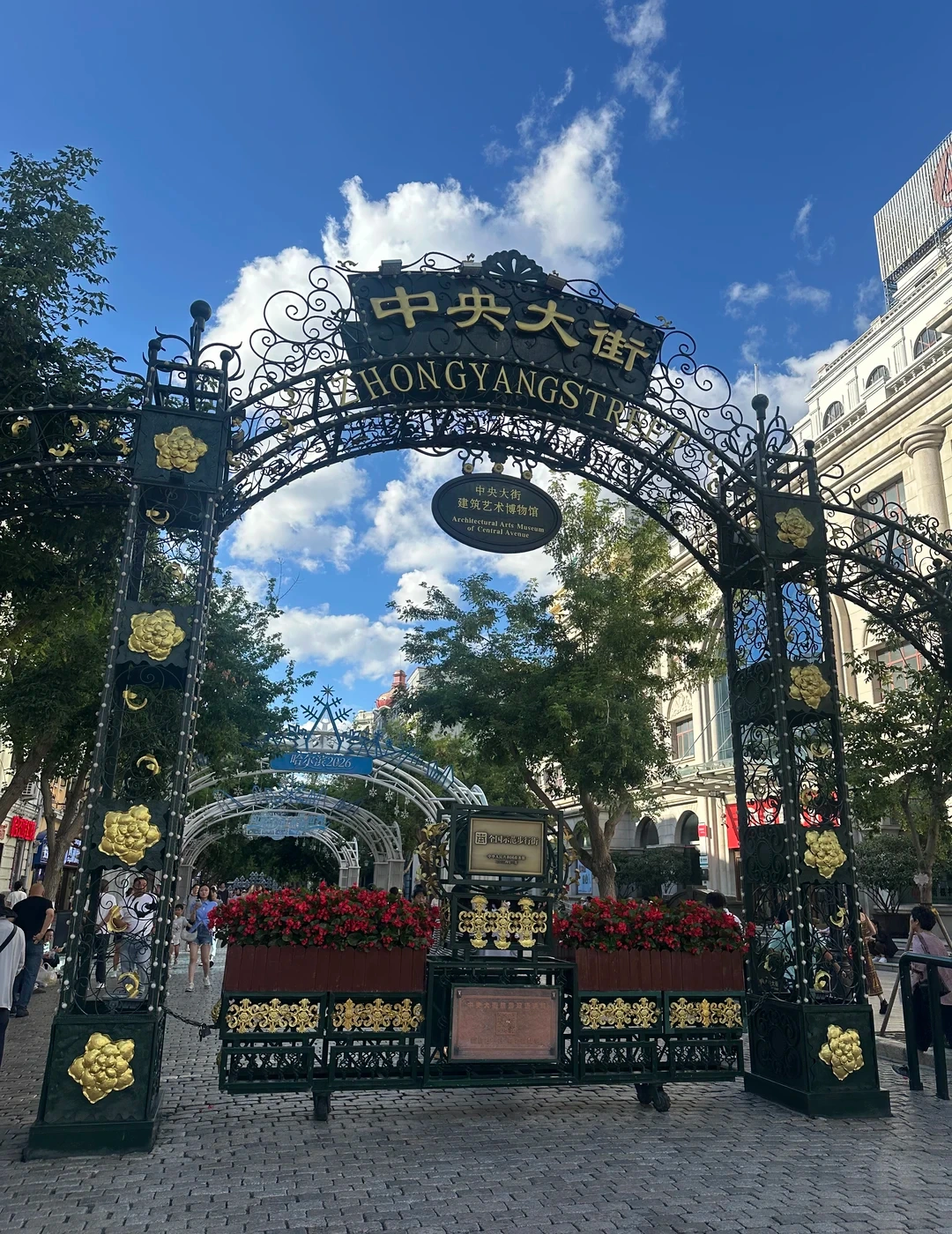
This 16 July collection shows Central Street / 中央大街 beneath blue sky, with green trees, flowers and visitors in lighter clothing.
The writer describes a pleasantly cool breeze during their visit. Another account shared on 19 June also describes enjoying the early-summer weather.
That makes summer a serious alternative for a city-focused trip. The city’s 2026 summer-tourism briefing describes a programme covering 1 July–8 October 2026, showing that tourism here extends well beyond winter.
I would keep the city visit and the outdoor winter ice park separate in the plan. The summer programme is a dated 2026 record, not confirmation of 2027 event dates or a claim that the outdoor ice city operates through summer.
“Summer escape” does not mean every day is cool
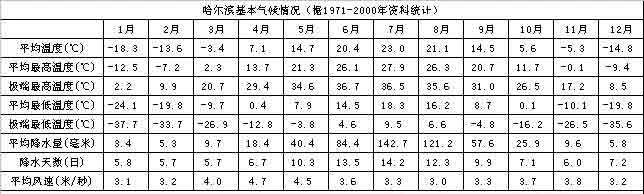
The original CMA table below is explicitly based on 1971–2000. It is an older climate reference, not a current forecast.
For July, it gives a 23.0°C mean, a 27.9°C average high and 142.7 mm average monthly rain. For January, the corresponding mean is −18.3°C and the average low −24.1°C.
Those are different measures. The July mean is not the daytime high, and the January average low is not a minimum that every night will reach.
The contrast explains the very different experiences on offer. The summer city trip avoids choosing the deep-winter experience; it does not guarantee mild, dry weather every day. The near-travel forecast is the next piece of information that matters.
Summer also has an evening city atmosphere
The same July collection includes Saint Sophia illuminated against the dark sky, with a visitor in short sleeves in the foreground.
The author particularly liked the cathedral at night. A separate July collection also shows the lit building and people spending time around the square.
If the appeal is architecture, photography and the atmosphere around the city, these are reasons to consider warmer-month dates rather than assume Harbin is worthwhile only for its winter park.
The photographs do not give a lighting switch-on time, museum admission rule or indoor opening hour. They show the outdoor evening experience from those visits.
For 2027, compare your shortlist with the actual holiday dates
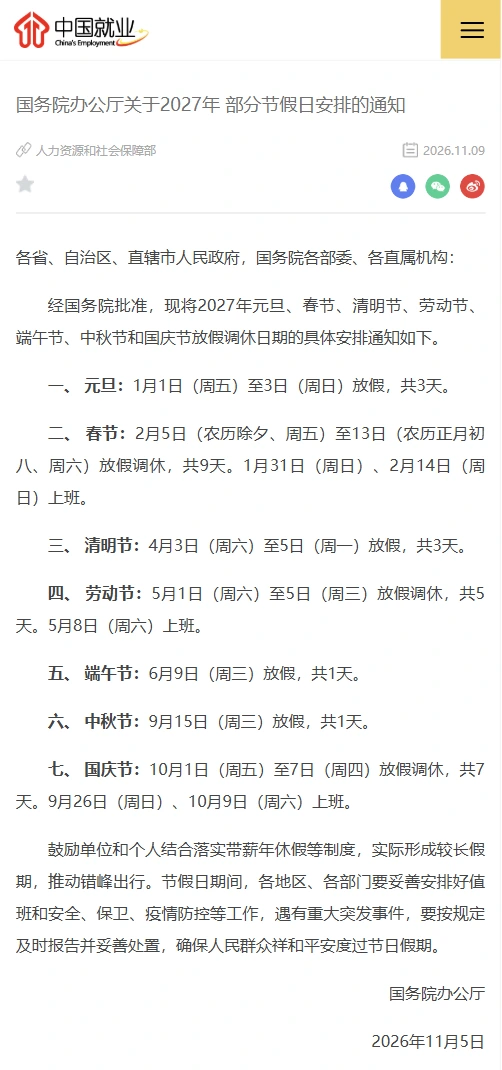
The official mainland 2027 calendar gives New Year on 1–3 January and Spring Festival on 5–13 February.
For a flexible ice-focused visit, I would begin by comparing January dates outside the New Year break, while keeping the actual park announcement decisive.
For a spring or summer city visit, the same calendar gives Qingming on 3–5 April, Labour Day on 1–5 May and the Dragon Boat Festival holiday on 9 June.
These dates help organise the choice. They do not prove how crowded a particular square will be, how much a hotel will charge, or whether the park will remain open through Spring Festival.
Finish with the printed forecast date and the minus signs
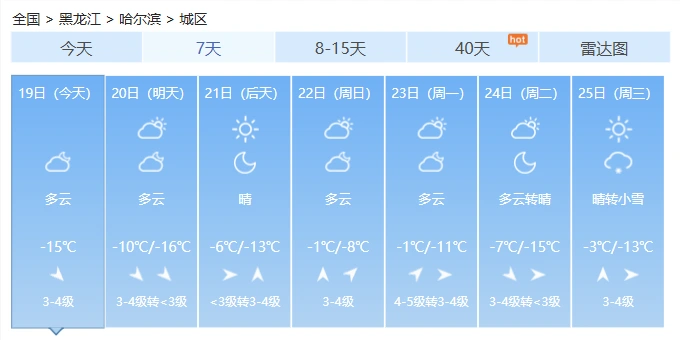
The Harbin urban forecast below was captured after midnight on 20 November 2026. The page still called the 19th “today” and the 20th “tomorrow”, so the printed dates are the useful reference.
The 20日 column gives −10°C / −16°C and 多云 — partly cloudy. The 21日 gives −6°C / −13°C and 晴 — clear.
The location reads 哈尔滨 → 城区, Harbin urban area. These negative temperatures are below freezing even for the daily high; a clear-sky icon does not mean warm weather.
Your date choice is complete when the main experience is clear, the season’s park status fits that choice, the holiday year is correct and the actual-day conditions suit the trip you want. If the park is essential and its operation is unconfirmed, a snowy city photograph alone does not resolve that uncertainty.
I would choose the main experience before choosing the month. For outdoor ice scenery, January is the starting shortlist, with the current opening and operating announcements still decisive. For Harbin’s architecture and city atmosphere, late spring and summer offer a different kind of visit.
A finished choice identifies whether the outdoor park is essential, the cold or warmer-weather conditions you accept, the correct holiday year and the actual dated forecast. A previous winter’s beautiful ice photograph shows why the trip appeals; it cannot confirm that a future day is operational.
Checked 20 November 2026. The forthcoming opening is a plan for the 2026–27 season; the closure report concerns February 2026. The original CMA climate table uses the older 1971–2000 period, not current forecasts. The holiday notice is for 2027. Individual photo dates and source colour treatment are qualified. No personal visit is claimed.
Questions and updates
Comments may be reviewed before they appear.
Your comment and chosen name may be published. We store your IP address and browser details to help moderate comments.