
Best Time to Visit Lijiang: Cherry Blossom, Rain and Snow-Mountain Views
For a first Lijiang city break, I would compare April and late October–November. If cherry blossom is the main reason for coming, I would investigate March. If golden morning light on Jade Dragon Snow Mountain matters most, I would investigate November–February.
July–August can still suit a slower city visit, with a much wetter weather trade-off. A clear view from below, snow on the upper mountain and a blue sky are separate wishes; no month guarantees all three.
A shortlist for different Lijiang trips
- General city visit
- Compare April and late October–November.
- Cherry blossom
- Investigate March, refining by the actual tree, area and year.
- Golden mountain light
- Investigate November–February, accepting a cold early start and uncertain cloud.
- Fixed summer dates
- Weigh the city’s appeal against rainier conditions, rather than assume every day will be clear.
The historical record, dated photographs and actual urban forecast explain the choices.
Compare April with late October–November for a general city trip
For a first Lijiang city break, I would compare April and late October–November. Spring can add blossom; later autumn is another useful starting point for a trip outside the main summer rains.
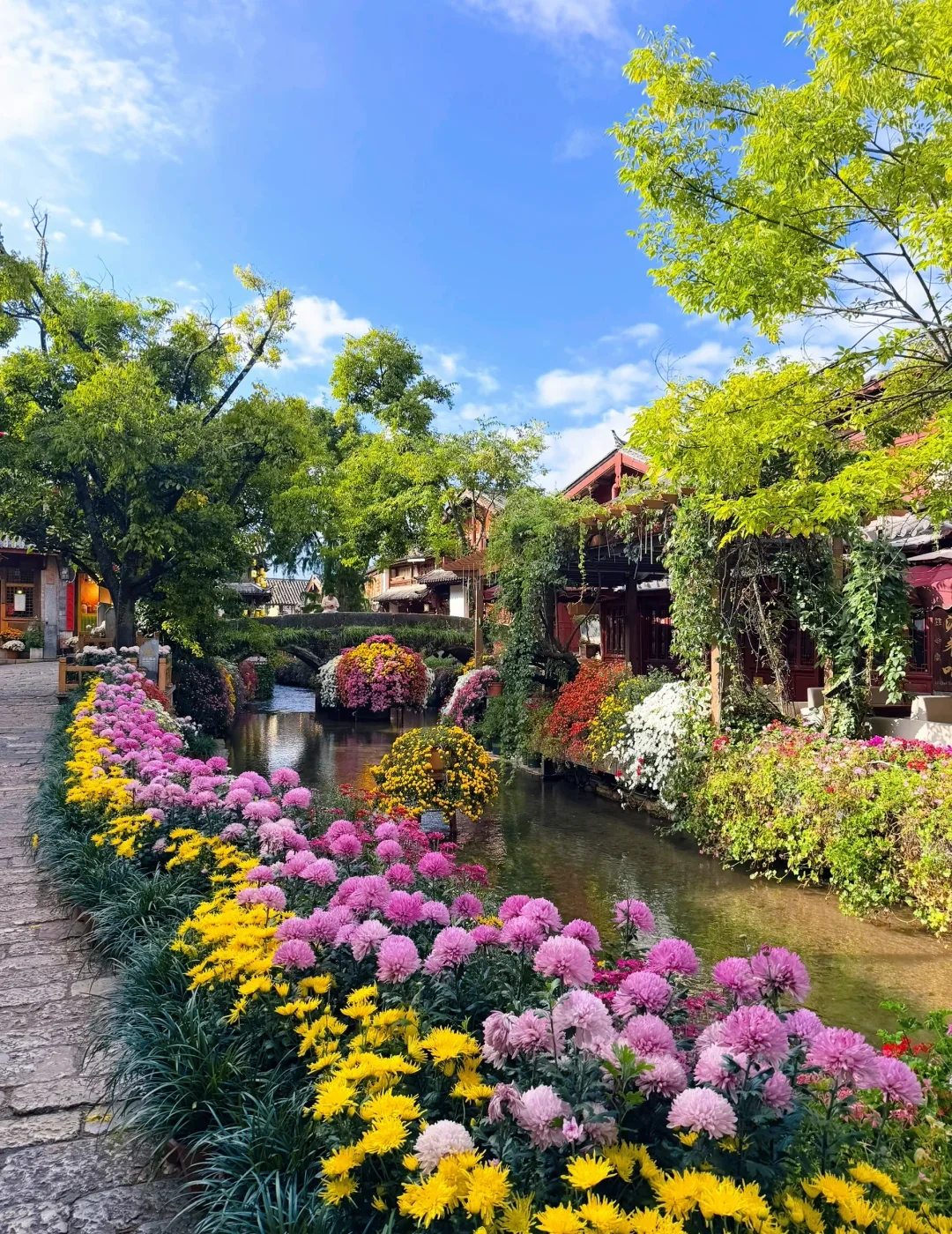
The photograph below is Lijiang Old Town / 丽江古城, from an account titled 22 October. Chrysanthemums line a canal, with trees, tiled roofs and blue sky above them.
That is an appealing autumn city scene. It is not evidence that every late-October day is dry, or that the same flower display will run on the same dates next year.
For a blossom-led visit, I would investigate March specifically. For golden morning light on the mountain, the November example answers a different seasonal priority.
Use the historical climate table with its original dates intact
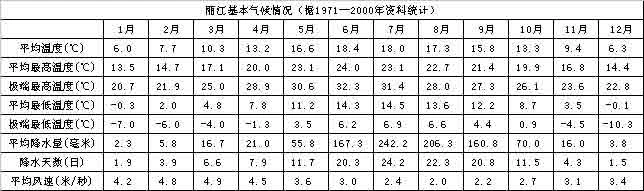
The China Weather city page contains a Lijiang table explicitly labelled 1971–2000. It is an older climate record, useful for comparison; it is not a current forecast or a newer set of normals.
Its monthly means include March 10.3°C, April 13.2°C, October 13.3°C and November 9.4°C. The summer means are June 18.4°C, July 18.0°C and August 17.3°C.
In the precipitation row, July has 242.2 mm and August 206.3 mm, compared with March 16.7 mm, April 21.0 mm, October 70.0 mm and November 16.0 mm.
The distinction matters: summer’s trade-off is the much wetter climate, while later autumn is cooler. Monthly means include day and night. The actual dated forecast is the better guide to the high and low for a real visit.
For cherries and a distant snow mountain, investigate March
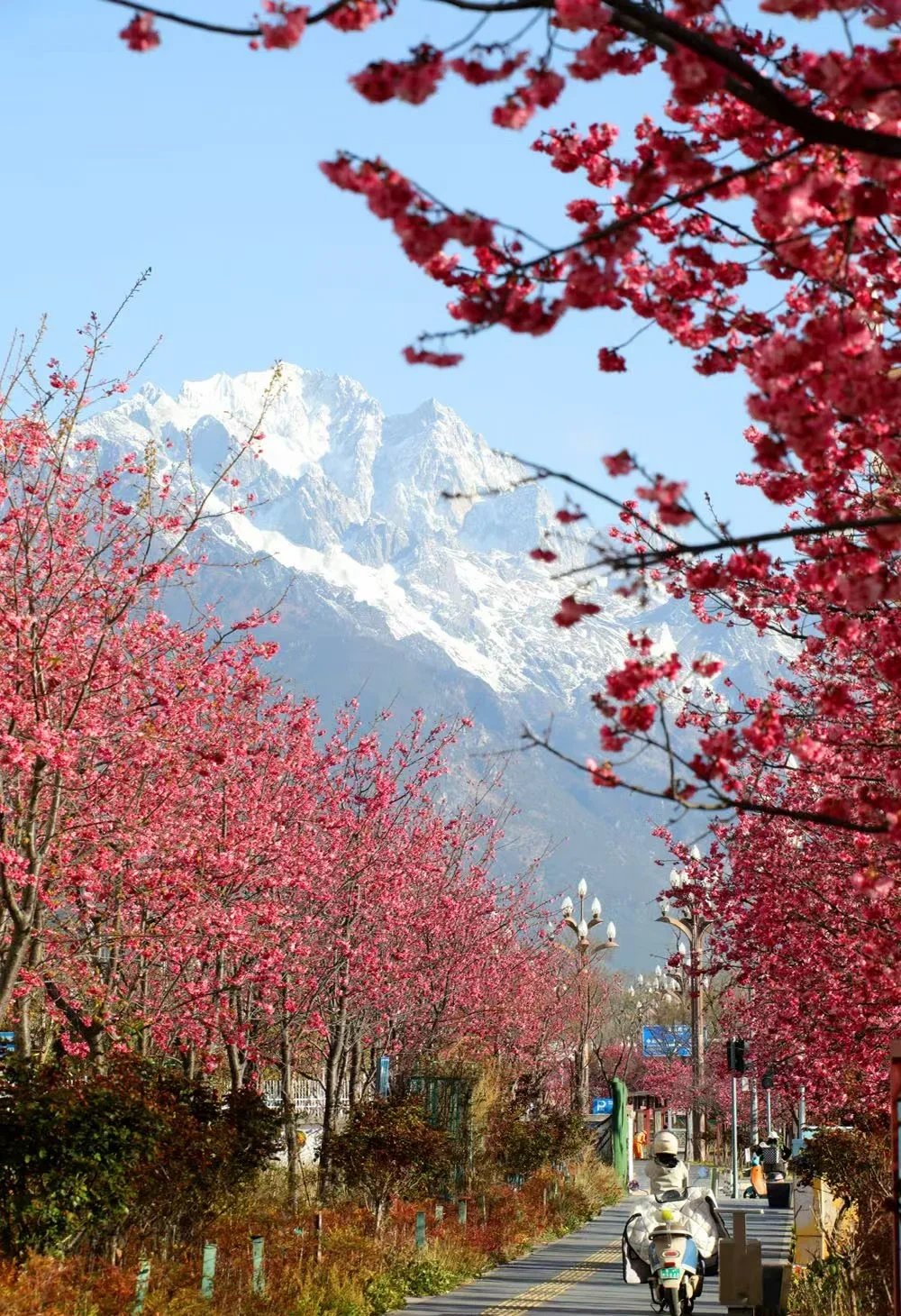
This Xueshan Road / 雪山路 photograph comes from an account explicitly titled 20 March. Pink blossom frames Jade Dragon Snow Mountain / 玉龙雪山 in the distance.
The photographer says these pictures were taken around 09:00, after the previous morning’s cloud had hidden the main peak. Another visitor’s 19 March collection shows the same blossom-lined road.
There is independent local reporting too: a 27 March 2026 report describes blossom and snow-mountain views on this road during the previous day’s cultural event.
I would investigate March for this combination, then refine the trip using that year’s actual flower progress and weather. The photographer’s prediction that the flowers would be finished by month-end belonged to that account; it is not a fixed annual deadline.
A flowering tree in Shuhe can be at a different stage
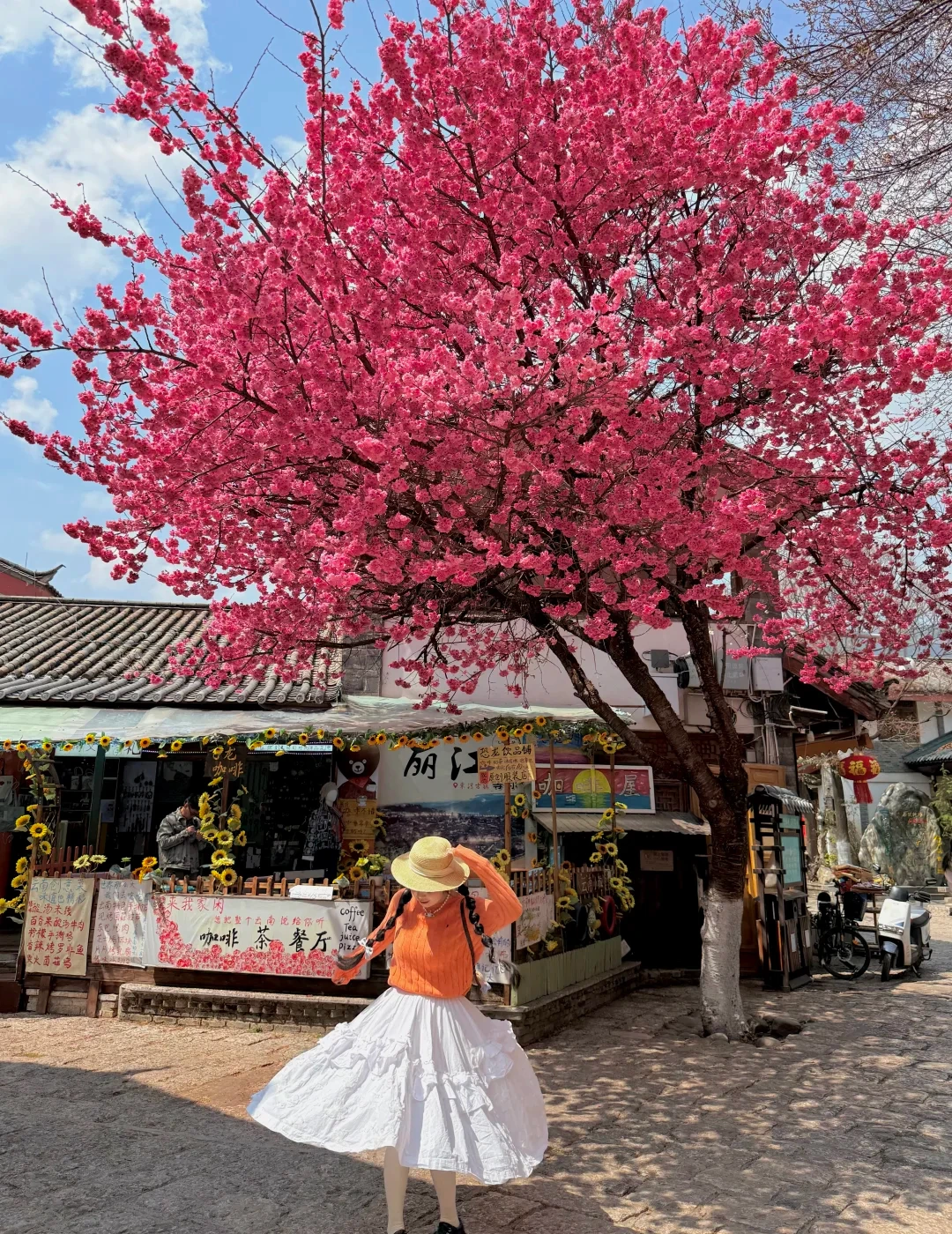
This bright pink cherry tree is in Shuhe Old Town / 束河古镇, from an account explicitly titled 12 March. The author describes returning to photograph the same tree each year.
It is a useful reason to narrow a flower trip by the particular tree or area, rather than expect every part of Lijiang to reach its best on one weekend.
The photograph shows this tree’s flowering state. It does not establish how long it stayed like this, or promise the same display in late March or April.
For a spring city trip, April remains a separate general-weather option. For this specific pink-tree experience, I would investigate March reports first.
With fixed July–August dates, make room for real rain
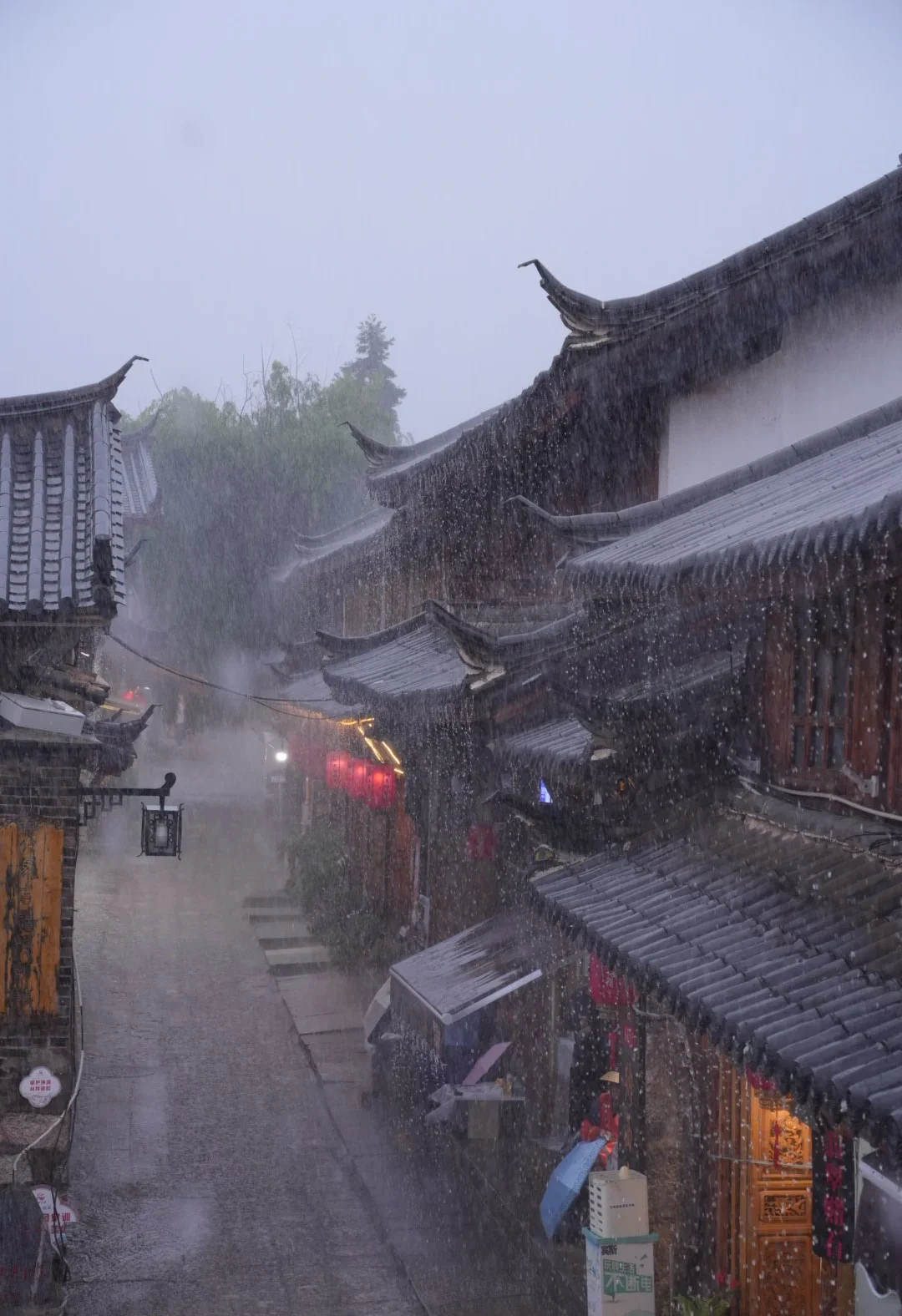
The photograph below is from a Lijiang Old Town account shared on 8 July. Rain falls across the lane and tiled roofs, with a grey sky beyond them.
The historical table’s summer rainfall pattern is also consistent with a 29 July 2026 local report, which explicitly describes July and August as the rainy season.
A visitor writing on 18 July describes a wet arrival, heavier rain later and an outing cut short. Another July account describes a sudden heavy downpour.
I would keep a summer city trip in consideration if that wetter experience suits it. I would not build an outdoor-heavy visit around a promise that rain only falls briefly at a fixed time each day.
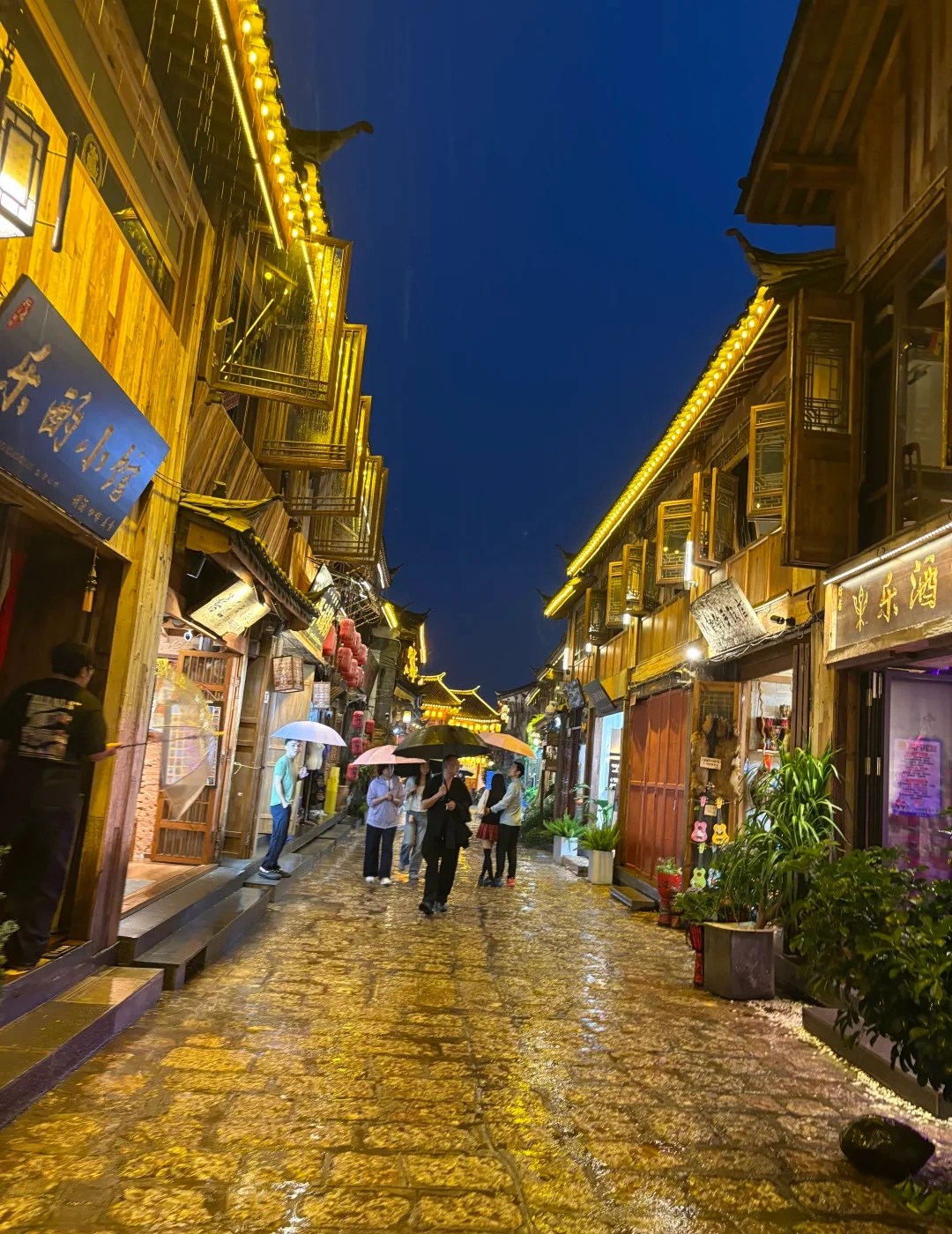
A rainy summer visit can still have an attractive Old Town evening
This illuminated lane belongs to the 18 July visitor’s collection. Umbrellas and reflections on the wet paving appear beneath the warm lights of the Old Town’s wooden buildings.
It adds something the grey rain scene does not: the same trip can still include an appealing city evening.
The writer also describes feeling cold in damp clothes. Their stated temperature is a personal report, not an independent weather measurement.
For fixed summer dates, I would weigh both sides. A wet city break may still suit a slower visit; a trip whose success depends on uninterrupted clear mountain views has a different requirement. The lights in this photograph do not provide opening hours for any particular business.
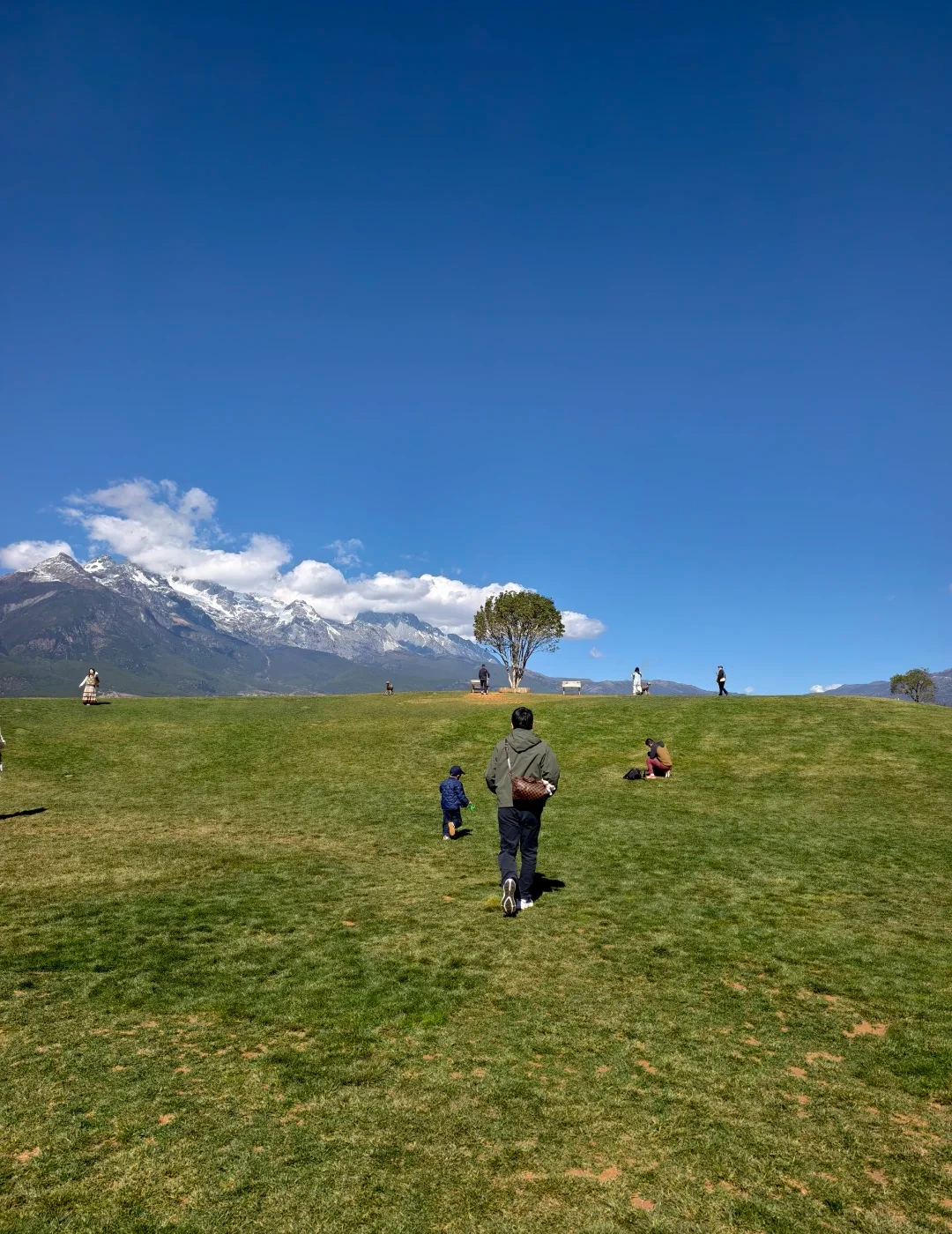
November can offer clear lower-level mountain views
The title of this account says 14 November, but the body says the photographs were taken the previous day. The author identifies the collection’s location as Yundi’an / 云堤岸.
The wide view below shows a green lawn beneath blue sky, with clouds lying across part of the snow-covered mountain. It illustrates the appeal of a November visit without claiming a completely cloudless peak.
The writer says sunshine felt warm while shade felt cooler. That is a useful personal comparison, not a temperature reading.
I would use a scene like this when considering November for a city-and-mountain-view trip. A photograph from below does not tell us the conditions higher on the mountain or whether a cable car will operate on a different day.
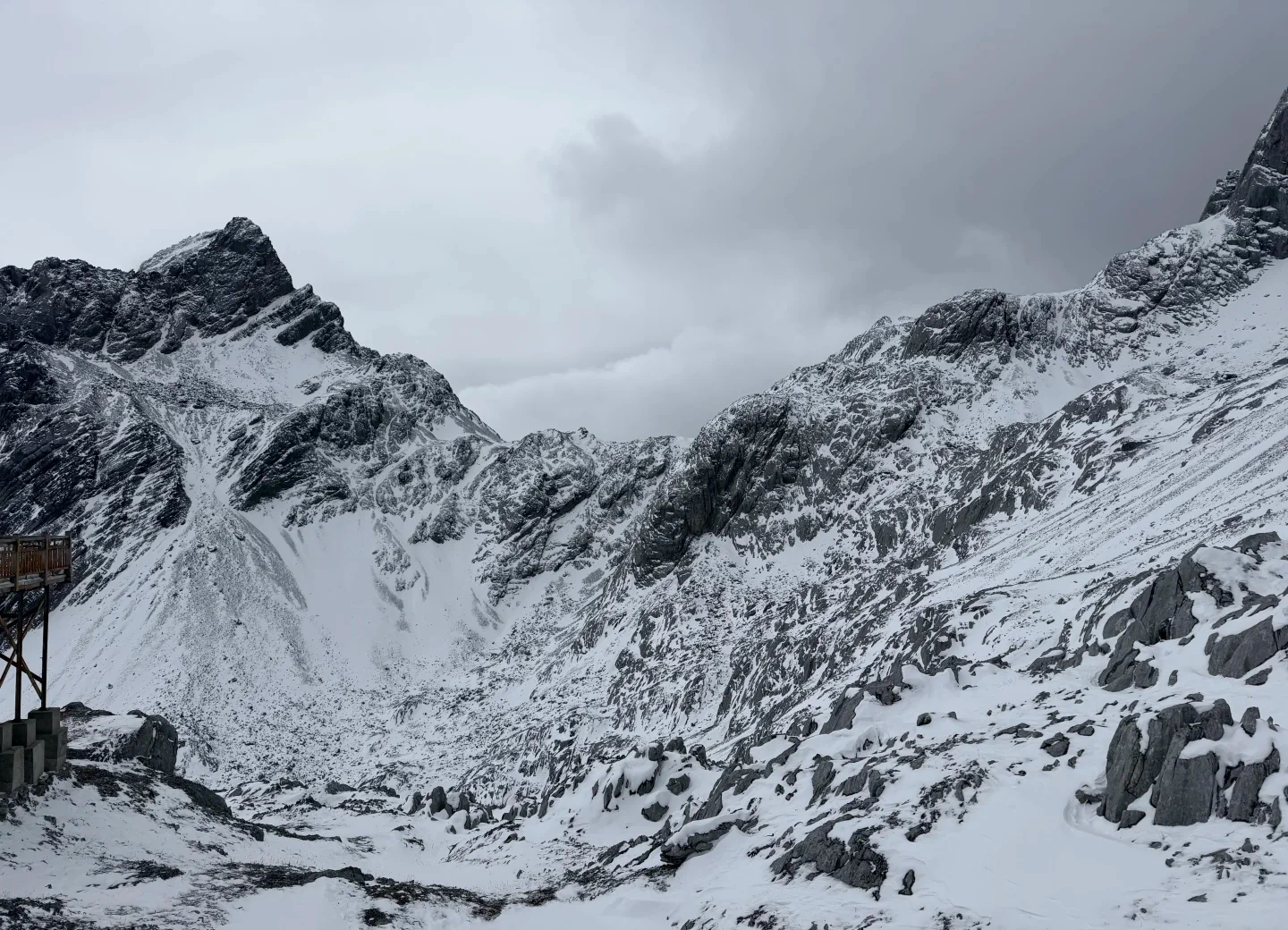
Snow on the mountain does not guarantee blue sky
A separate account explicitly dated 11 November 2026 shows Jade Dragon Snow Mountain under grey cloud. Snow covers the rocky slopes around the upper visitor area.
This is why I would distinguish three wishes when choosing a season: seeing snowy mountain scenery, seeing the mountain clearly from below, and seeing it under a bright blue sky.
They can overlap, but a single “best month” cannot guarantee all three. The lower-level November photograph and this upper-mountain scene record different days and conditions.
The author also predicted access for the following day. That was a prediction, not a current operating notice. This scene is useful for the weather comparison, rather than a promise of access to a particular elevation.
For golden morning light, investigate late autumn and winter
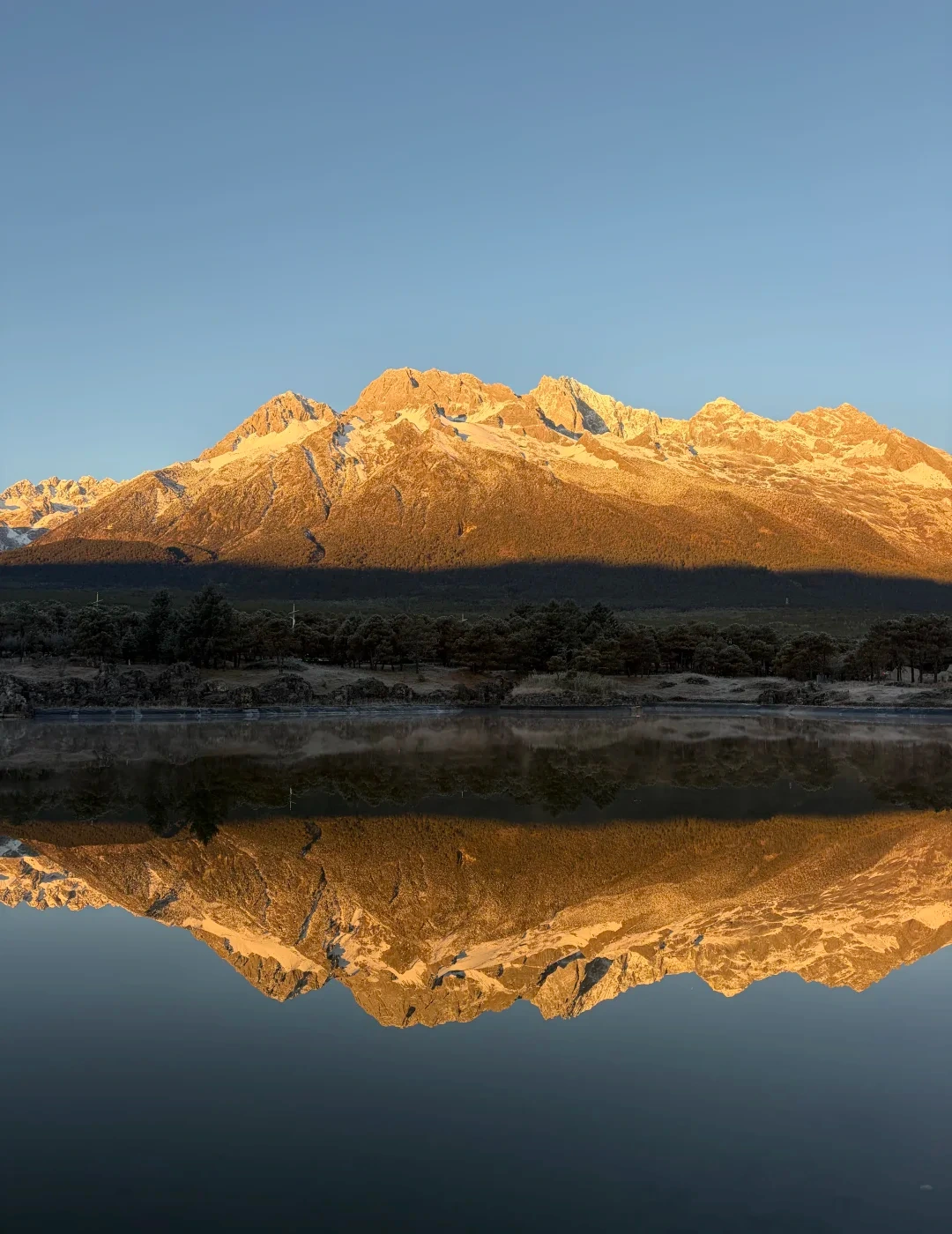
This collection is explicitly dated 13 November 2026. The photographer describes the mountain beginning to turn pink around 07:33, then becoming golden. The photograph shows the lit peaks reflected in still water.
The Chinese name is 日照金山 — sunlight turning the mountain gold. A November 2025 local report, including an interview with a mountain visitor-centre manager, also describes late autumn and winter as a favourable viewing period.
I would investigate November–February if this is the main photographic priority, while accepting a cold early start and the possibility that cloud prevents the view.
The 07:33 observation belongs to 13 November 2026. It is not an all-winter sunrise time. The striking result also does not mean the viewing area was empty: the wider collection shows many other visitors.
Compare the shortlist with the 2027 mainland holidays
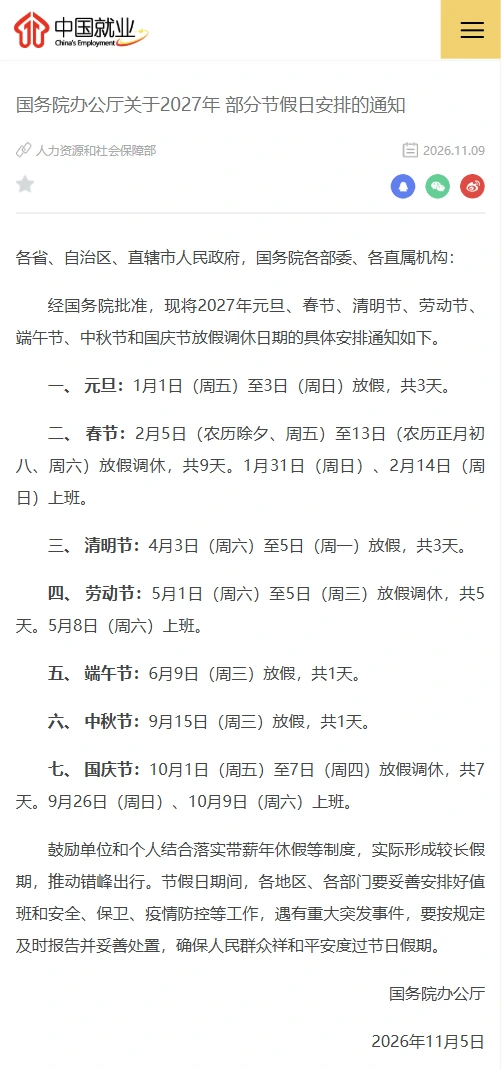
For 2027, the official calendar lists Qingming on 3–5 April, Labour Day on 1–5 May and National Day on 1–7 October.
For an autumn trip with flexible dates, I would begin the comparison after that first October week, then weigh October’s remaining rainfall against November’s cooler conditions.
For late-autumn or winter photography, New Year is 1–3 January and Spring Festival 5–13 February. A seasonal preference and the actual public holidays are separate parts of the choice.
The calendar does not predict hotel prices or crowds. The March 2026 cultural-event dates in the spring report also do not establish the 2027 programme.
Finish with the actual city forecast, including the low
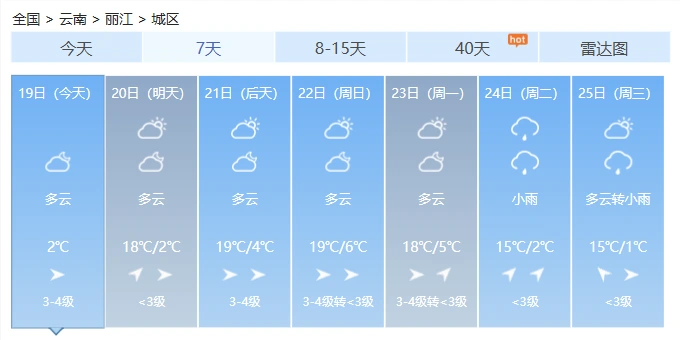
The Lijiang urban forecast below was captured after midnight on 20 November 2026, while the page still labelled the 19th “today” and the 20th “tomorrow”.
The printed 20日 gives 18°C / 2°C, 多云 — partly cloudy. The printed 21日 gives 19°C / 4°C, also partly cloudy.
That is a substantial difference between the forecast high and low. The single 2°C in the printed 19th column is the remaining overnight value, not a forecast daytime high.
The place reads 丽江 → 城区, the urban area. For this city-date choice, the finished result is a preferred season, a realistic scenery priority, the correct holiday year and the actual travel-day forecast. A city high of 18°C should not be read as an upper-mountain forecast.
A general city trip and a photograph-led trip need different shortlists. April or later autumn is where I would begin for the city. March deserves attention for blossom; later autumn and winter for golden light on the mountain.
Your finished choice should identify the scene you want, the wet or cool conditions you can accept, the correct holiday year, and the actual city forecast. A fixed summer visit can still offer a lovely Old Town evening, while a clear November photograph does not guarantee the same conditions on the upper mountain.
Checked 20 November 2026. The reproduced China Weather climate table explicitly uses 1971–2000 and is historical context. The spring and summer local reports concern 2026; the winter interview report is from 2025. The holiday calendar is for 2027. Photo dates are qualified in the captions. Source colour treatment is retained. No personal visit is claimed.
Questions and updates
Comments may be reviewed before they appear.
Your comment and chosen name may be published. We store your IP address and browser details to help moderate comments.