
Best Time to Visit Shanghai: Weather, Blossoms and Autumn Colour
For a first Shanghai city trip, I would start with dates after the early-October holiday through early November. Late March–early April is my flower-focused alternative. If golden trees are the main reason for going, the better starting point is later: late November into December, depending on the trees and place.
The distinction matters. A comfortable autumn afternoon, a pink cherry canopy and a flooded orange forest belong to different seasonal choices. The real photographs below show what those choices mean.
Choose the experience before the month
- City time outdoors
- Compare post-holiday October–early November.
- Cherry blossoms
- Start with late March–early April; early varieties can flower earlier.
- Golden ginkgo
- Late November–mid-December for the illustrated example.
- Flooded water redwoods
- Mid-to-late November–late December for the illustrated example.
- Fixed summer or winter dates
- Compare the rain, heat and cold-weather trade-offs.
Compare the 2027 holiday dates and see how to read the actual city forecast.
For a first city visit, my shortlist starts after the October holiday
I would first compare dates after the early-October holiday through the first half of November. This is my choice for someone who wants time outside without making cherry blossoms or peak autumn leaves the purpose of the trip.
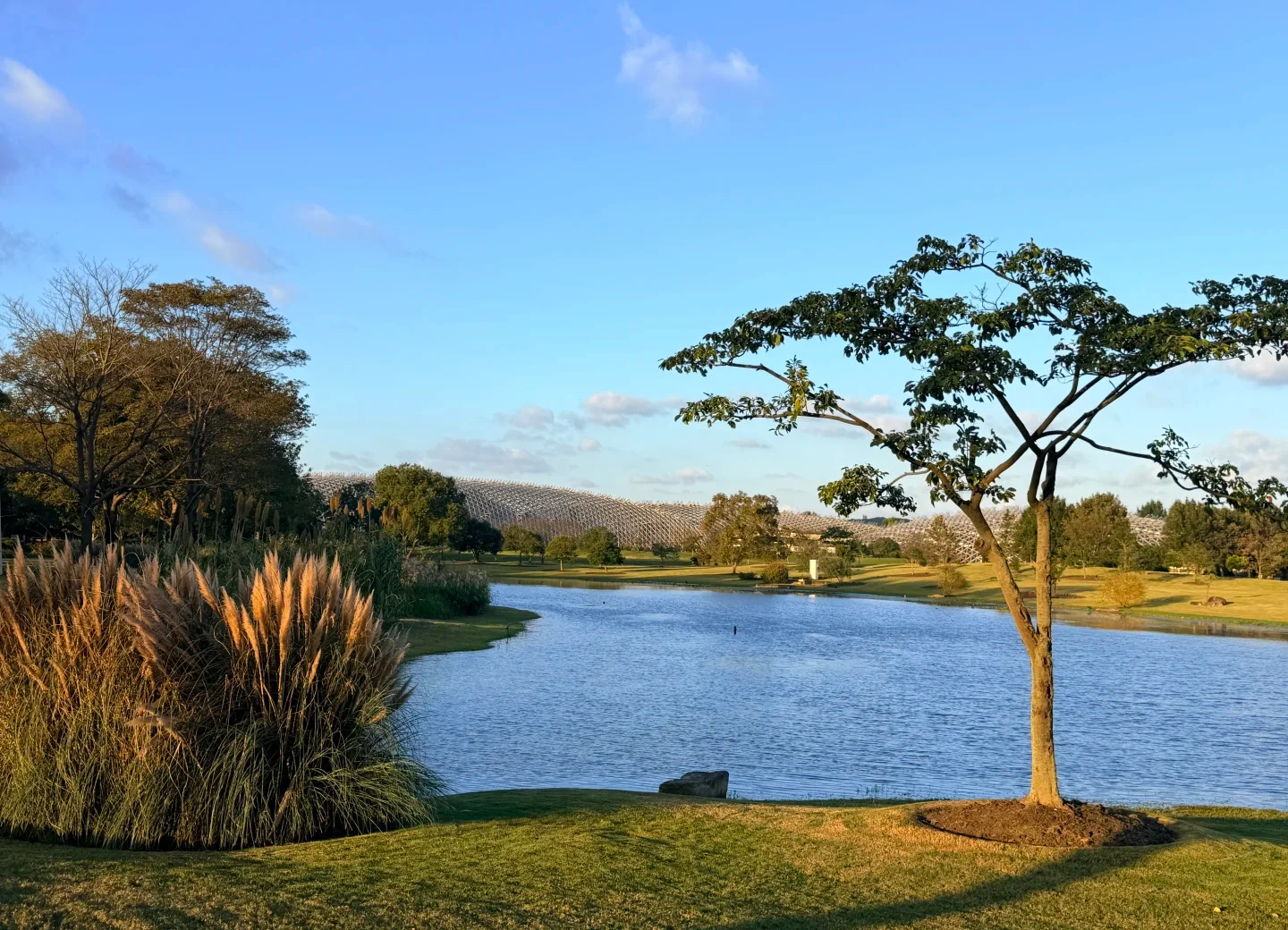
The city’s four-season overview describes autumn as the cooling part of the year. The photograph below, from an account shared on 26 October, shows a bright autumn afternoon at Chenshan Botanical Garden / 辰山植物园: open water, grasses and trees, with plenty of green still visible.
That is a useful expectation. October can be attractive without looking like a golden-leaf calendar. For a foliage-led trip I would consider the later windows below instead.
The visitor found this particular visit pleasantly quiet. I would not use one afternoon to promise an empty park, cheap rooms or uninterrupted sunshine throughout October.
An October visit can also mean osmanthus
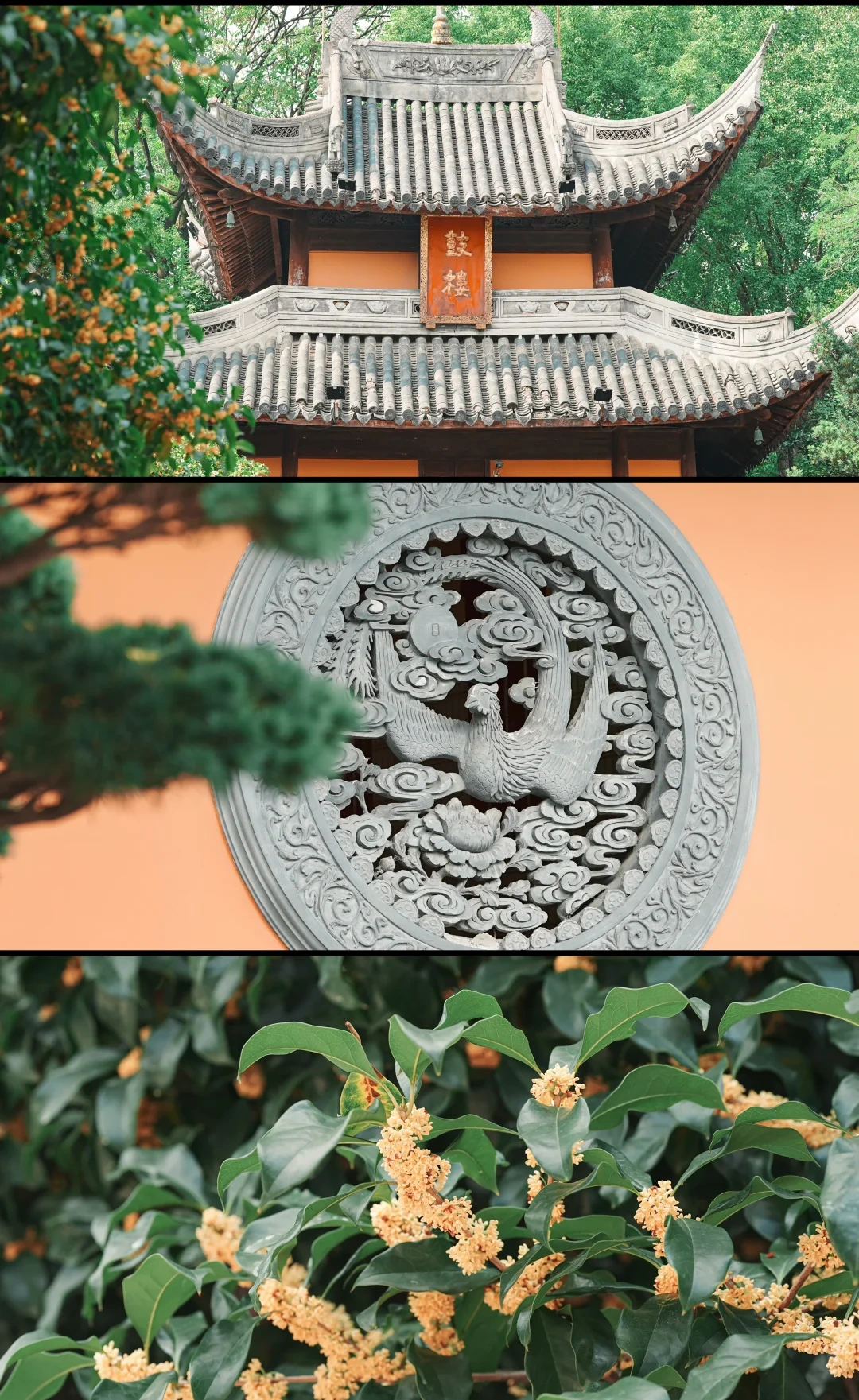
For a different autumn detail, this 13 October account records flowering osmanthus at Longhua Temple / 龙华寺.
The photographer’s original three-part image brings together the temple architecture, carved decoration and the small orange-yellow flowers. It gives a more specific picture of an October visit than a generic claim that the whole city turns gold.
The date belongs to that visit. Flowering depends on the year, so I would treat October osmanthus as a possible seasonal pleasure rather than reserve one exact week on the strength of a photograph.
If you like temples and small botanical details, this is a reason to consider October. If you are imagining large trees covered in yellow leaves, the next two examples better match that aim.
For golden ginkgo, consider late November to mid-December
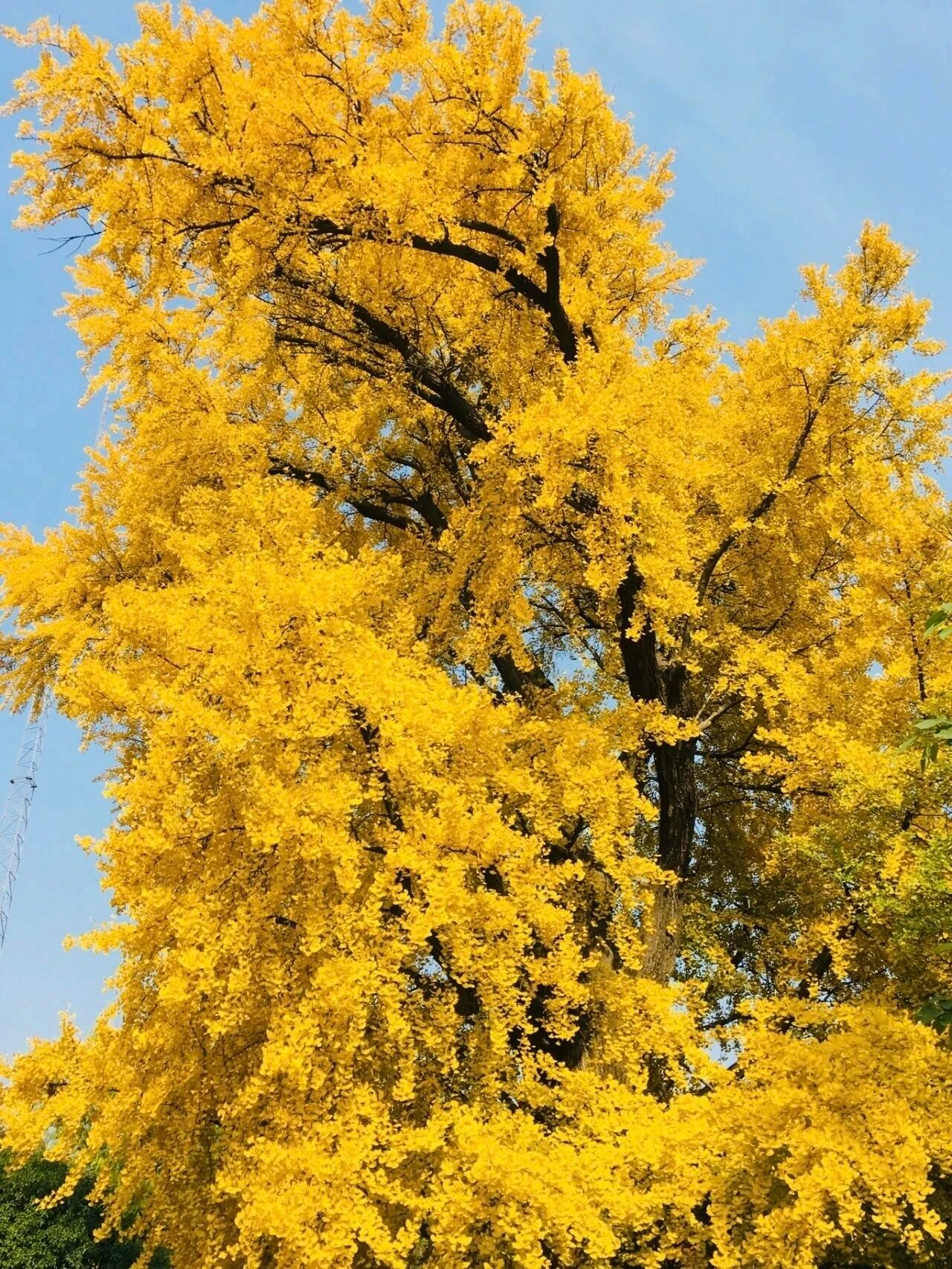
At Jiading’s Millennium Ginkgo Park / 嘉定千年银杏公园, the city’s November 2026 autumn feature gives a viewing window of late November to mid-December.
The official photograph below shows the golden canopy that makes this a different date choice from a general October city visit.
I would choose this later period if ginkgo colour is the main attraction, while allowing for colder days. The source offers a seasonal window, not a guarantee that a particular day will reproduce the photograph.
The photograph is the tourism authority’s illustration. It does not establish the tree’s condition today or predict next year’s exact peak.
For the flooded forest, the season extends later
The same official feature places the coloured water redwoods at Qingxi Country Park / 青西郊野公园 in a mid-to-late November through late December viewing window.
The actual photograph shows trunks standing in water beneath orange-gold foliage. This is the landscape to compare with the ginkgo canopy, rather than assuming all Shanghai autumn photographs refer to the same trees or week.
For someone whose first priority is this flooded-forest scene, I would investigate that later period. Someone mainly seeking comfortable city wandering may still prefer the earlier autumn shortlist.
As with the ginkgo photograph, this is a seasonal illustration. Yearly colour and the conditions on a chosen day remain separate questions.

For cherry blossoms, early March and April can look quite different
Spring is my alternative to autumn for someone interested in flowers. The useful detail is that “cherry-blossom season” does not mean every variety flowers together.
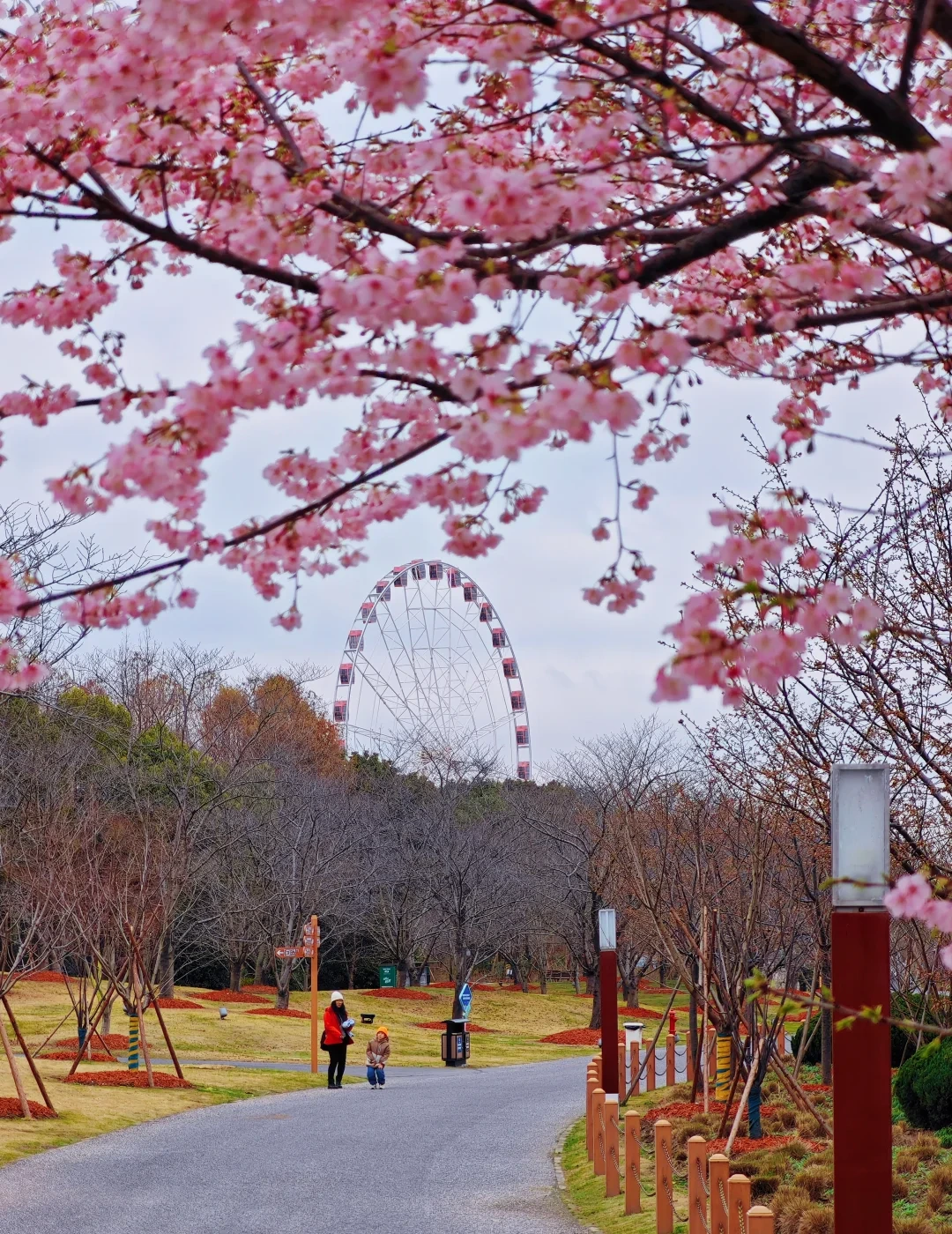
This photograph at Gucun Park / 顾村公园 comes from a visit dated 4 March 2026. Early pink blossoms frame the Ferris wheel, while many other trees remain bare.
A later visit can produce a very different scene. The white blossoms and fallen petals in the next photograph were recorded about a month afterwards, at the same park.
For a flower-focused holiday I would begin by comparing late March and early April, then refine the dates from that year’s flowering reports. Early-March pink blossom is an alternative, with a different look and no implication that the entire park is already flowering.
The April example shows why exact capture dates matter
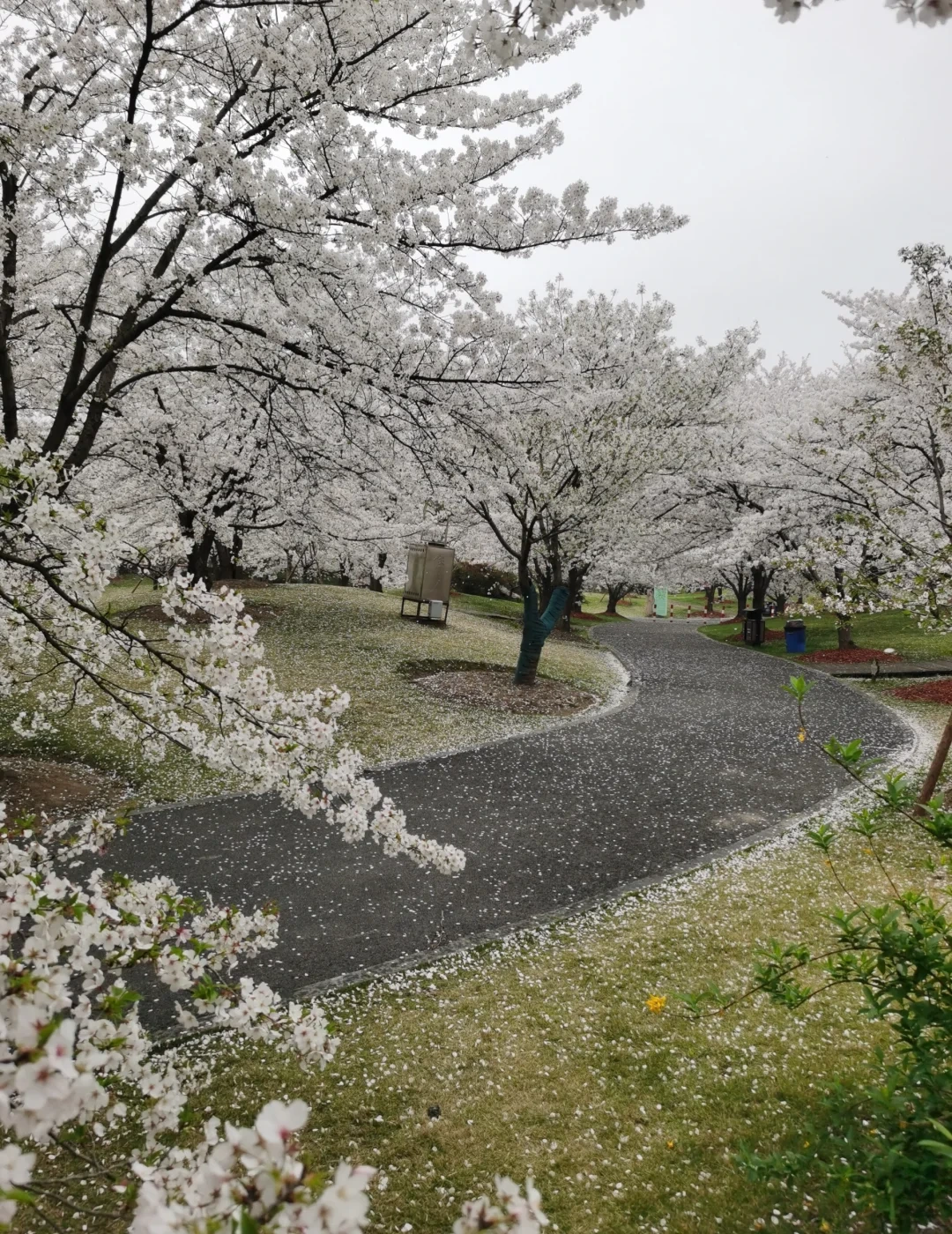
The author of this Gucun Park photograph corrected the visit date to 3 April. The post was edited on 8 April, by which time the author described thinner flowers, more leaves and more fallen petals.
The image itself shows white blossom overhead and petals covering the path and grass. It is useful evidence of one beautiful April stage, rather than a live update for the posting date.
The 2026 Shanghai Cherry Blossom Festival ran at Gucun Park from 9 March to 9 April. Those are 2026 event dates; they do not announce 2027 dates or establish full bloom for the entire month.
For a future trip, late March–early April is a starting window. A report with an explicit recent capture date is more useful near departure than an attractive photograph reposted after the flowers have changed.
June brings the plum-rain trade-off
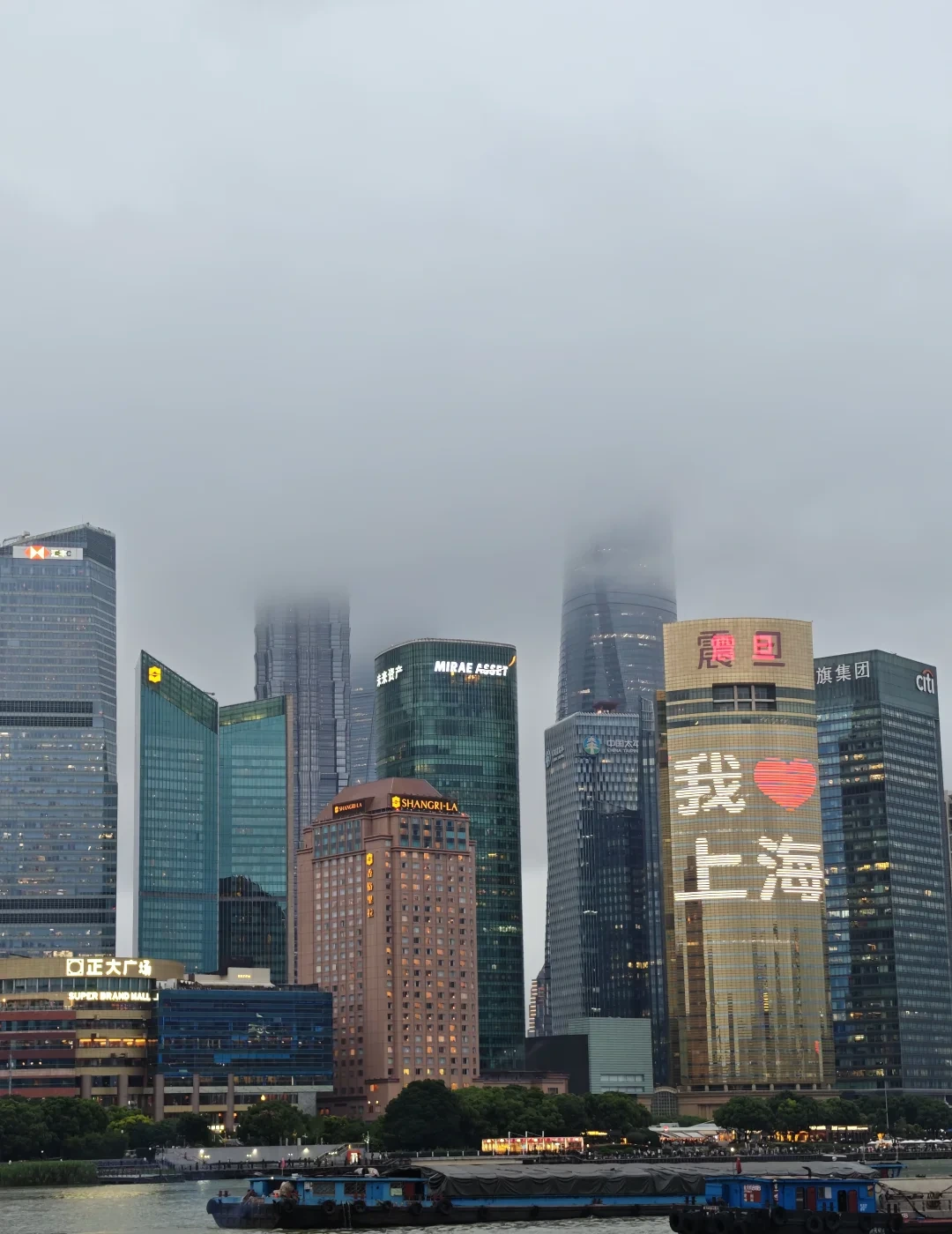
For a holiday dominated by skyline photographs, June is a less straightforward choice. The city’s overview places the usual plum-rain season, or 梅雨 / méiyǔ, around mid-June to early July.
The photograph below comes from a 27 June account. The visitor described intermittent fine rain; low cloud obscures the tops of the Lujiazui towers. A restaurant stop provided shelter during that outing.
This can still be an atmospheric city visit. It is a weaker match for someone whose enjoyment depends on clear views of the tallest buildings every day.
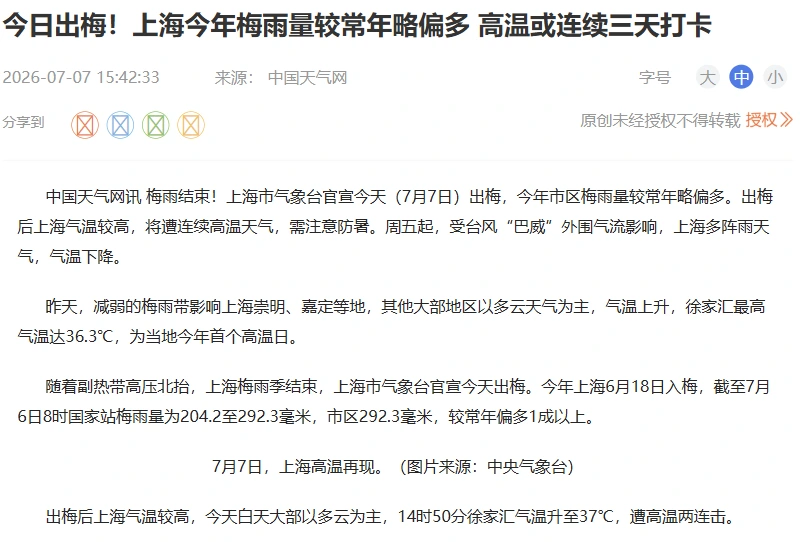
The seasonal dates move. In the dated 2026 report below, the meteorological service announced entry on 18 June and the end on 7 July. Those dates describe that year, not a fixed annual booking rule.
The end of plum rain does not mean mild summer weather
July and August suit visitors who can be flexible about how much time they spend outside. For a trip built around long outdoor days, I would choose spring or autumn instead.
The actual China Weather report dated 7 July 2026 below records 36.3°C at Xujiahui on 6 July, followed by 37°C at 14:50 on 7 July. The announced end of plum rain and the hot spell occurred together in this example.
This is a historical event, not a prediction for your July dates. It does show why “after the rainy season” should not be read as “comfortably cool.”
For visitors who find humid heat difficult, I would favour the spring or autumn alternatives if the calendar permits. A fixed summer holiday can still work with different expectations from a trip built around all-day outdoor sightseeing.
Winter is an option for city atmosphere, with a colder expectation
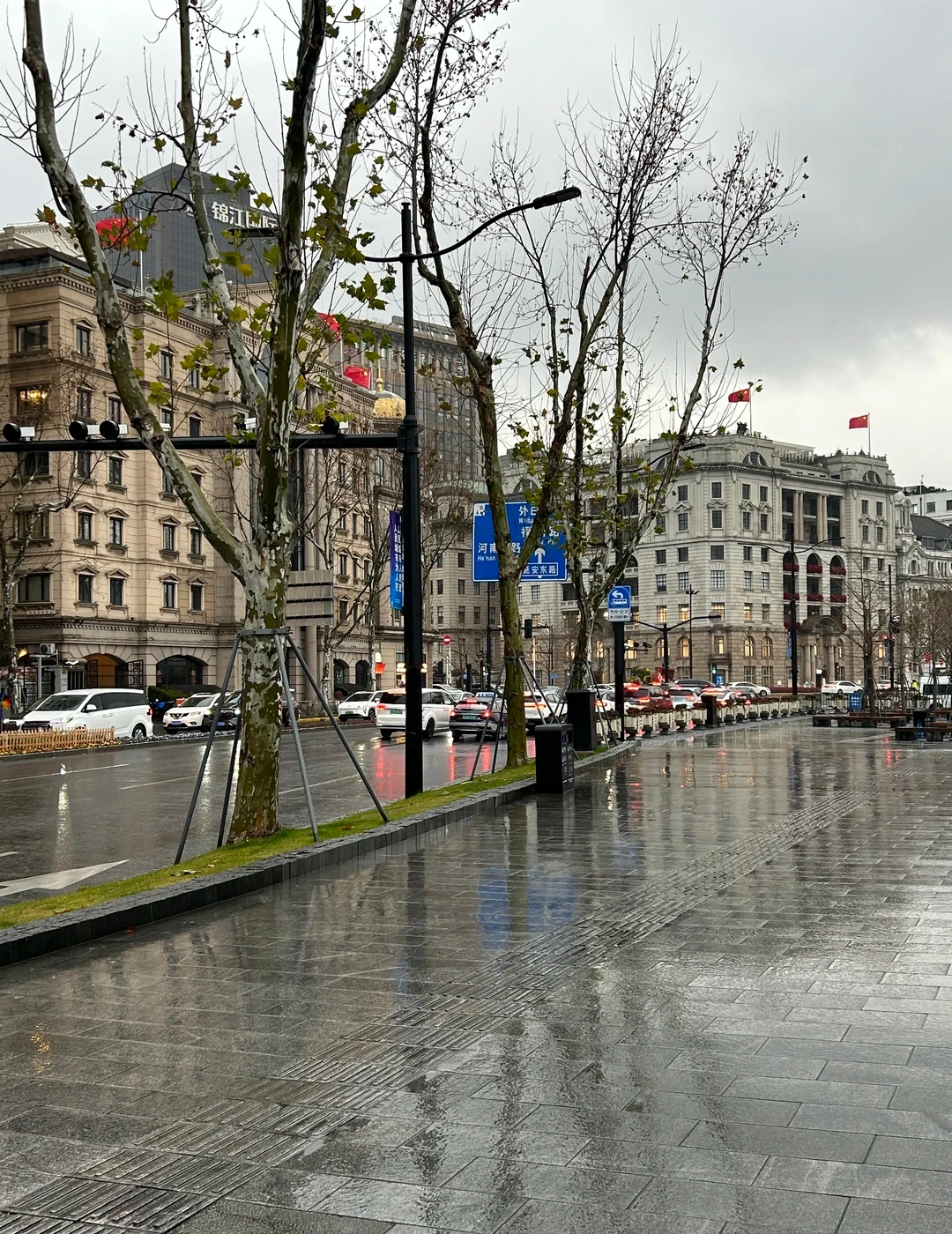
A winter visit can appeal if architecture and the city itself matter more than spring flowers or leafy parks. The city’s overview describes winter as cold and damp, with snow uncommon.
This January account shows a wet Bund street, bare branches and reflected lights. The visitor’s short caption describes enjoying the rain-soaked city while finding it very cold.
I would consider December–February for someone comfortable with that kind of urban winter experience. I would choose another season for someone expecting reliably mild evenings outside.
A Shanghai snow photograph is a poor reason by itself to choose winter: the city’s guidance notes that some years have no snow at all. The rainy January example is a useful counterweight to a winter album made entirely from unusual snow days.
For 2027, compare the seasonal shortlist with the actual holiday dates
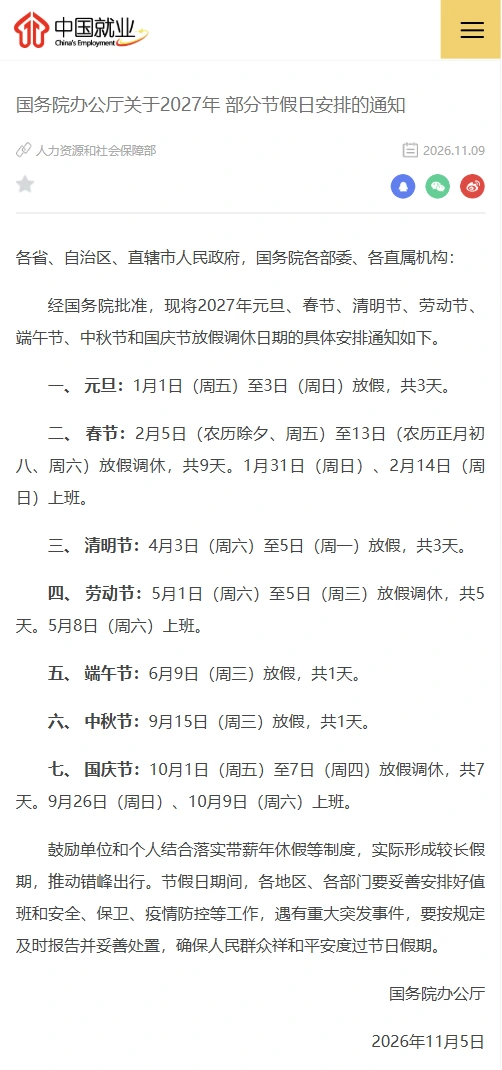
The State Council’s mainland holiday schedule for 2027 gives a separate calendar check.
The notice lists Spring Festival on 5–13 February, Qingming on 3–5 April, Labour Day on 1–5 May and National Day on 1–7 October.
This is why my autumn starting choice comes after the early-October holiday. For cherry blossoms, the early-April window overlaps Qingming, so the weather-and-flowers choice also has a holiday consideration.
These are official holiday dates, not a measurement of crowds or a guarantee that the following week will be cheap. They help compare dates honestly before the final choice is made.
Finish with the forecast for the days you can actually travel
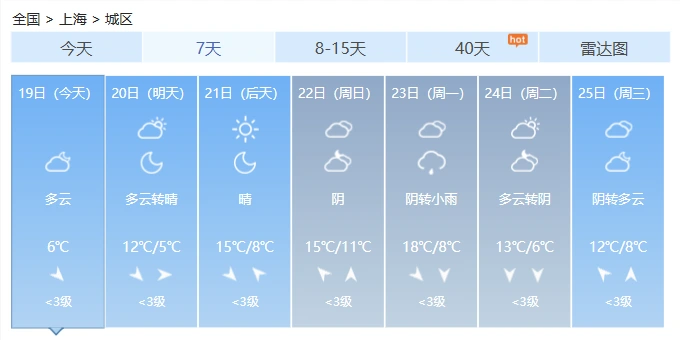
The final check is the Shanghai urban-area forecast. The real screenshot below was captured on 19 November 2026.
20日(明天) is 20 November: 12°C / 5°C, 多云转晴, meaning cloudy becoming clear. The following day shows 15°C / 8°C and clear weather. The single 6°C in the “today” column is the remaining overnight forecast; it is not that day’s high.
Even in an autumn shortlist, a particular visit can therefore be cool. The place label is 上海 → 城区, the urban area; this is not a separate forecast for every outlying park.
A finished choice has three parts: the experience you want, dates that fit the correct holiday year, and the actual forecast close to departure. For a first city visit I would begin with post-holiday October to early November; for flowers or coloured trees, I would use the more specific windows above.
My first shortlist is post-holiday October to early November for a general city visit, or late March–early April for cherry blossoms. A tree-colour priority moves the choice later, using the specific ginkgo or water-redwood window.
The choice is complete when you can name the experience you want, match it to the correct holiday year, and read the forecast for your actual days. A summer or winter trip deserves expectations suited to that season, rather than the appearance of Shanghai in a different month.
Sources checked 19 November 2026. Visitor capture dates and posting dates are distinguished above. The cherry festival dates and heat report are from 2026; the holiday notice is for 2027. Official seasonal photographs illustrate their named locations and do not report current leaf colour.
Questions and updates
Comments may be reviewed before they appear.
Your comment and chosen name may be published. We store your IP address and browser details to help moderate comments.