
China High-Speed Train Seats: First vs Second Class, Photos and Prices
For a short daytime ride, I would usually start with second class. First class is worth comparing when the four-across cabin and extra comfort details matter enough to justify the actual fare difference. It does not make the same train arrive sooner.
For two people, second-class D/F is already a two-seat side with no middle seat. First class is therefore an upgrade in the cabin and seat, rather than a requirement for sitting as a pair.
This guide starts with your route and date already in mind, and finishes with a class and a seat preference you can explain. The real visitor photographs show the cabin, seat labels, tables, foot support and charging. A dated official example then puts a price on the choice: ¥57 second class or ¥91 first class for the same 59-minute train.
Find the useful seat letters, see the complete fare example, or distinguish business class. The official booking entry is 12306 in English.
Second class: five seats across, with a useful two-seat side
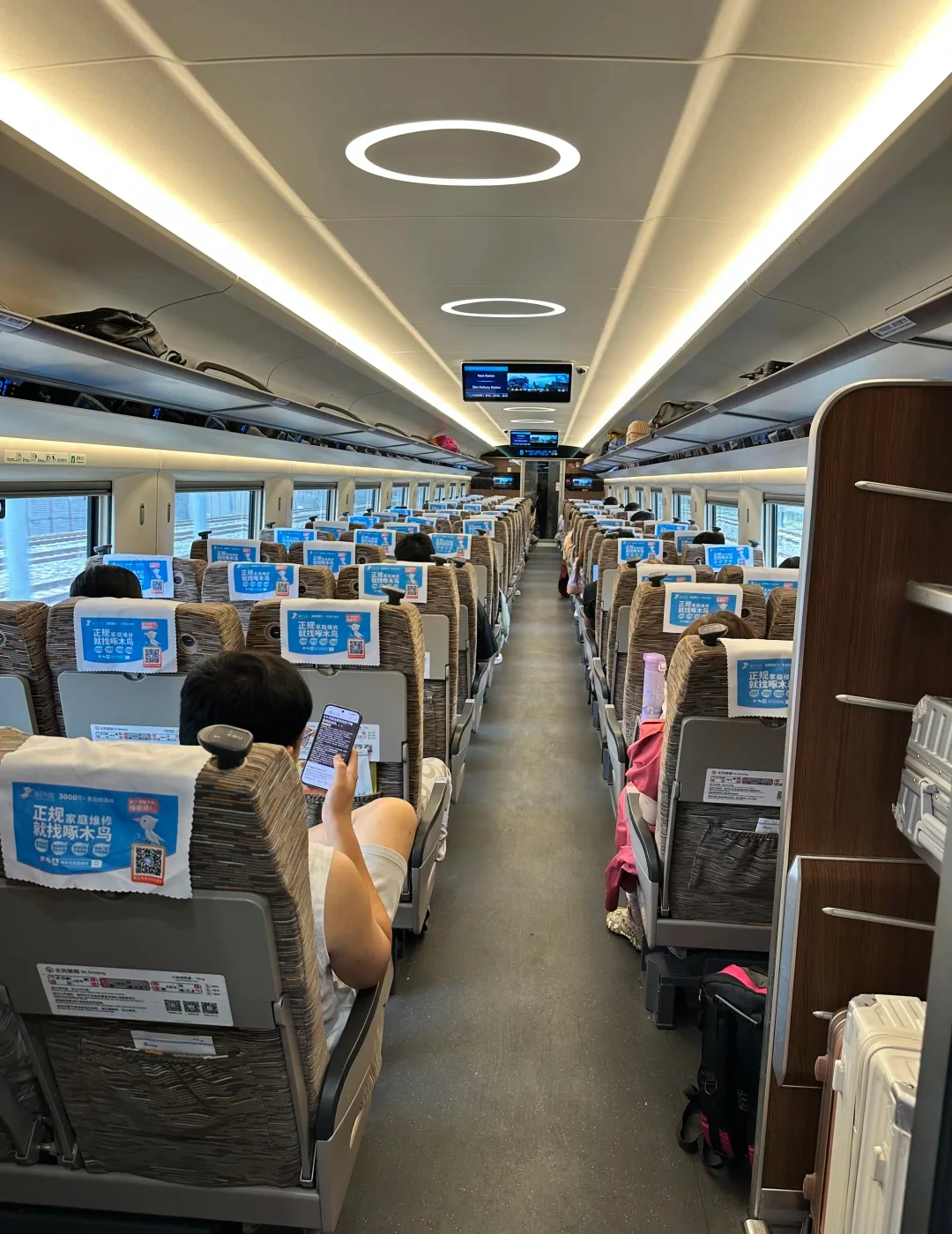
Second Class / 二等座 is my starting choice for a budget-conscious daytime journey. The usual layout has three seats, an aisle, then two seats. This photograph from a visitor’s G988 account makes the difference visible: a bank of three is on the left of the image and a separate pair on the right.
The pair matters. Two people can share that side without a third passenger sitting between them. There is no need to buy first class solely to have a two-seat side. The seat letters below distinguish the pair from the three-seat bank.
The account describes an intelligent Fuxing train, and another second-class visitor also praised the room around the seat. These are helpful real examples of why second class can be perfectly comfortable. They do not establish a universal seat width, legroom measurement or noise level for every train. The class gives you a useful starting expectation; the particular train set supplies the furniture.
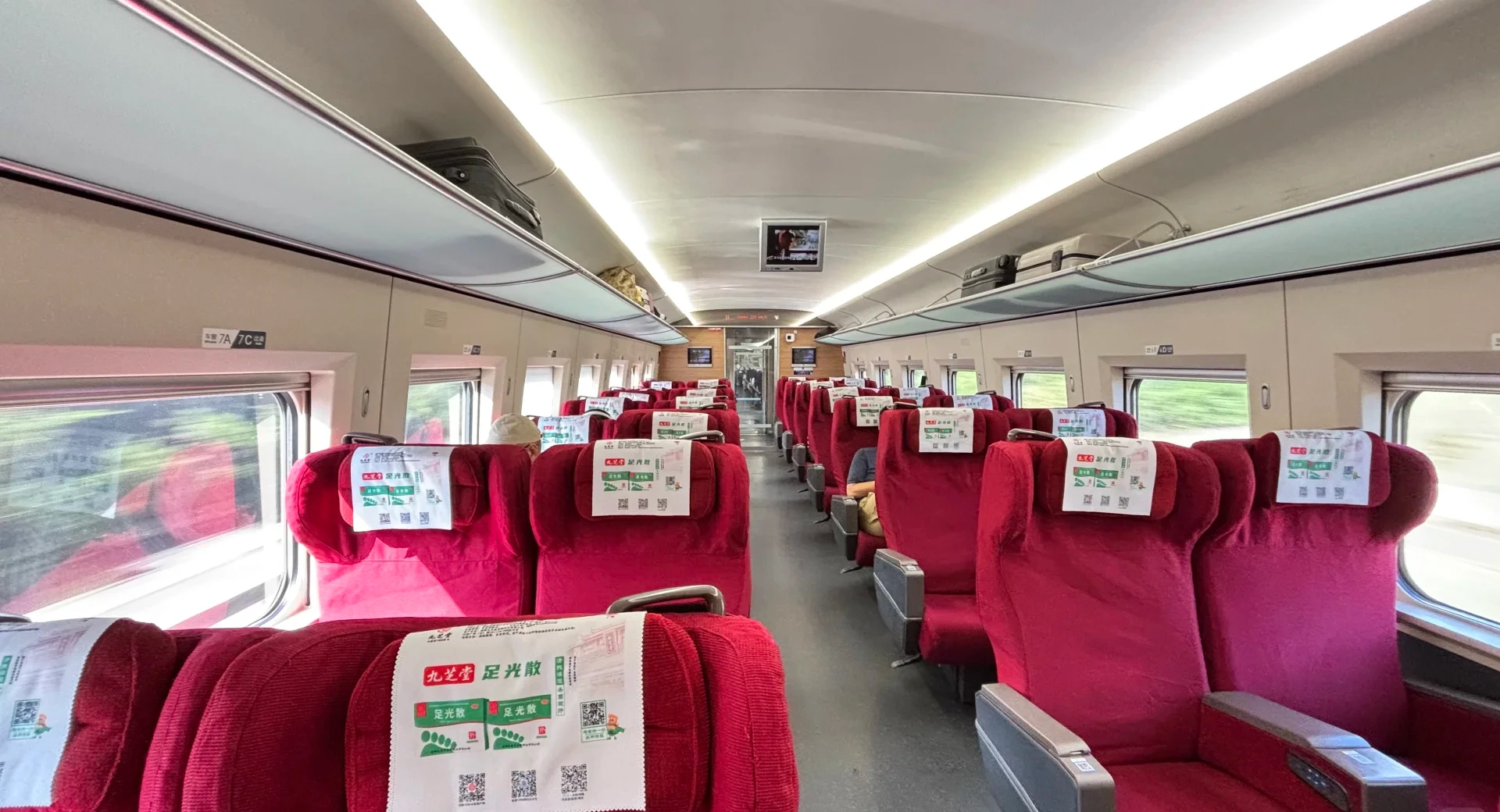
First class: two seats on either side of the aisle
First Class / 一等座 usually has a two–aisle–two layout. The red-seat photograph shows that arrangement clearly. There is no B middle seat in this layout.
That is a useful upgrade when having fewer seats across the cabin matters to you. For a longer ride, the combination of the seat, available space and leg support may be worth paying for. For a short ride, the extra fare may be money you would rather keep for the rest of the trip.
Several visitors described their first-class cabin as quiet. One reader in the comments reported a noisy journey instead. First class is a seating product, not a guarantee that the other passengers will be silent. I would base the purchase on the layout and the fare difference, with any quietness as a welcome extra.
The photographs in this guide come from different journeys. Upholstery colour alone does not identify a train model, and a red seat is not a promise about the exact cabin on your departure.
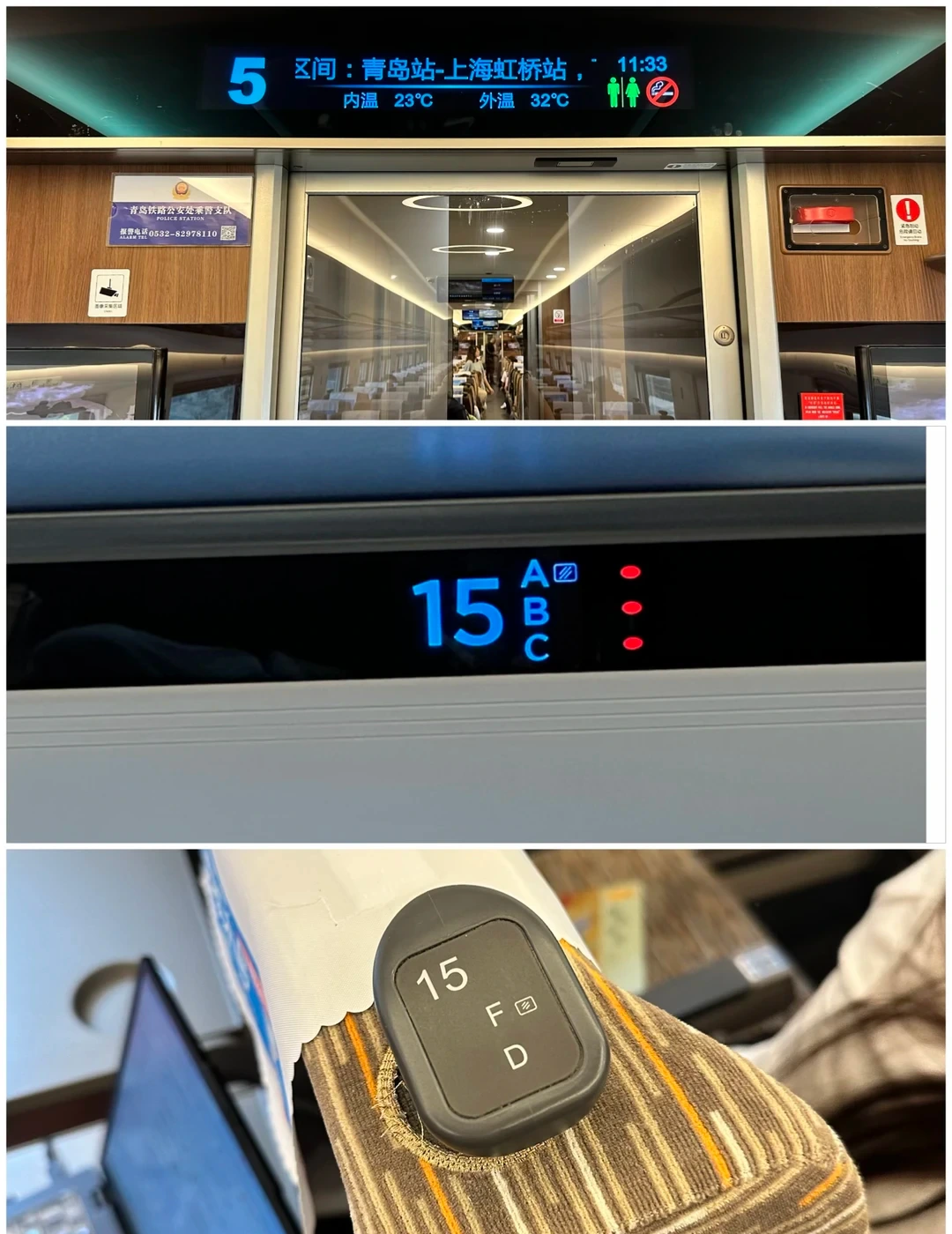
A/F are windows; C/D are aisles; B is the middle
In the usual second-class layout, the letters are A B C — aisle — D F. A and F are windows, C and D are aisles, and B is the middle seat. First class normally uses A C — aisle — D F.
The visitor’s actual signs below show both sides of second class. The middle panel reads 15 A B C; the lower panel reads 15 F D. The latter is the same two-seat side viewed from its own angle.
For two travellers who want a whole side of the row, my first second-class preference would be D/F in the same row. For a solo traveller, A or F is the window preference; C or D is the aisle preference. Three people can aim for A/B/C together. A preference is not a guarantee that those seats will be available or assigned together.
China Railway’s own explanation confirms these letters using intelligent Fuxing trains as its example. The practical point is the relationship to the aisle, rather than expecting every interior to match one photograph.
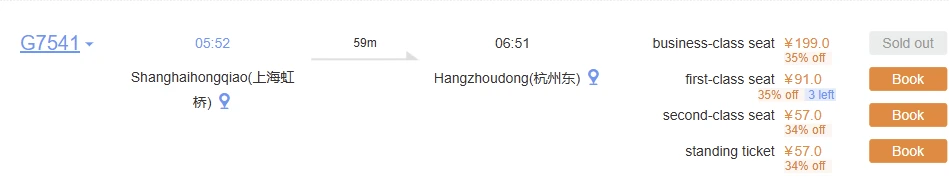
A real same-train comparison: ¥57 versus ¥91
Compare the extra amount for the same train and the same stations. In the official 12306 result captured on 19 November 2026, G7541 for 20 November 2026 showed:
| Departure | 05:52, Shanghaihongqiao / 上海虹桥 |
|---|---|
| Arrival | 06:51, Hangzhoudong / 杭州东 |
| Journey | 59 minutes in either class |
| Second class | ¥57 per person |
| First class | ¥91 per person |
| Extra | ¥34 per person; ¥68 for two |
For this 59-minute example, I would choose second class if keeping the cost down were the priority, with D/F as the preferred pair. I would choose first class if four seats across the cabin were worth the extra ¥34 to me. Both choices reach the same station at the same time.
That is a complete comparison for this departure, not a fixed price for the route. The page showed discounts and remaining availability, which can change. A general claim that first class always costs 1.4 or 1.6 times second class is less useful than the actual additional amount for your train. The official entry is China Railway’s English 12306 website.
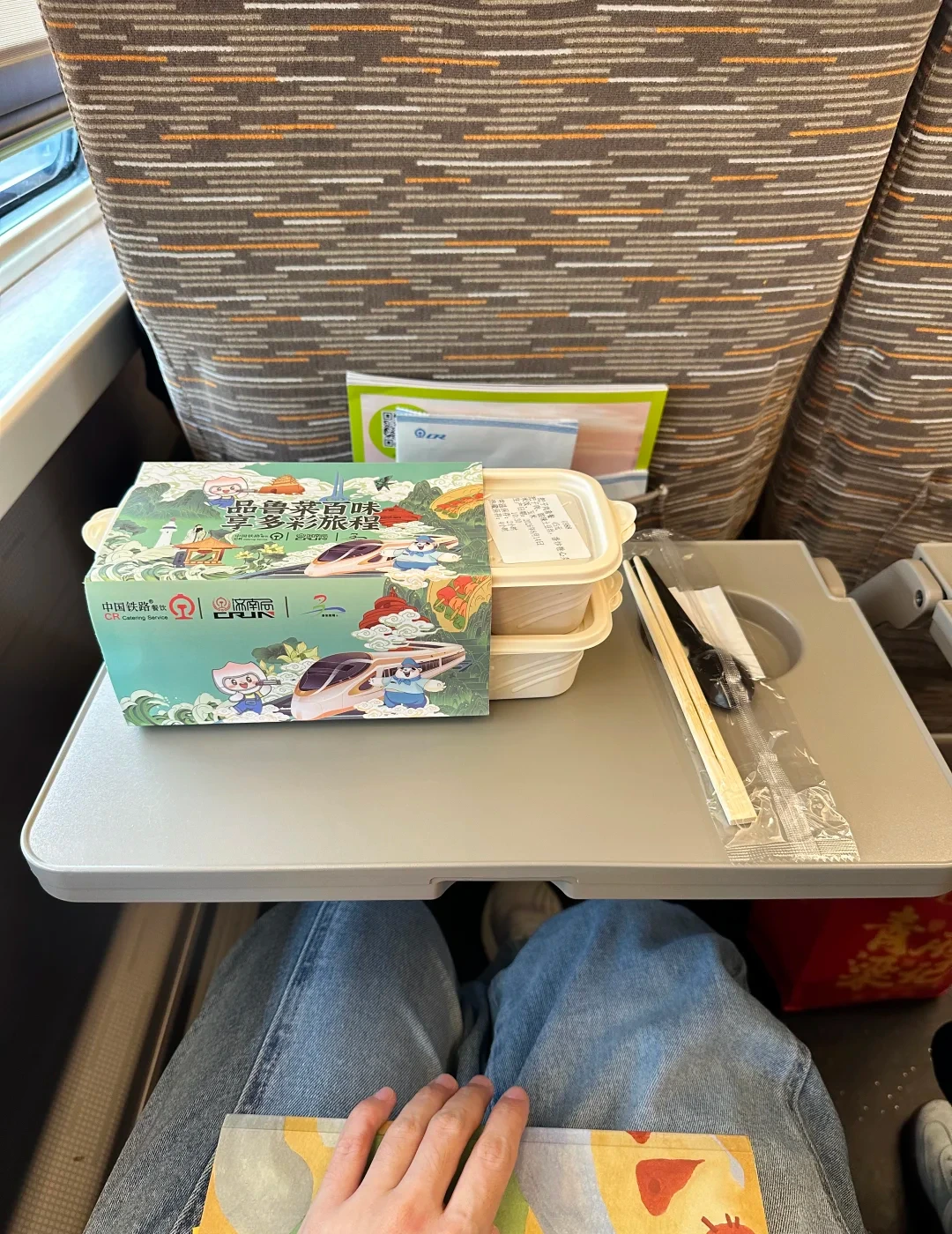
Second class already has a table for a meal
The photograph below shows an actual second-class table supporting a boxed meal. It belongs to the same intelligent Fuxing account as the cabin and seat signs above.
That is useful if your concern is whether second class offers somewhere to eat or put a small item. A table is not exclusive to the higher class. In this photographed seat, it is mounted on the back of the seat ahead.
For working, the useful questions are how much surface you need and whether the seat in front, your screen angle and your own body position will be comfortable together. The picture shows a meal in place; it does not measure laptop clearance or demonstrate every size of computer.
I would not upgrade solely because I assumed second class had no table. The distinction is the particular table arrangement and the space around it, rather than the existence of any table at all.
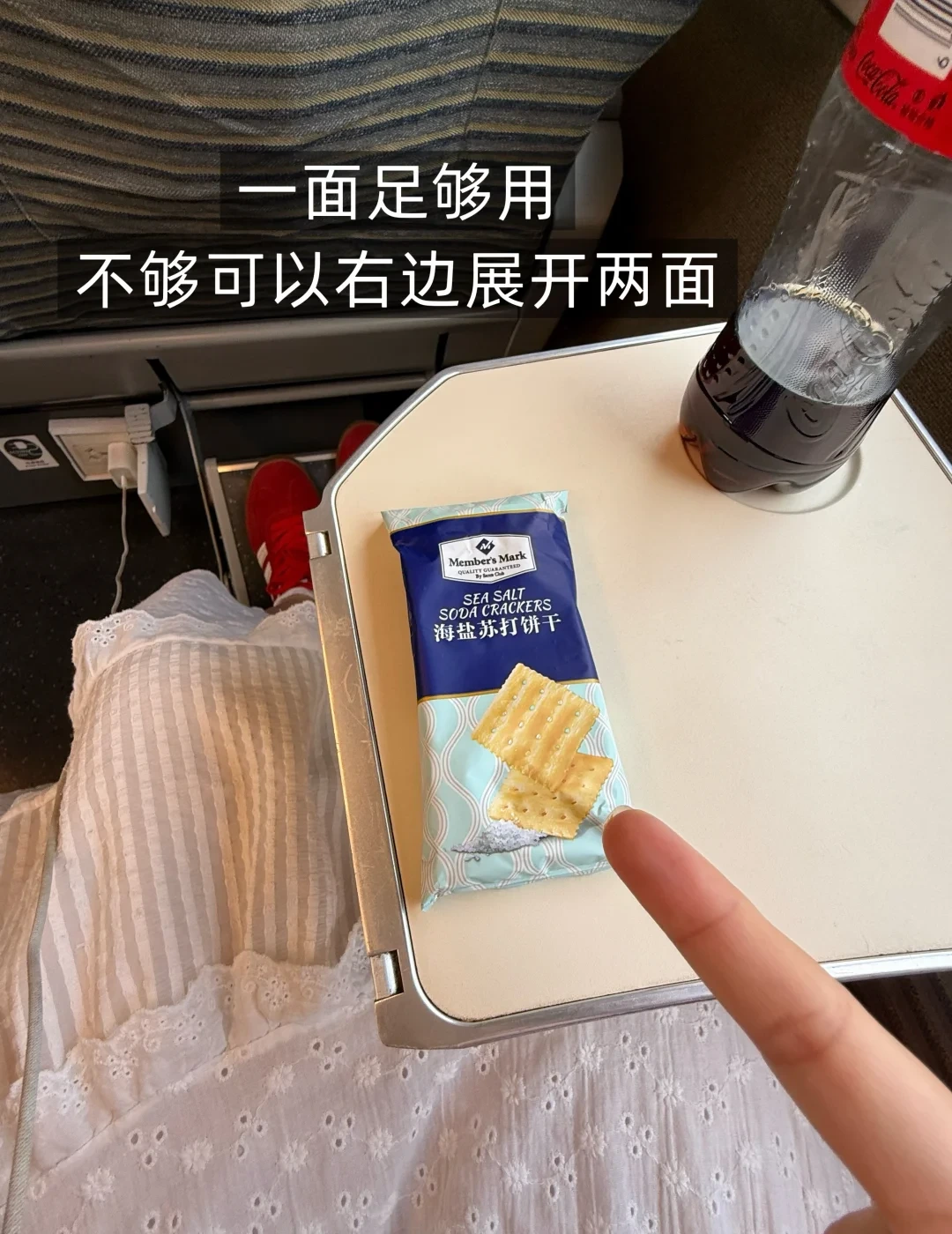
A first-class table may be stored in the armrest
The illustrated first-class seat uses a folding table stored at the armrest. Here it is already open, with crackers and a bottle on it. The author’s annotation says one panel can be used on its own, with another panel opening out for more surface.
This is a real feature of that seat, and it helps explain why a first-class setup can feel different when eating or working. It is not proof that every first-class table is larger than every second-class table.
There are other configurations. CRRC’s description of the technically upgraded intelligent Fuxing train includes first-class tables at the armrest and in front of the seat. A generic instruction to search only inside the armrest would therefore be incomplete for all trains.
The useful expectation is a model-dependent table arrangement. This photograph shows the finished open table; it is not a full opening-and-stowing tutorial for every type of seat.
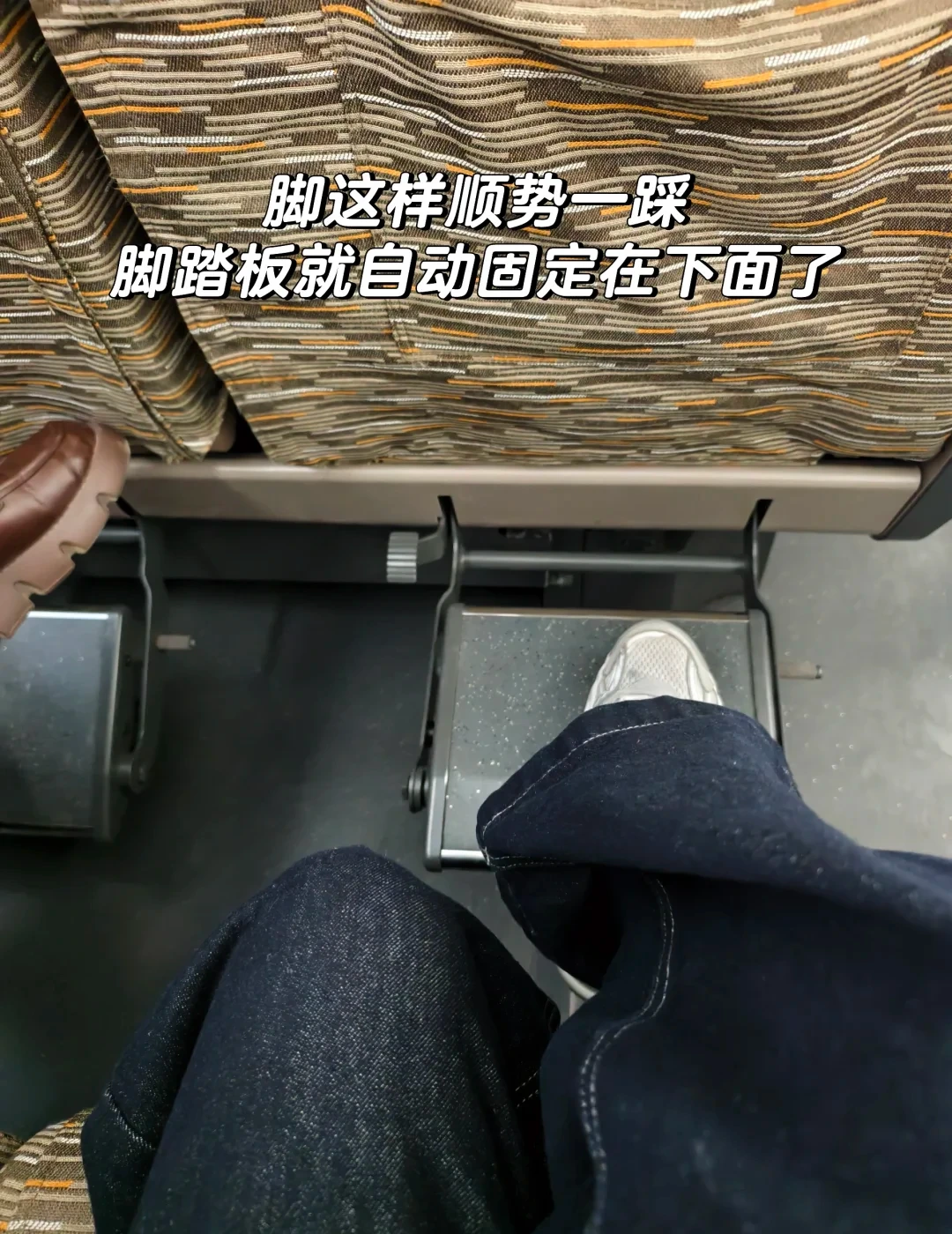
The footrest can matter more on a long ride
This first-class photograph shows a passenger’s foot resting on a deployed support beneath the seat ahead. It is one of the details that may matter more as the journey gets longer.
The author of this 3,371-like detailed account photographed the support, its release control, the backrest button and the table. They found the footrest useful, but were fairly modest about how much difference it made to comfort. That is a more helpful expectation than an automatic promise of a luxurious ride.
For someone who dislikes having their feet unsupported for hours, this sort of feature can be a reason to compare first class. A footrest is not a measurement of legroom and does not mean every passenger can stretch out fully. The train model, seat position and your own proportions still affect the experience.
The photograph establishes what this particular support looks like in use. A class-selection guide can explain the benefit without assuming every release mechanism is identical.
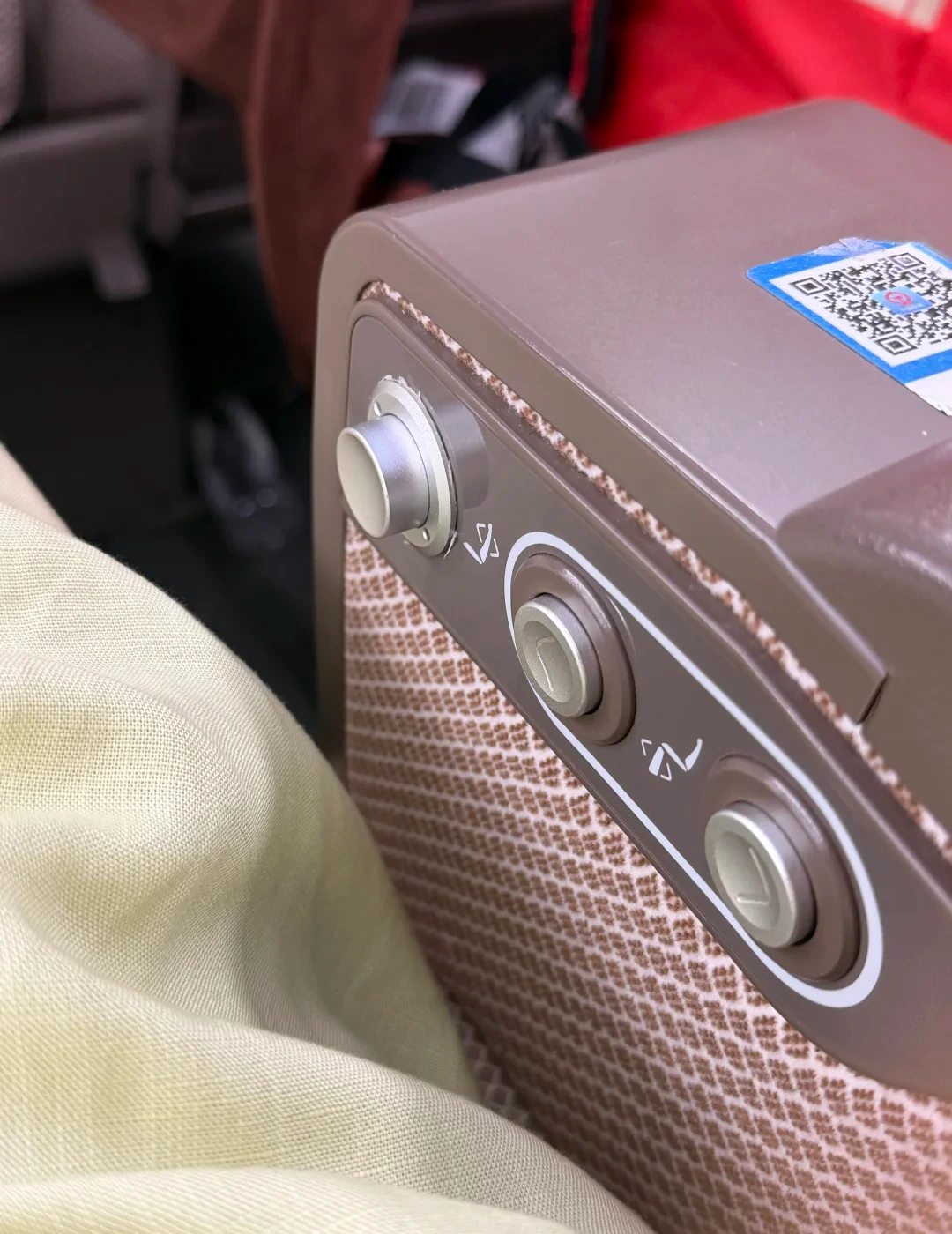
The seat controls vary, even within first class
The photograph below shows a first-class armrest with three separate seat-control buttons and pictograms. This visitor identified their service as G7988.
Another detailed first-class account instead photographed a single round manual adjustment button. These two real examples are a reason to be cautious with tutorials that present one control as the only first-class design.
There is also a distinct product called Premium First Class / 优选一等座. CRRC’s 2024 description identifies its shell-style electrically adjustable seats separately from ordinary first class. It should not be confused with Business Class / 商务座, nor assumed to be offered on every departure.
I would treat the exact class label and actual seat design as the useful information. This G7988 photograph is not being identified as a particular CR400 subtype or as premium first class: the visible buttons alone do not establish that model or fare category.
Second class can have both USB and an AC outlet
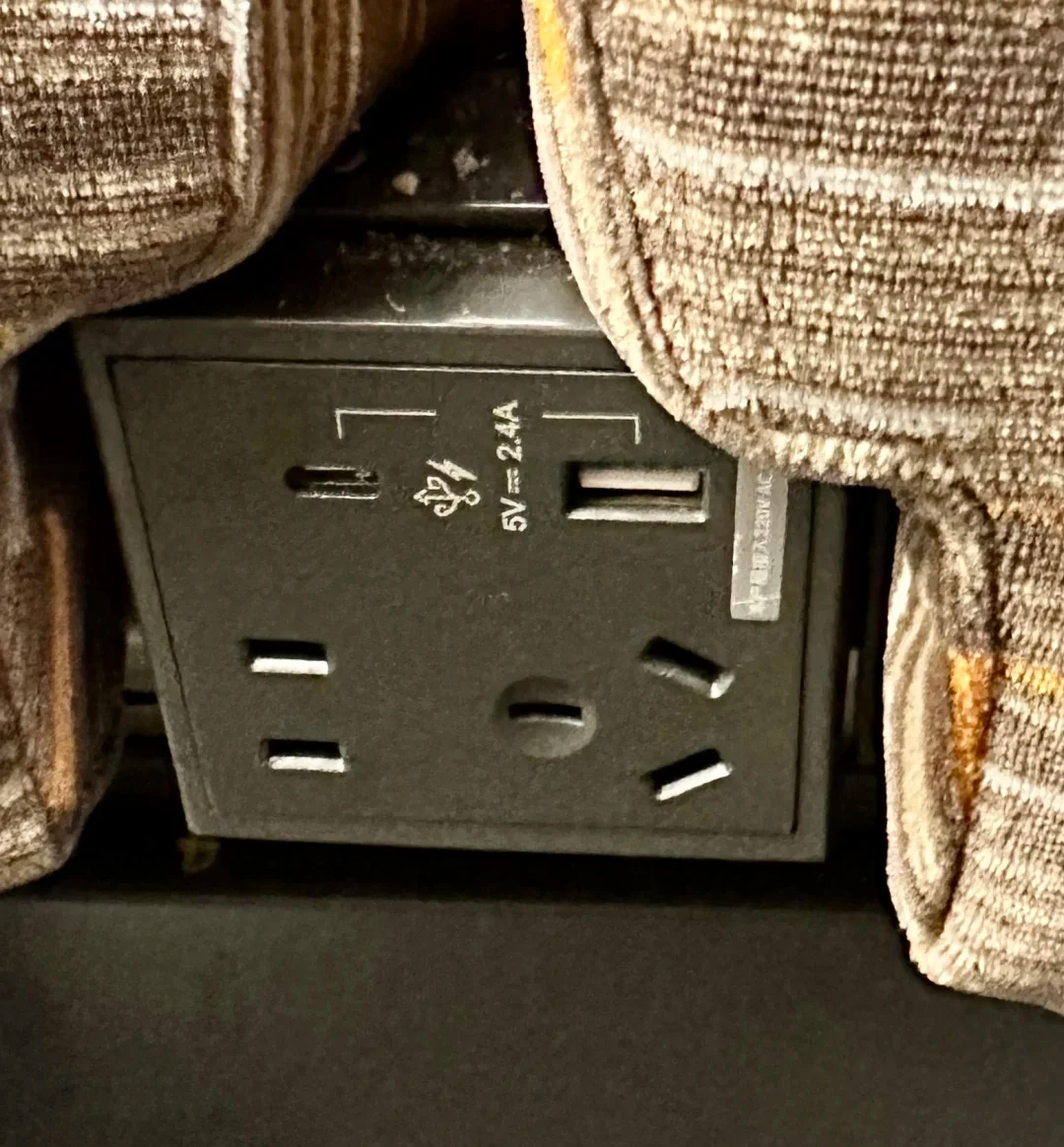
The close-up below comes from the second-class intelligent Fuxing account. The actual panel shows USB ports and an AC outlet beneath the seats. The album also records USB access on the seat backs.
This is a useful correction to the idea that charging is a first-class-only benefit. The real distinction is the equipment on the train you take, the outlet location and whether it is convenient for your cable.
A photograph of one panel cannot establish one independent outlet per passenger, fast charging, or compatibility with every overseas plug. The pictured USB label reads 5 V / 2.4 A; it does not promise USB-C laptop charging.
Power alone would not be my reason to upgrade from this illustrated second-class seat. Its actual outlets are more informative than a blanket claim that second class has none.
First-class charging can be nearer the armrest
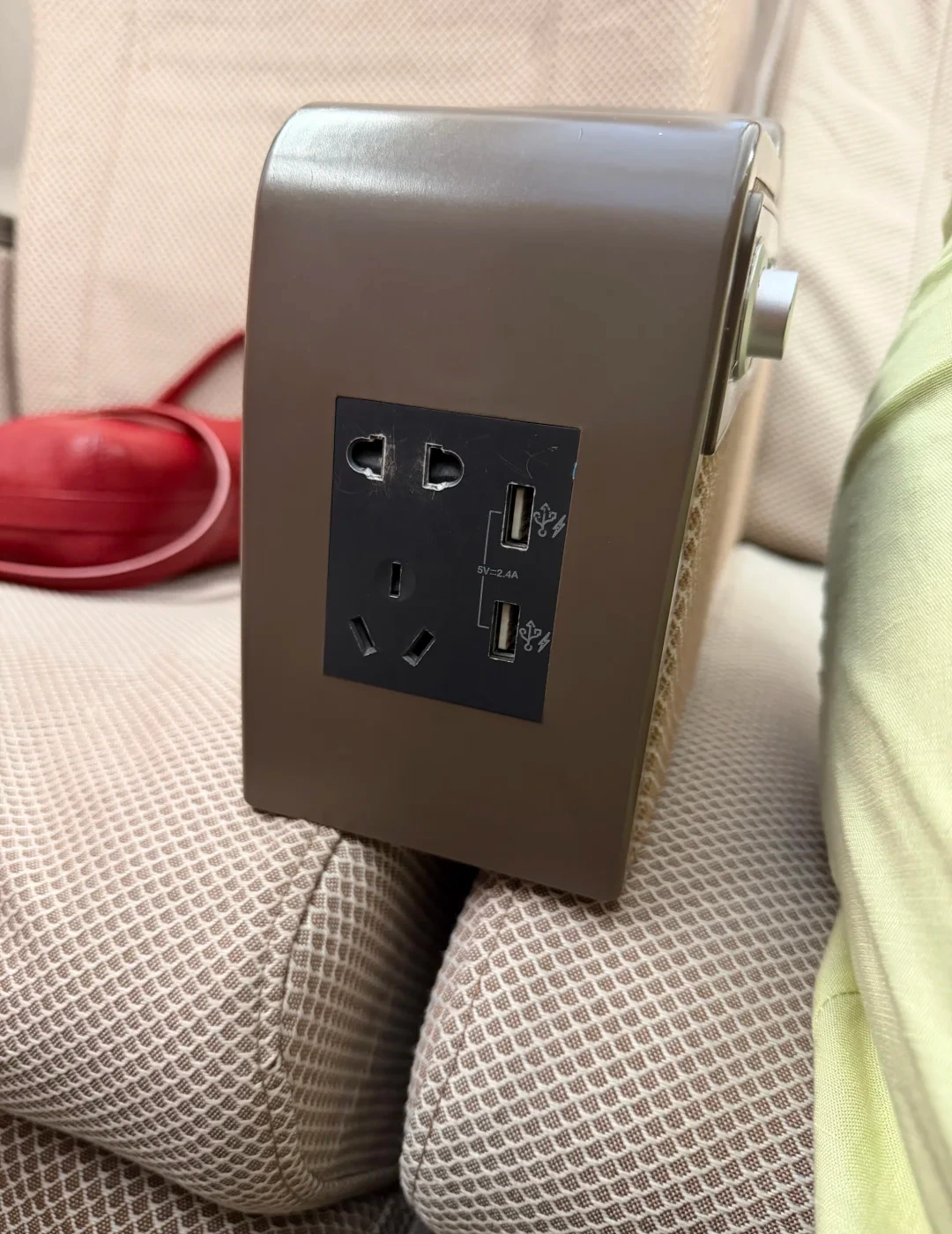
In this first-class example, an AC outlet and two USB ports are incorporated into the armrest area. The location may be easier to reach than an outlet below the seats.
That is the feature this photograph proves. It does not establish that every first-class seat has a dedicated outlet, or that every model uses this position. Another first-class account in the research set actually photographed an outlet low down by the seat ahead.
For someone who needs frequent access to charging while working, outlet position is a practical comfort detail. It belongs alongside the table and seat arrangement in the decision. It should not replace the basic comparison of fare and journey length.
The USB markings and socket openings in the image are the equipment of this photographed seat. I would not infer a particular laptop-charging capability from the class name.
A snack box in one photo is not a meal guarantee
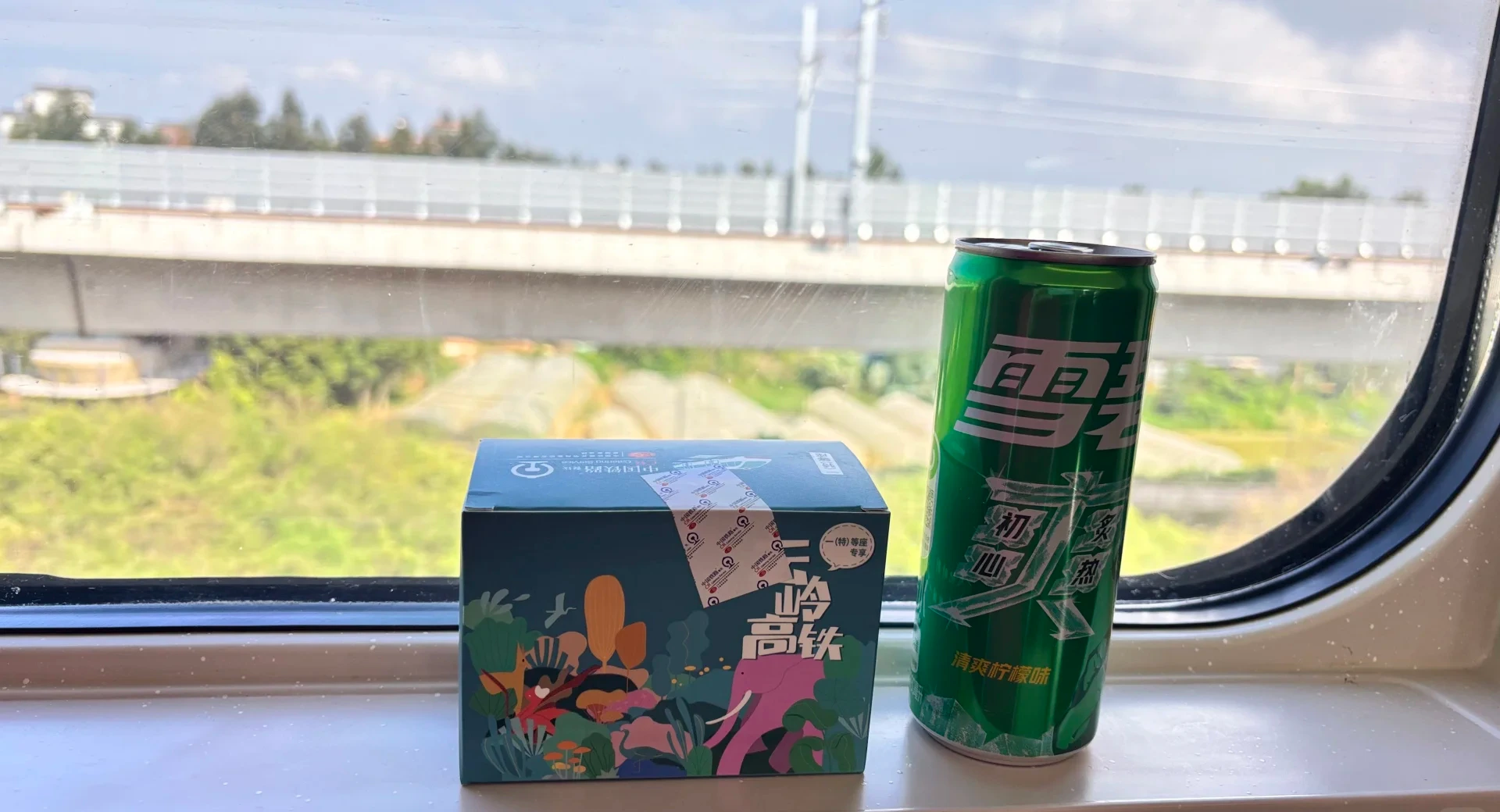
The photograph shows a small snack box and a canned drink in a first-class journey account. It is a genuine part of that visitor’s experience.
However, the author of the detailed 3,371-like first-class guide said no complimentary snacks or water were handed out on their trip. Those two accounts are enough to reject the idea that every first-class purchase necessarily includes the photographed refreshments.
I would therefore value ordinary first class for the seat and space, rather than price an assumed free meal into the upgrade. A snack box is also different from a hot meal. Neither the photograph nor the class name establishes a universal menu.
The same reasoning applies to lounge expectations. Ordinary first class, premium first class and business class are different labels. A service described for one product should not be silently included in the promise for another.
Business class is a separate comparison
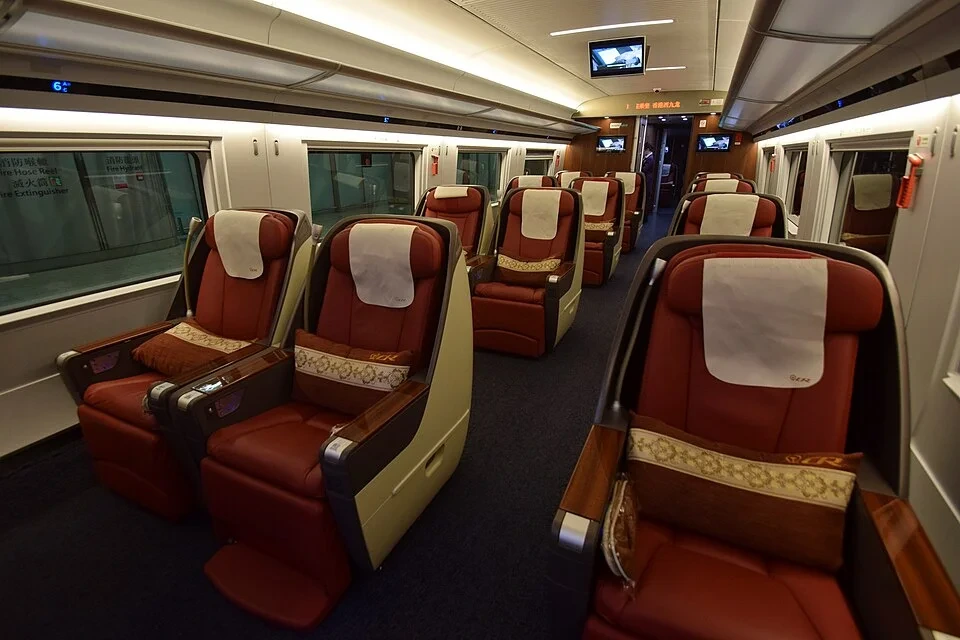
Business Class / 商务座 is a separate category from first class. The photograph below shows the cabin of a CR400BF-A train, with a pair of large seats on one side and individual seats on the other.
That solo side answers a different need from “no middle seat”: it can mean no passenger sitting directly beside you. First class normally still has pairs. China Railway describes business layouts as commonly two-plus-one or one-plus-one, so this photographed arrangement is an example rather than the only configuration.
If travelling together, a pair and two seats separated by an aisle are different arrangements. A class label alone does not answer which one your party will receive.
Photo: Baycrest — Wikipedia user, CC BY-SA 2.5; resized from the original. This existing cabin photograph is retained to distinguish business class from the visitor photographs of first and second class above.

My choice for the illustrated 59-minute journey would be second class, with D/F as the preferred pair. The alternative is first class for an extra ¥34 each in the captured example. On a longer trip, I would give the seat and support features more weight, while still comparing the actual additional fare.
A useful finished decision names the class, the preferred seat arrangement and the extra amount you are willing to pay. For example: “Second class, D/F in one row if available, because saving ¥68 for two matters more to us on this short ride.” Or: “First class, a same-side pair, because four seats across is worth the extra ¥34 each to us.” Neither preference guarantees a particular seat assignment.
Updated 19 November 2026. Visitor pictures are credited to the accounts that shared them; they come from different train sets and journeys. The official fare screenshot was checked on 19 November for travel on 20 November 2026. Research covered visible post bodies and available still images, rather than personally riding or testing these seats. Ticket purchase, payment and boarding were not performed for this comparison.
Questions and updates
Comments may be reviewed before they appear.
Your comment and chosen name may be published. We store your IP address and browser details to help moderate comments.