
Best Time to Visit Zhangjiajie: Clear Views, Flowers and Winter Snow
 JamesArticle updated
For a first Zhangjiajie trip, my starting choice is the second half of October. Early to mid-November is another autumn window to compare. For flowers and new green growth, investigate April and May. For snow-covered peaks, compare December to February as a deliberate winter trip.
The trade-off is what you most want to see. Clear sandstone pillars, cloud moving between the peaks, flowering shrubs and snow each depend on different conditions. The same month can include an excellent panorama and a day when the distant view disappears.
This guide focuses on the Wulingyuan / Zhangjiajie National Forest Park landscape, with a separate photograph identifying Tianmen Mountain. They are different scenic areas. UNESCO describes Wulingyuan’s distinctive sandstone pillars; a travel caption calling all of Zhangjiajie “karst” blurs that distinction.
Start with what would make the trip worthwhile
- First mountain trip
- My starting shortlist: second half of October.
- Autumn scenery
- Compare mid-to-late October to mid-November, with current weather in mind.
- Spring flowers
- April–May; exact flowering varies.
- Green woodland
- Summer and early-autumn examples below show a different appeal from peak red leaves.
- Snow and rime
- December–February, with snowy surfaces and possible operational changes.
Compare the spring photographs, see winter conditions, or read the local forecast.
My first choice: the second half of October
For a first trip focused on the sandstone pillars and time outdoors, I would start with the second half of October. Early to mid-November is another window to compare if cooler conditions suit your plans.
The Hunan government’s autumn report, published on 14 October 2026, cites the local meteorological bureau’s recommended autumn-scenery period as mid-to-late October through mid-November. That supports an autumn shortlist, rather than a guarantee of clear views on every day.
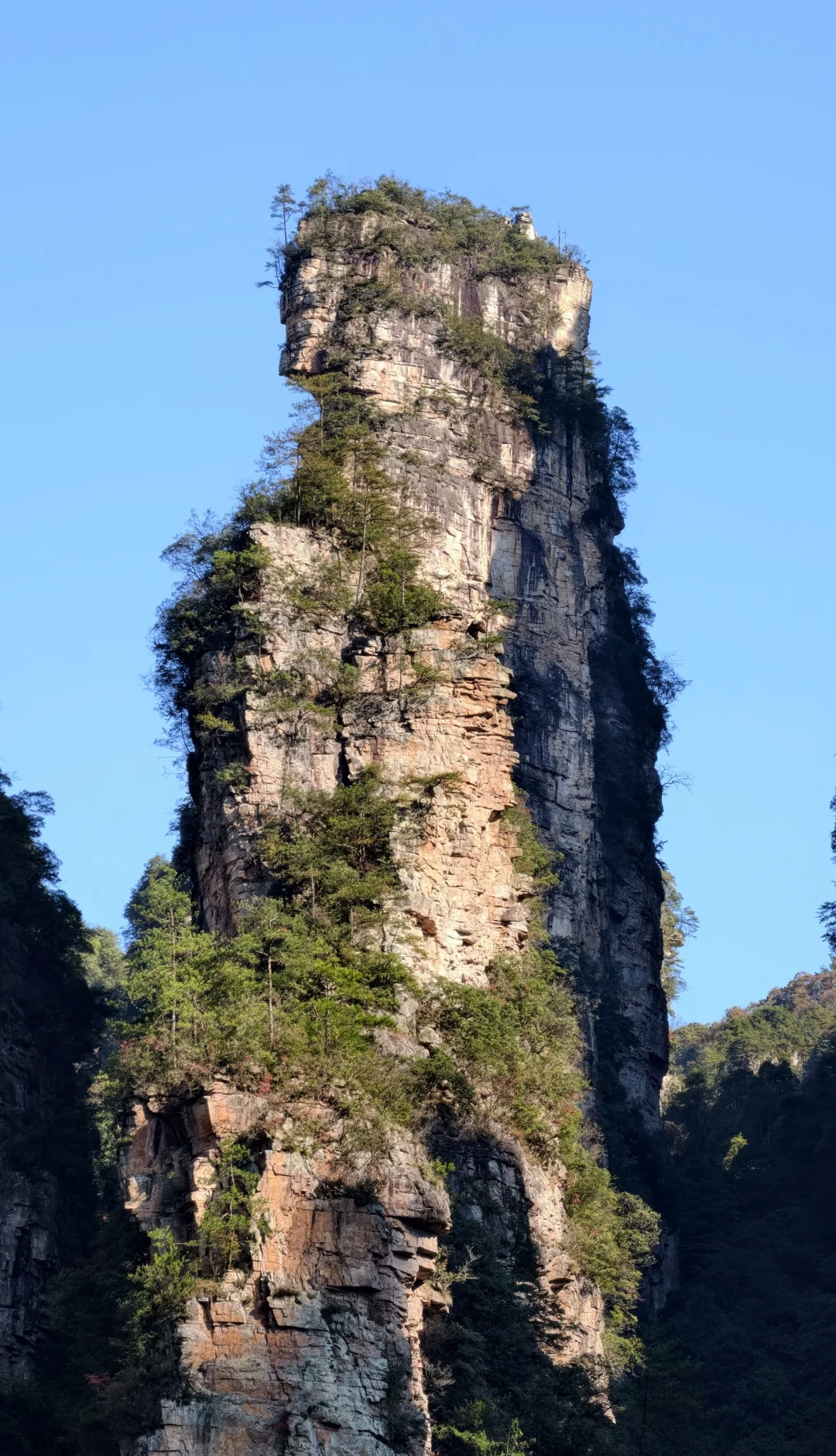
The photograph below comes from a post titled “11.14”. It shows a forest-park sandstone pillar under a blue sky, with vegetation on its ledges. In the same account, the visitor described fog obscuring another part of the park. Different conditions can occur within one visit.
Autumn appeals to me for the combination of the rock landscape and seasonal colour. The pines do not all turn red, and an autumn date does not require every slope to be covered in bright leaves to make a worthwhile trip.
For rhododendrons, investigate April and May
April into May is the spring alternative I would investigate for flowers and fresh green scenery. The date needs to fit the actual flowering period, not simply a generic “spring in China” label.
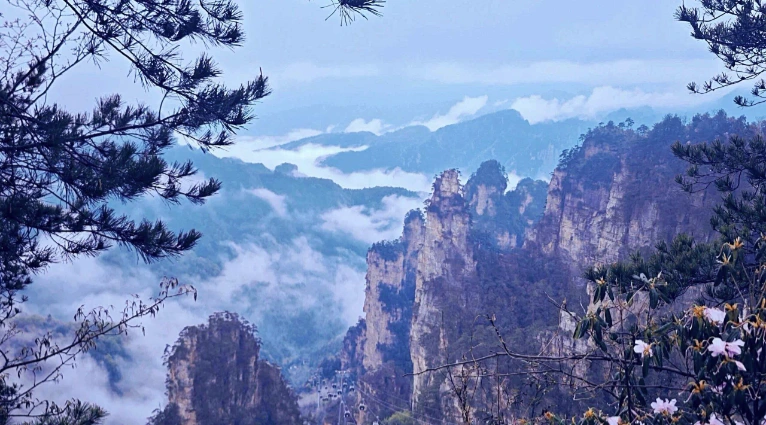
A Hunan government report on 22 April 2026 described rhododendrons flowering in the national forest park. A Rednet field report on 27 April also documented flowers among the peaks at Tianzi Mountain / 天子山.
The photograph below belongs to that Tianzi Mountain report. Pink flowers are visible along the right-hand edge, with sandstone peaks, pines and cloud behind them. It records a flowering spell in April 2026; the timing for another year can move.
I would compare late-April and May dates when flowers are the main reason for choosing the season, then separate the flower report from the day’s visibility. The next example shows why a recommended spring month can still produce a very different mountain view.
Spring flowers and a clear panorama are separate questions
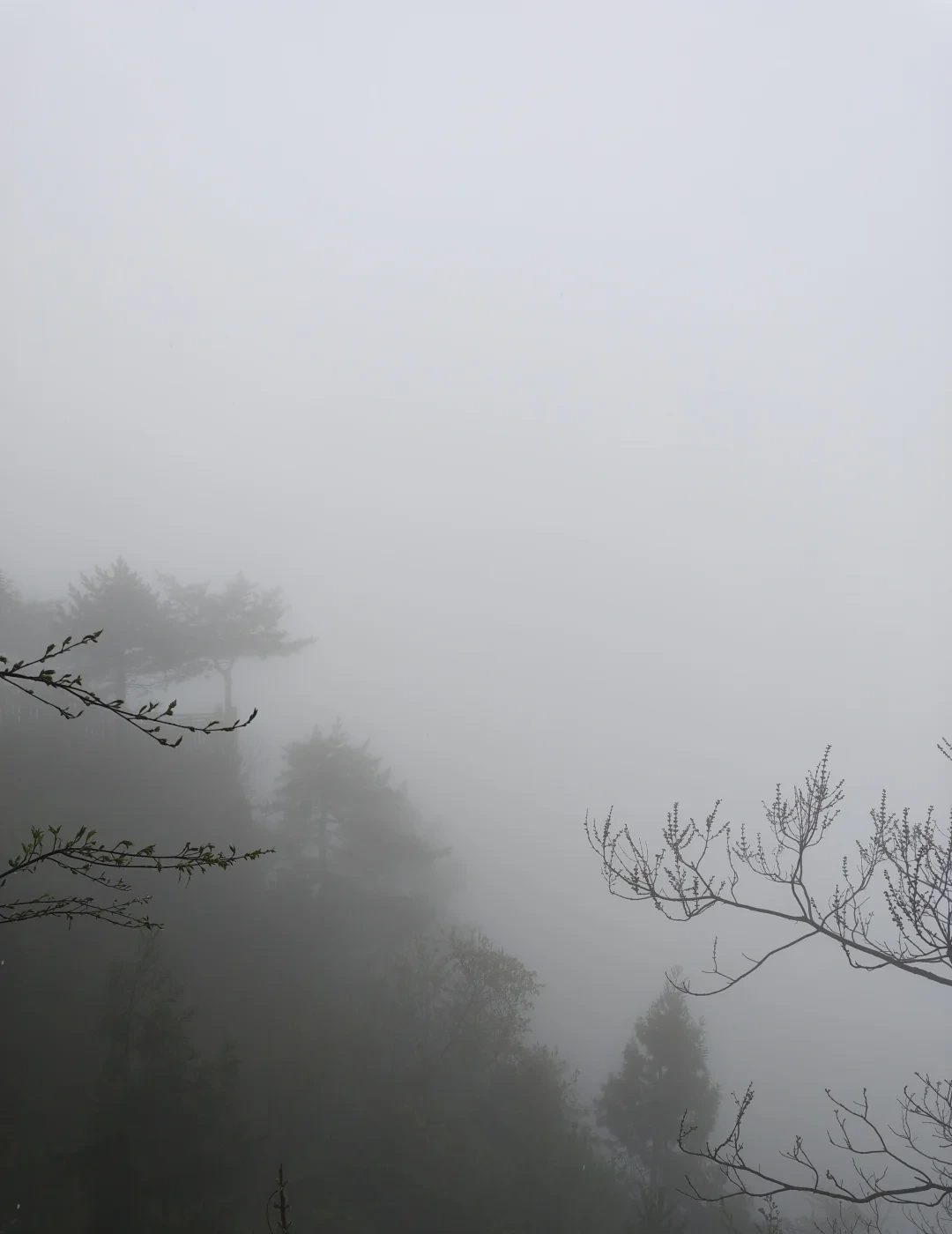
This is Tianzi Mountain on 13 April in a visitor’s account: nearby branches remain visible, while the mountains disappear into grey-white fog. The author described rain and very little to see.
That is a different experience from the flower-and-peak scene above, although both belong to spring. Cloud below a viewpoint can make a dramatic landscape; cloud around the viewpoint can hide it.
Another visitor described rain on 2 May, followed by the fog retreating enough to see the forest-park pillars. These accounts are useful together: rain does not guarantee either a ruined day or a sea of clouds.
If a distant panorama is what would make the trip worthwhile, I would keep as much flexibility around the mountain days as the wider itinerary allows. A seasonal recommendation cannot resolve the timing of one rain or fog spell. The forecast is useful closer to departure, while a photo from someone else’s visit remains an example of that visit.
June to August: green mountains, with rain in the picture
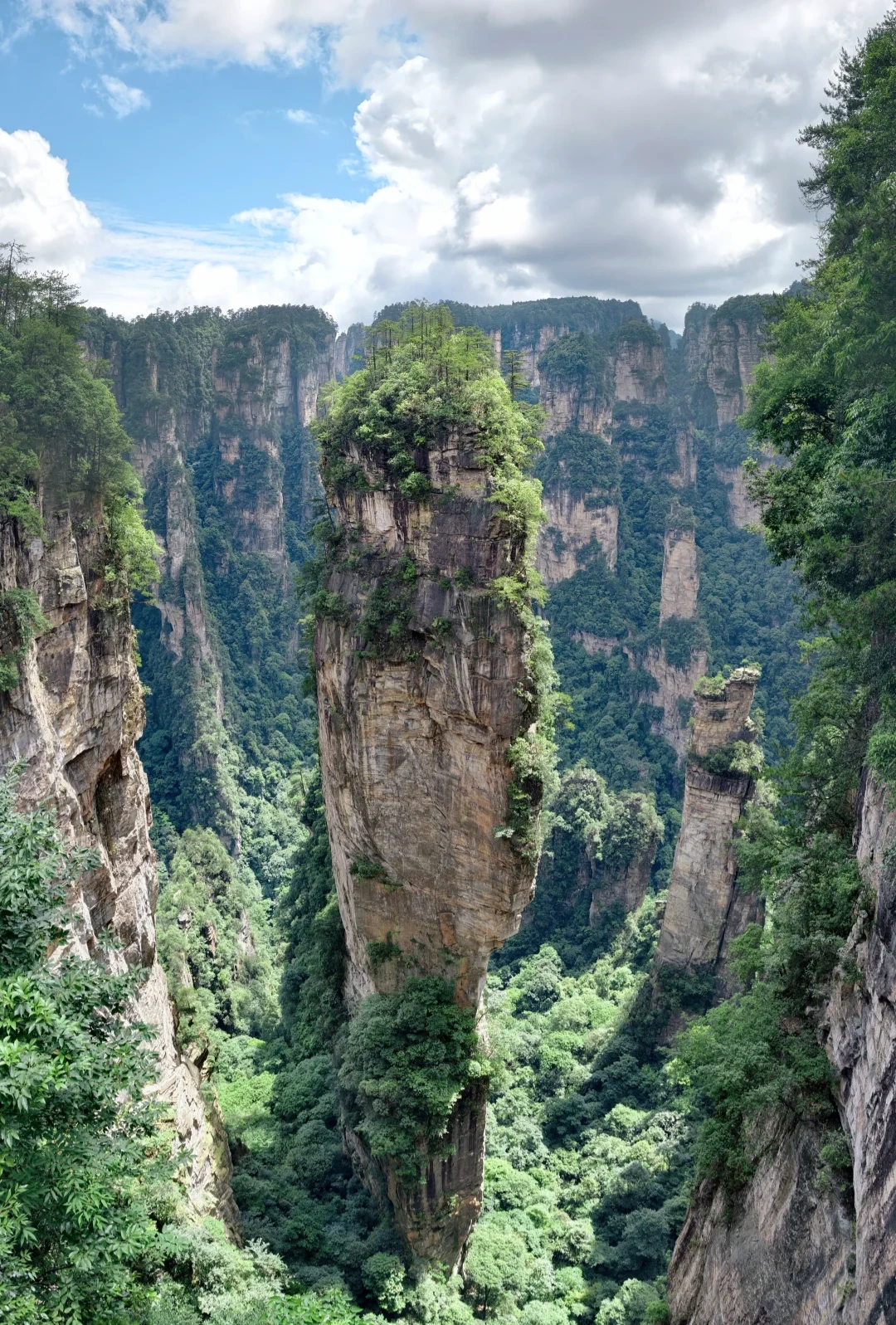
Summer can bring the dense green setting shown below: trees cover the ledges and valley floor, while the tall sandstone pillar stands out against the cliffs behind it. The photograph was shared in a 15 June post.
It is an attractive summer-scene example, but a green photograph cannot establish how hot the city was, how cool every mountain path felt or how long the sky stayed clear. The photographer’s posting date is also separate from the exact exposure time of the frame.
The provincial tourism department’s seasonal guidance notes summer showers and mountain fog. Its description of the scenic area being cooler than the city is a broad comparison, not a fixed temperature difference for every viewpoint.
For a June–August trip, the trade-off is accepting changeable visibility as part of a green mountain visit. I would not make an expensive, inflexible trip depend on rain being followed by a particular cloud-sea scene. The province’s August 2026 report describes summer visitors enjoying the forest setting, but that does not make the whole season dry or crowd-free.
September can still be a green-forest trip
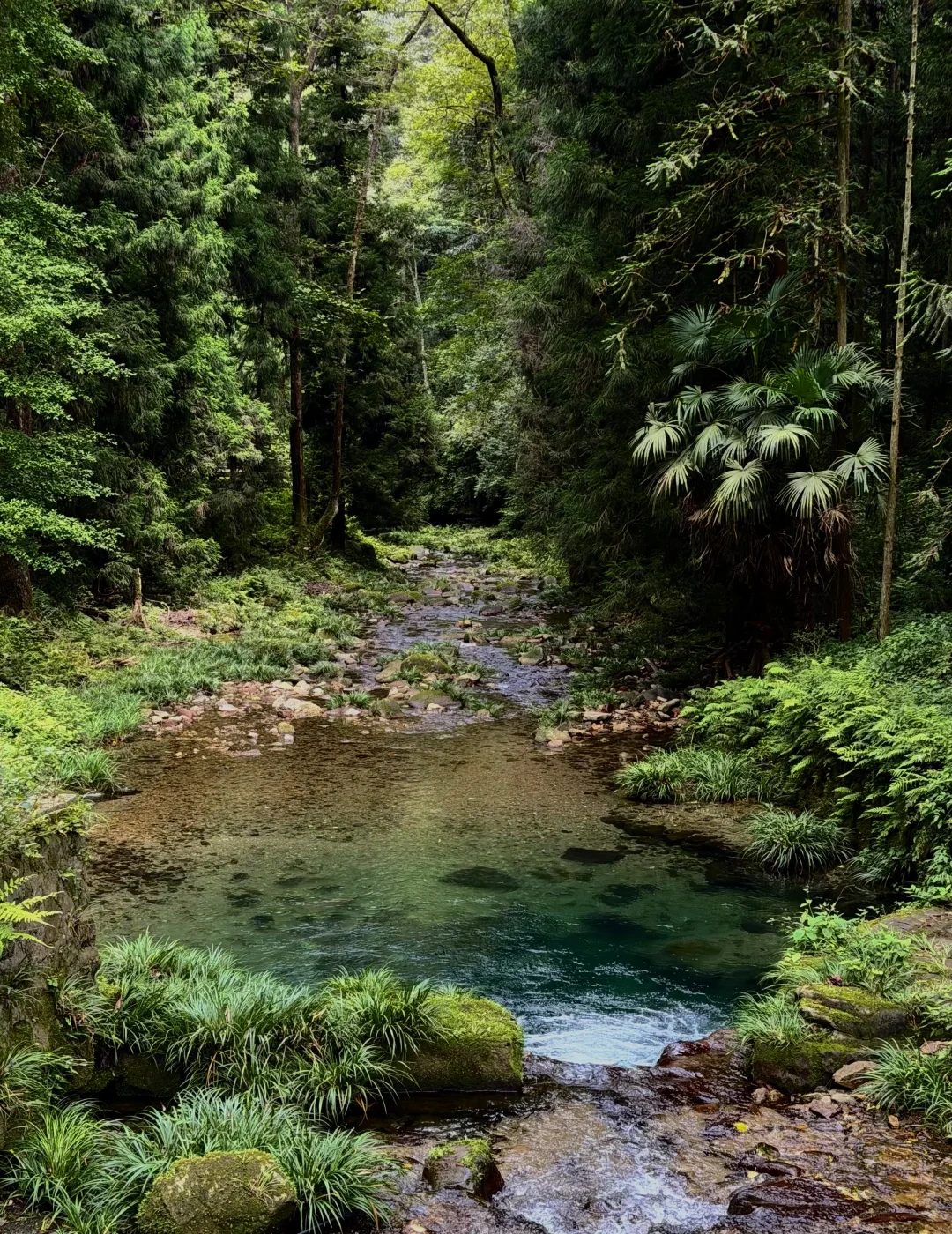
The Golden Whip Stream / 金鞭溪 photograph below was shared on 8 September. The author described an early-September visit. The scene is predominantly green: water, rocks and layers of woodland fill the frame.
That is a useful expectation for a September shortlist. A visit does not have to be judged by whether every tree has already changed colour. If your main attraction is the green woodland and stream setting, that can be a different choice from a trip whose main purpose is late-autumn foliage.
The author found the park relatively uncrowded during that visit. I would treat this as a personal observation, rather than a promise for every September day. The holiday calendar and the actual dates still matter.
This is a view of the stream scenery, rather than a walking route or an invitation to enter the water. The photograph says something useful about the setting; it does not establish the condition or opening of every path.
Winter is a deliberate snow-and-rime choice
December to February is the winter window to compare when snow and ice-coated trees are the reason for travelling. A winter month alone does not guarantee either fresh snow or a clear view.
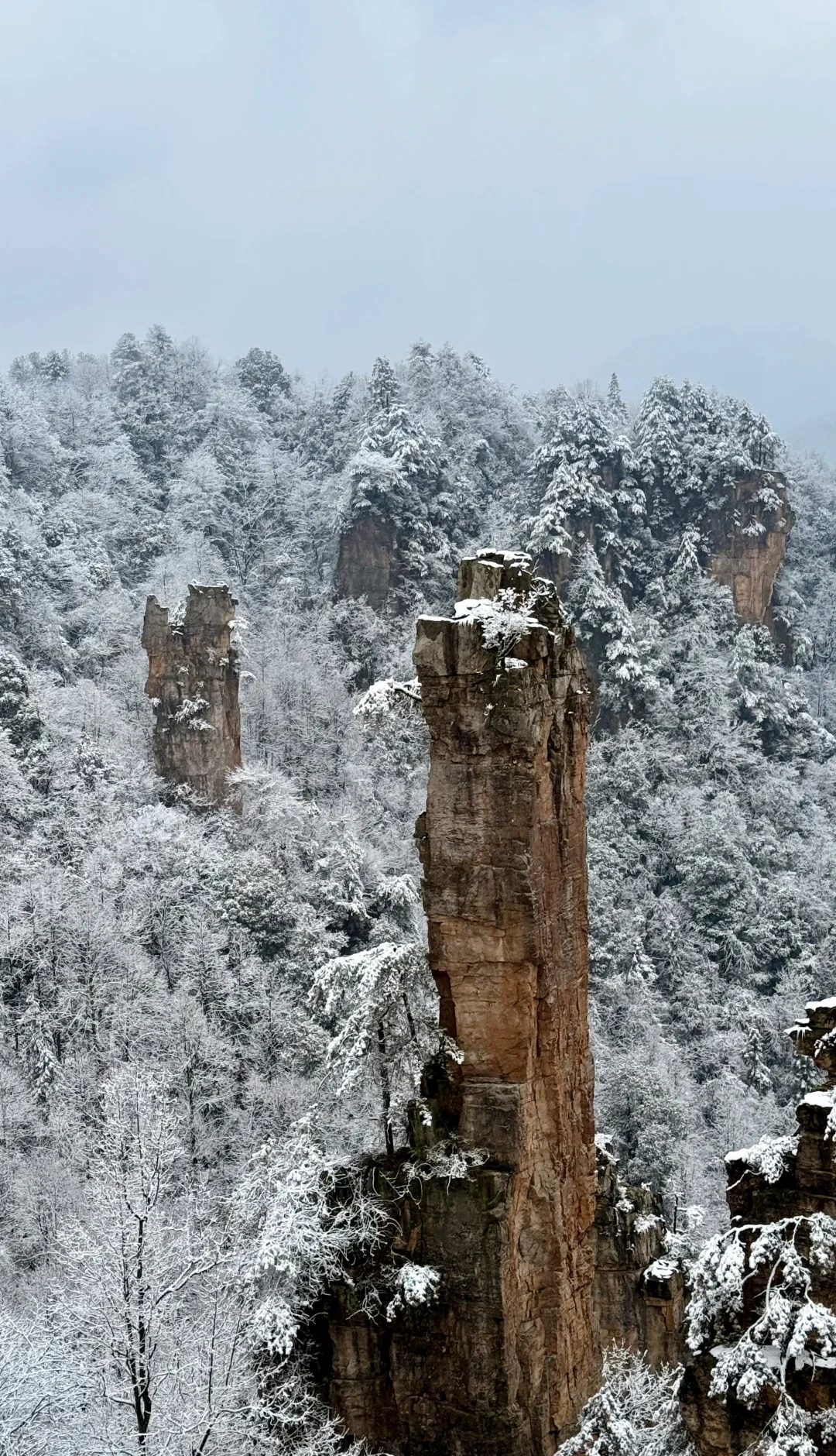
The photograph below comes from a 1 January 2026 forest-park account. The visitor described snow and rain on the preceding day, followed by a day without wind or rain and with less fog. Snow remains on the ledges and branches around the sandstone pillars.
Even within that account’s comments, another visitor described fog at a different part of the park. A good winter frame can therefore be completely real without representing the view from every location on the same day.
The Wulingyuan district’s own report on 20 January 2026 documented another snowfall in the national forest park. These are dated examples of winter scenery, not a calendar predicting which days in a future winter will have snow. I would choose winter because I want a winter trip, with its colder surfaces and possible disruption, rather than assume it is the same visit at a lower price.
The snow photograph also has a walking surface
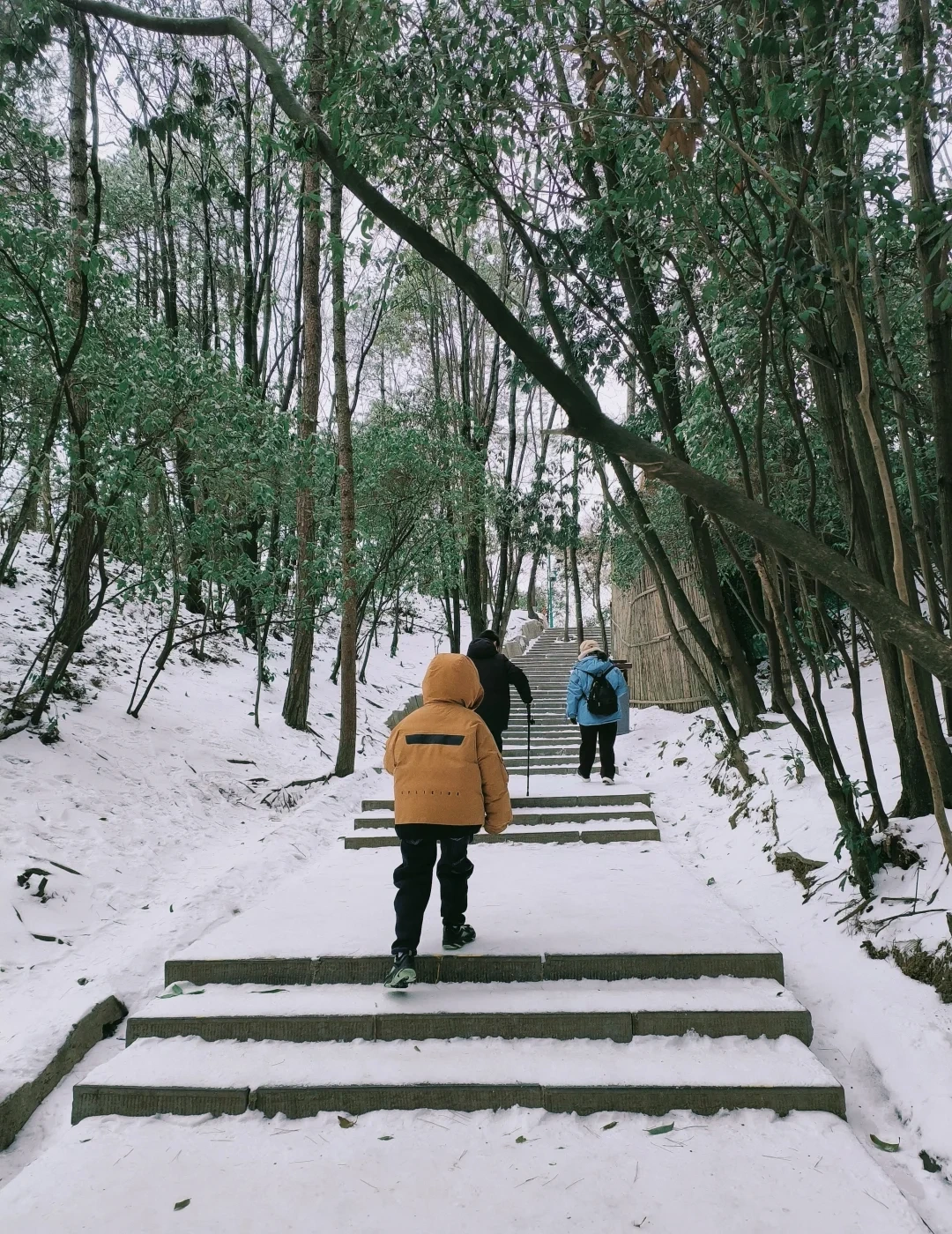
The second winter image makes the practical difference easier to see. It shows steps with snow on the treads and beside the route, with visitors moving uphill under the trees.
It belongs to an account of 22 January, posted on the 23rd. The visitor described mountain-top transport being interrupted by snow and a plan that required additional trips on scenic transport. That is the account of one visit, not a current route recommendation or a standard extra cost.
A January 2026 report from the scenic transport operator’s Tianzi Mountain division describes snow clearing and de-icing work. It gives a more realistic picture of a winter visit than assuming every paved path is automatically dry.
For date selection, the question is whether you actually want this kind of winter walking trip. Someone whose main priority is easier walking and long, clear views may reasonably prefer the autumn shortlist. A snow-covered path remains a winter surface even when the scenery around it is beautiful.
Tianmen Mountain is a different scenic area
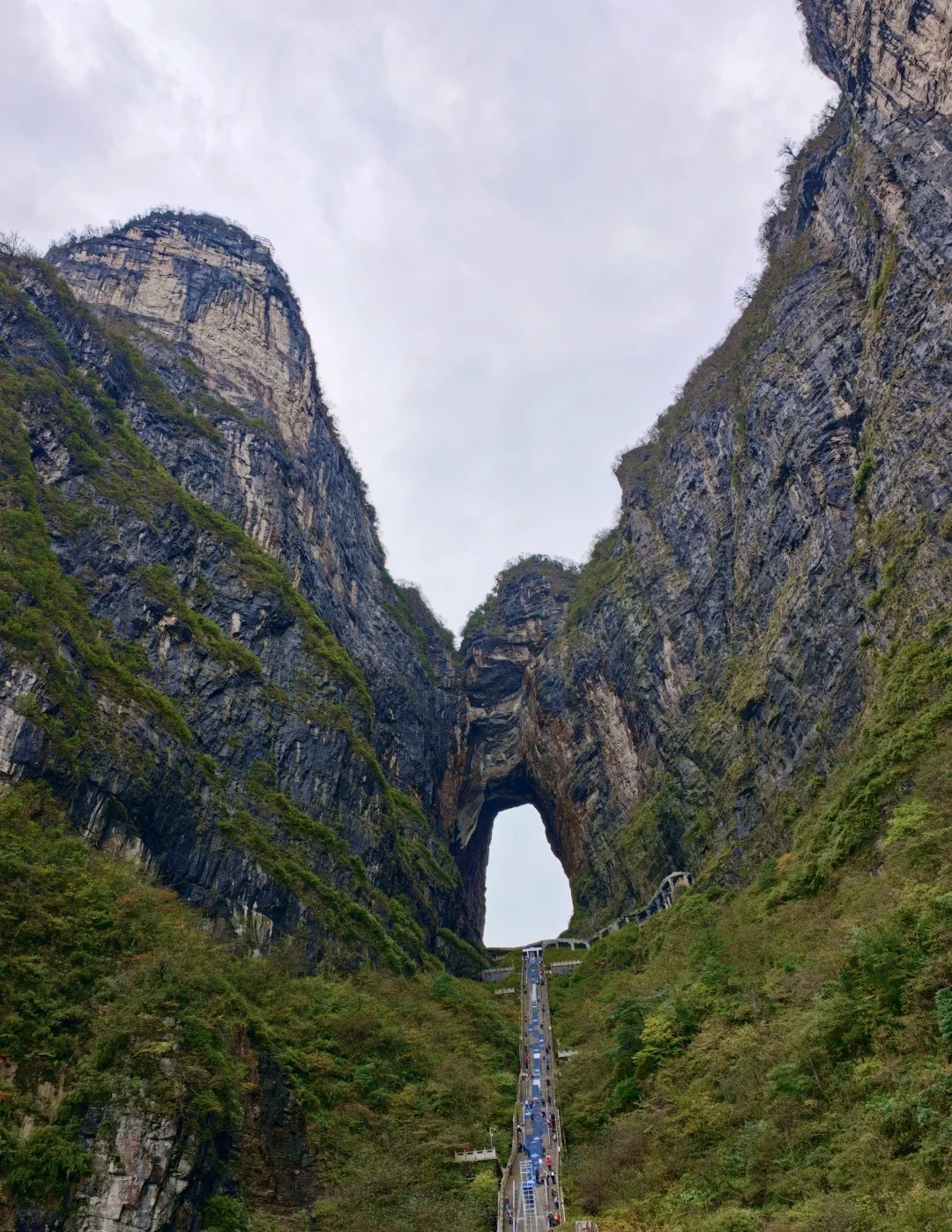
The large natural opening in the photograph is Tianmen Cave / 天门洞 at Tianmen Mountain / 天门山. This is different from the forest-park sandstone pillars shown earlier.
The Hunan Forestry Department’s park description places Tianmen Mountain in Yongding District / 永定区, by Zhangjiajie’s urban area. The forest-park landscapes discussed above belong to the Wulingyuan / 武陵源 side of a Zhangjiajie trip.
The source album was presented as a 5 November Tianmen Mountain visit, with cloud and autumn scenery. The natural opening is visible in this frame; other frames show cloud between the mountains. That does not establish the same conditions at Tianzi Mountain or another forest-park viewpoint.
A useful seasonal plan identifies which landscape matters most to you. The forecast and any operating notice then need to belong to that place. A beautiful Tianmen photo cannot establish a forest-park transport arrangement, and an older cableway route in a travel caption is not a current operating notice.
A seasonal photo is not a cableway operating notice
Winter arrangements can also change for maintenance. The dated example below is a Rednet report published on 4 December 2025 about Tianzi Mountain Cableway / 天子山索道.
It reported a full maintenance suspension for 5–16 January 2026, with reopening then expected on 17 January 2026. The screenshot pairs the report’s title and publication date with the exact paragraph giving those January dates.
This is historical evidence, not the coming winter’s schedule. It demonstrates why an attractive month and the availability of a particular cableway are separate questions. It also concerns Tianzi Mountain Cableway, not Tianmen Mountain’s cableway.
I have not established a complete 2026–27 winter maintenance calendar for all the transport your eventual route might use. A date choice that depends on a particular cableway therefore remains conditional until its current arrangements are confirmed. A previous year’s closure dates cannot supply that confirmation.

Match the holiday calendar to the year you will travel
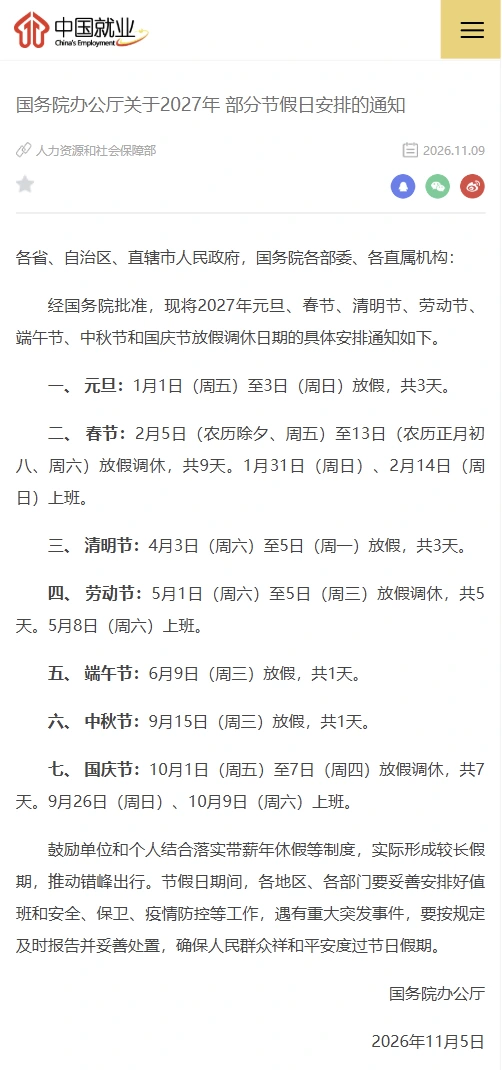
A seasonal shortlist becomes more useful once it is compared with the right holiday year. The official notice below is for 2027, not 2026.
| New Year | 1–3 January |
|---|---|
| Spring Festival | 5–13 February |
| Qingming | 3–5 April |
| Labour Day | 1–5 May |
| Dragon Boat | 9 June |
| Mid-Autumn | 15 September |
| National Day | 1–7 October |
The State Council notice, reproduced by the Ministry of Human Resources and Social Security, is the source for these dates.
My second-half-of-October shortlist falls after that listed National Day break. An April–May flower trip needs particular attention around Qingming and Labour Day; a winter trip may coincide with New Year or Spring Festival.
Being outside a listed holiday is not a promise of empty viewpoints or a particular hotel price. One November visitor specifically reported that the forest park still felt busy. For a trip in another year, that year’s holiday calendar is the relevant one.
Finish with the forecast for the place you intend to visit
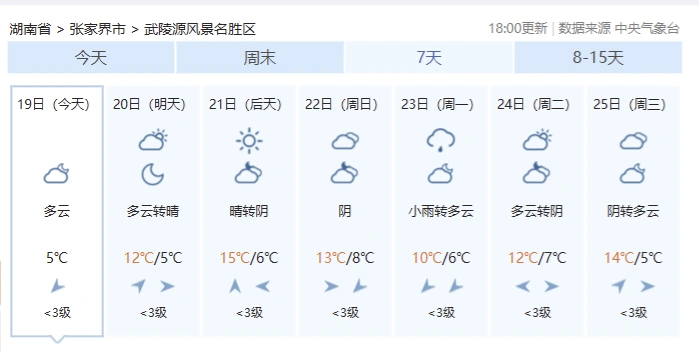
When your dates are close enough to appear in the forecast, open the Wulingyuan Scenic Area forecast. The location heading ends 武陵源风景名胜区 / Wulingyuan Scenic and Historic Interest Area, rather than just Zhangjiajie city.
The screenshot below was captured on 19 November 2026, after the page’s 18:00 update. In its 20日(明天) / 20th, tomorrow column, the forecast is 多云转晴 / cloudy becoming clear, with 12°C / 5°C. The first number is the high and the second the low.
The columns headed 阴 mean overcast; 小雨转多云 means light rain becoming cloudy. The date and location headings are as important as the weather icon. This is a dated example of reading the page, not a forecast for a future booking.
The scenic-area forecast also does not promise identical conditions at every high viewpoint or at Tianmen Mountain. Your date choice is ready when the season fits your main priority, the holiday year is correct, the local forecast fits the days you intend, and any transport essential to that plan has current confirmation.
For a general first trip, I would keep the second half of October as the starting choice. The reason to move it should be something that matters to your trip: spring flowers, green woodland, a deliberate winter visit or the dates you actually have available. The relevant holiday year, local forecast and any essential transport arrangements then complete that choice.
Sources checked 19 November 2026. Visitor photographs are credited to the posts that shared them; the spring flower photograph comes from the named Rednet field report. Posting dates are distinguished from confirmed capture dates. The cableway report is a historical 2025–26 example, the holiday notice is for 2027 and the forecast image is a dated November 2026 example.
Questions and updates
Comments may be reviewed before they appear.
Your comment and chosen name may be published. We store your IP address and browser details to help moderate comments.