
Chengdu Hot Pot: Broths, Menus and What to Order
For a first Chengdu hotpot meal, I would choose a divided pot with red broth and a milder tomato or mushroom side. My starting dishes would be beef, tofu, a vegetable and rice, with tripe or duck intestines as optional choices.
The photographs below show what those words mean on an actual table. There is also a real Chinese menu and a dated pre-bill, because the broth and dipping charges can sit outside the price of the food plates.
The first choices to make
- Different spice preferences
- 鸳鸯锅 · divided pot, with a red side and a milder flavour.
- Unfamiliar ingredients
- See 毛肚 · tripe and 鸭肠 · duck intestines before choosing.
- What the bill includes
- Broth, oil, dishes and drinks can have separate charges.
- Cooking
- The photos identify dishes. The regulator’s note explains the important general principles.
For a first meal, I would choose a divided pot
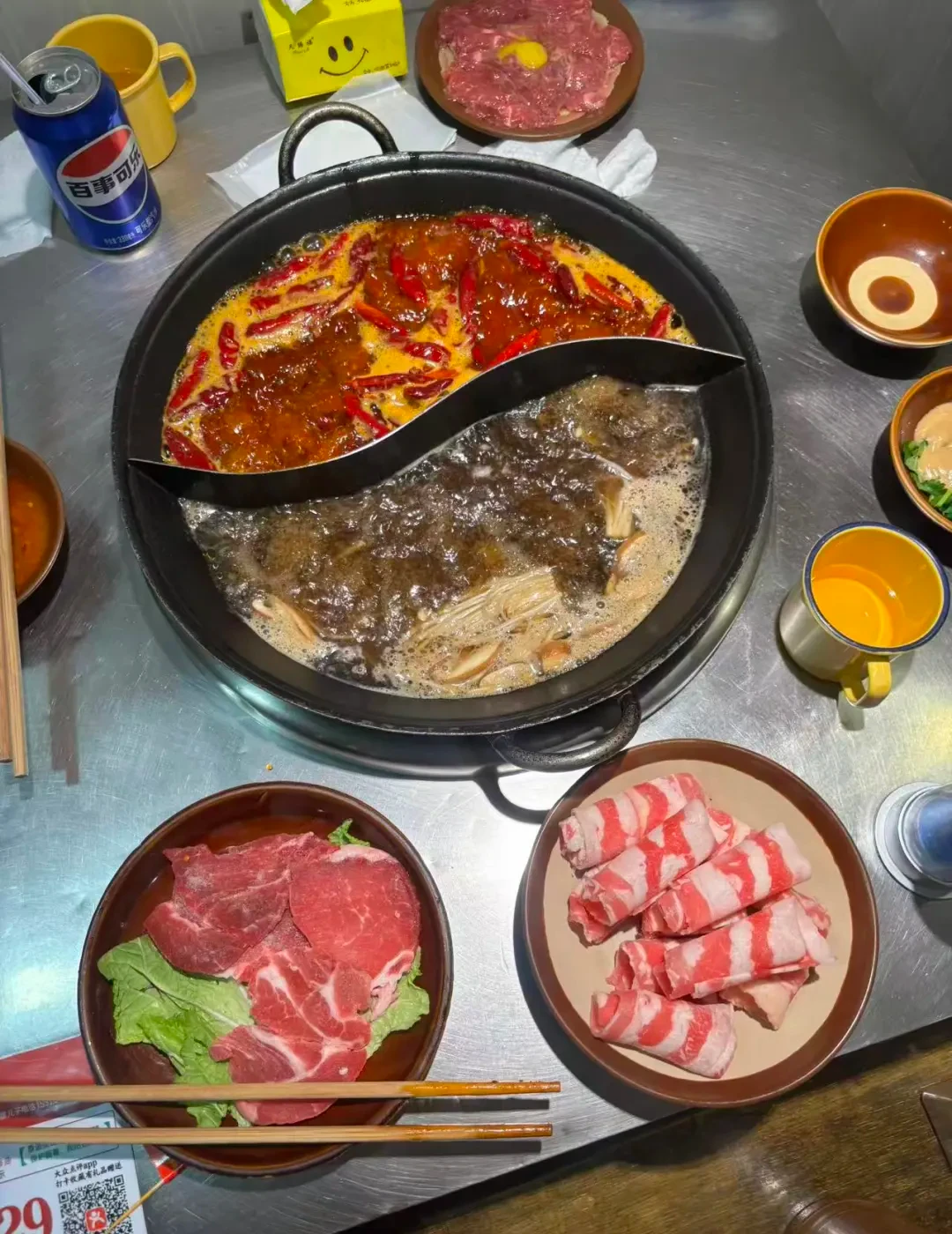
My first choice for a mixed group would be a yuanyang pot · 鸳鸯锅, with a spicy side and a milder broth beside it. The photograph below shows a curved divider separating a red chilli broth from a darker clear-style broth.
That gives the meal two possibilities from the start. The visitor who shared this meal specifically wanted Chengdu hotpot but worried about the heat; the divided pot was the compromise with friends.
Guodi · 锅底 means the soup base. Hongtang · 红汤 is the red-broth label. The characteristic mala · 麻辣 combines chilli heat with the tingling quality of Sichuan pepper, as explained in the Chinese-language account of Chengdu’s flavours.
Weila · 微辣 means the restaurant’s mild option. One diner’s comfortable level can be another’s very spicy meal. A divided pot gives more choice than relying on everyone enjoying one red broth.
A tomato side can be a small central pot
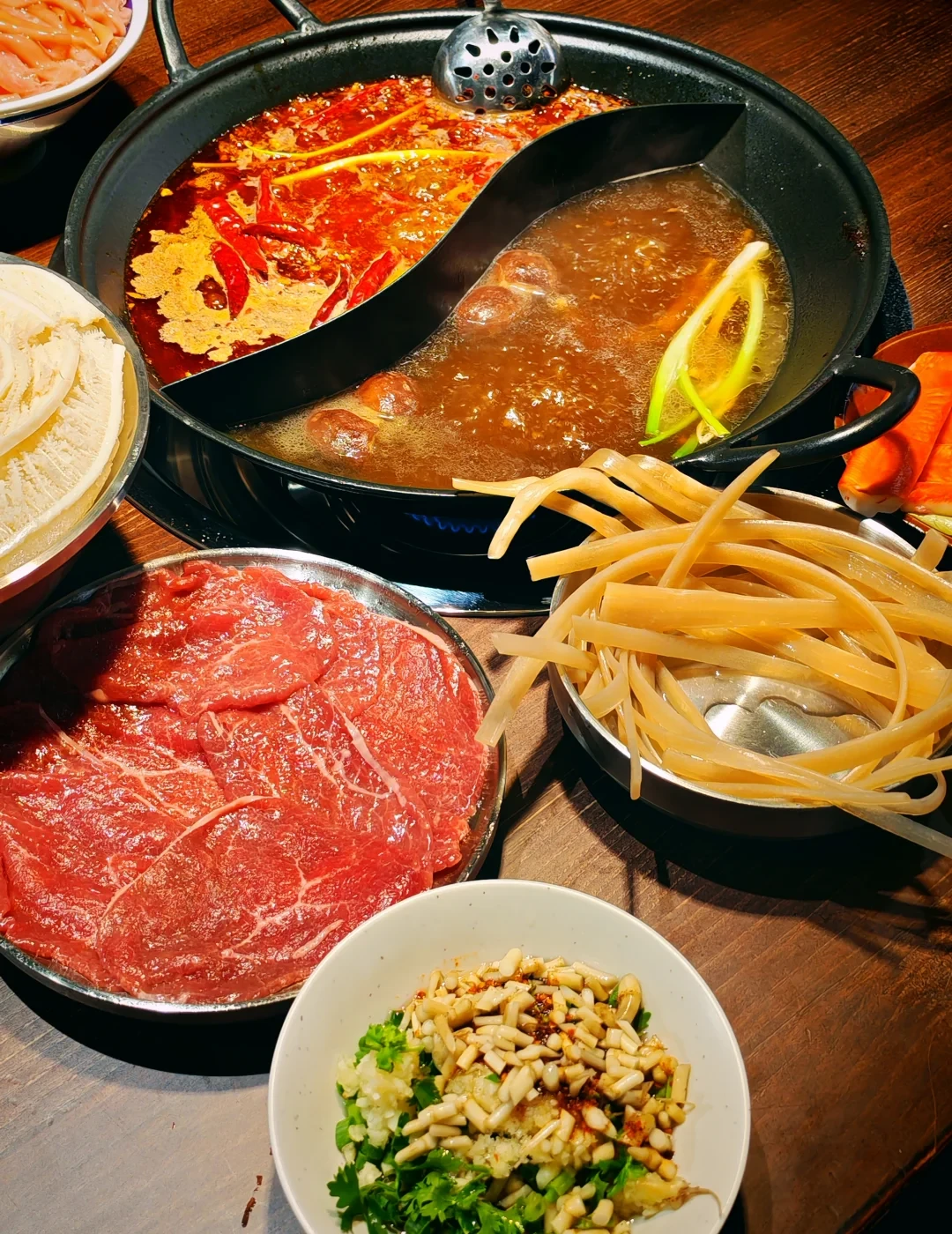
A divided pot does not always look like two equal halves. In this Chengdu meal, tomato broth · 番茄锅 sits in a small round compartment at the centre of the spicy outer pot.
The same account shows beef, tripe, potato slices, tofu and green garlic stems around it. The tomato side was the milder choice in that particular meal.
For someone who wants a tomato flavour alongside the red broth, this is a useful arrangement to recognise. The small centre has less space than the outer ring; the picture makes that practical difference clear.
I would distinguish the broth choice from the full recipe. “Tomato” tells you the advertised flavour, while the stock and seasonings depend on the restaurant.

Mushroom broth is another option, and it may look brown
For a less fiery side, another name worth recognising is juntang · 菌汤, mushroom broth.
This account describes a mushroom-and-red-broth combination. The mushroom side in the photograph is brown and bubbling, with mushrooms visible. A mild broth need not be pale white.
GoChengdu’s own guide to milder hotpots also includes mushroom soup as an alternative to the familiar red pot.
I would choose between tomato and mushroom according to the flavour I actually want. Neither name is a complete ingredient declaration. Their value here is that they are recognisable alternatives on a hotpot menu, alongside the red-broth option.
Nine compartments do not mean nine flavours
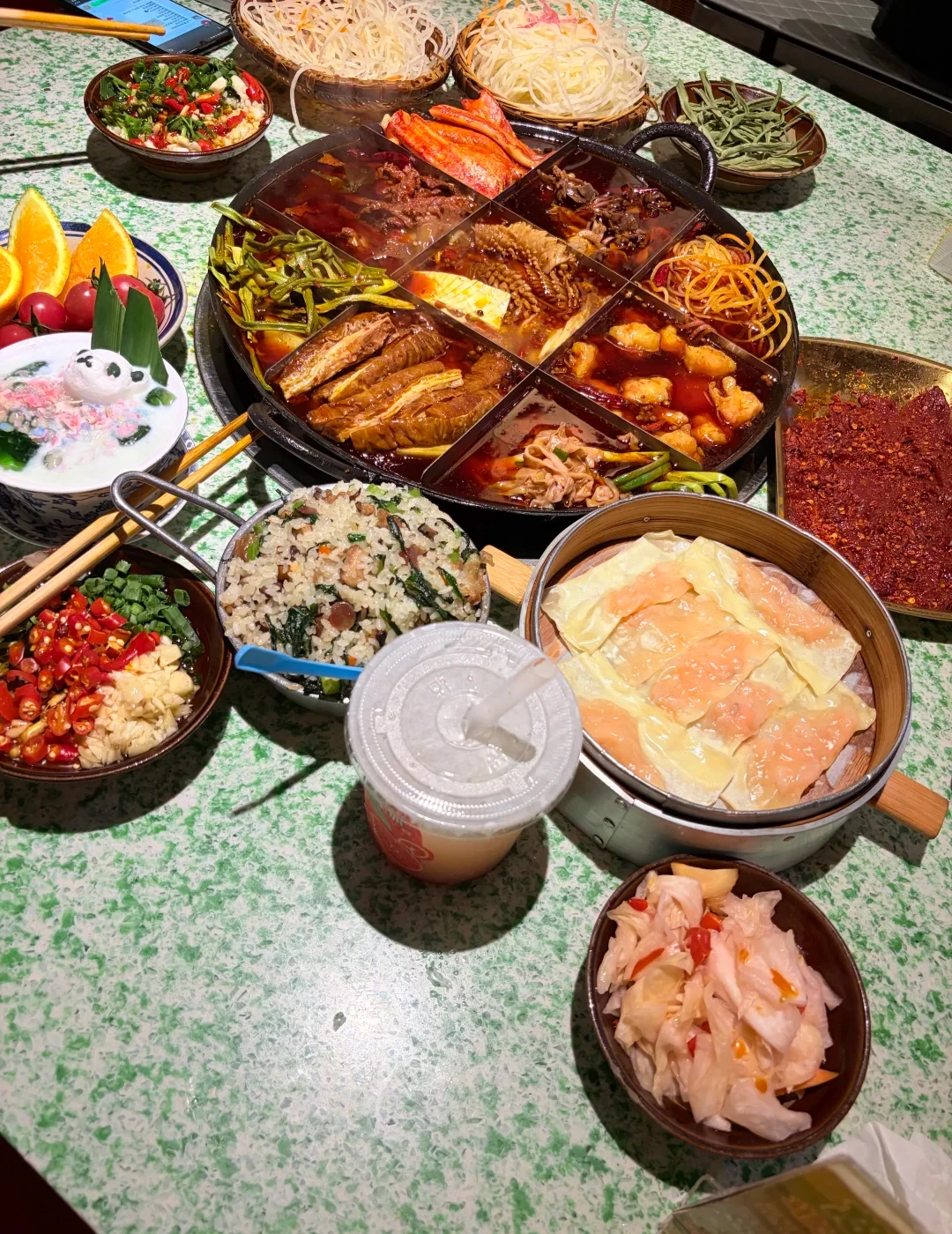
A nine-grid pot · 九宫格 is a different arrangement. The photographed meal below has a metal grid dividing one red-broth pot into nine spaces.
It is a striking way to present the meal and keep different foods in different parts of the pot. It should not be confused with the two-flavour choice above.
The author of this Chengdu account specifically says they repeatedly choose the nine-grid pot. In the comments, they describe even the mild version as fairly spicy and becoming stronger during the meal.
If I were uncertain about the heat, I would favour a divided red-and-milder pot for the first meal. I would choose the nine-grid presentation when everyone wants the red-broth experience.
A real menu separates the pot, dipping bowls and dishes
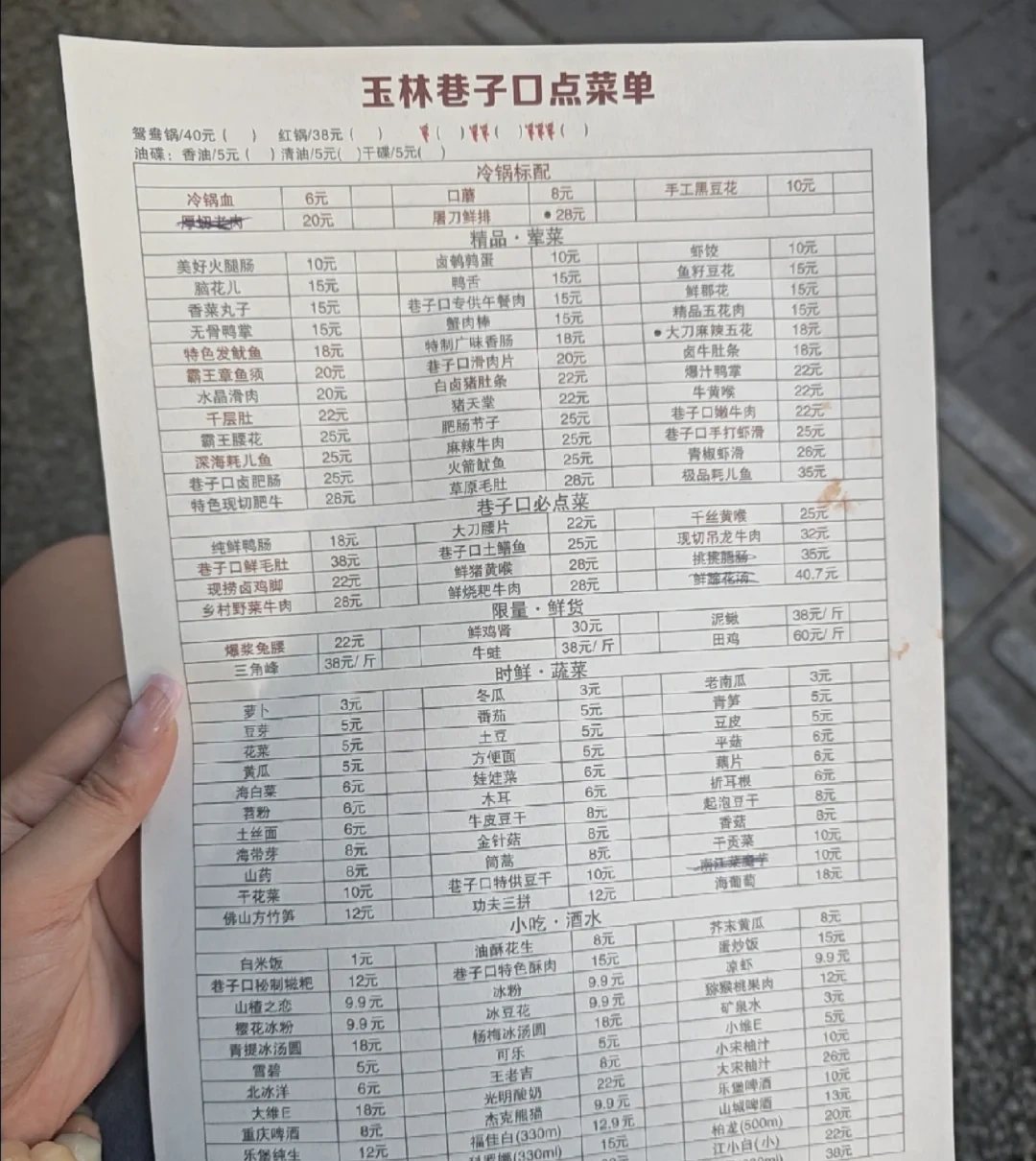
This photographed Yulin Xiangzikou · 玉林巷子口 menu is useful for its structure. It was posted on 15 August 2025, so its prices are a historical example.
The top line distinguishes 鸳鸯锅 from 红锅. Directly below are 油碟 choices. The large middle part lists meat and other dishes; further down, 时鲜·蔬菜 introduces vegetables and 小吃·酒水 introduces snacks and drinks.
That layout explains why the cost is more than the sum of a few meat plates. The soup base, dipping options and drinks can be separate parts of the order.
It also gives useful recognition words: 番茄 for tomato, 土豆 for potato, 金针菇 for enoki mushrooms and 白米饭 for plain rice. The restaurant’s present menu remains the source for current availability and prices.
An approachable meat choice: tomato beef
For a first selection, I would consider tomato beef · 番茄牛肉 if it is on the menu.
This photograph shows uncooked beef spread on a metal plate with chopped tomato. It comes from the same meal as the central tomato broth above, so the relationship between the dish and the pot is easy to see.
The appeal is a familiar meat with a recognisable tomato preparation. It also gives the group an alternative to starting entirely with offal.
The plate is a preparation photograph, not food already ready to eat. The cooking note later in this guide applies to it. The words 番茄牛肉 identify this account’s dish, rather than a promise of an identical recipe or portion in every restaurant.

The seasoning on the meat can add another layer of heat
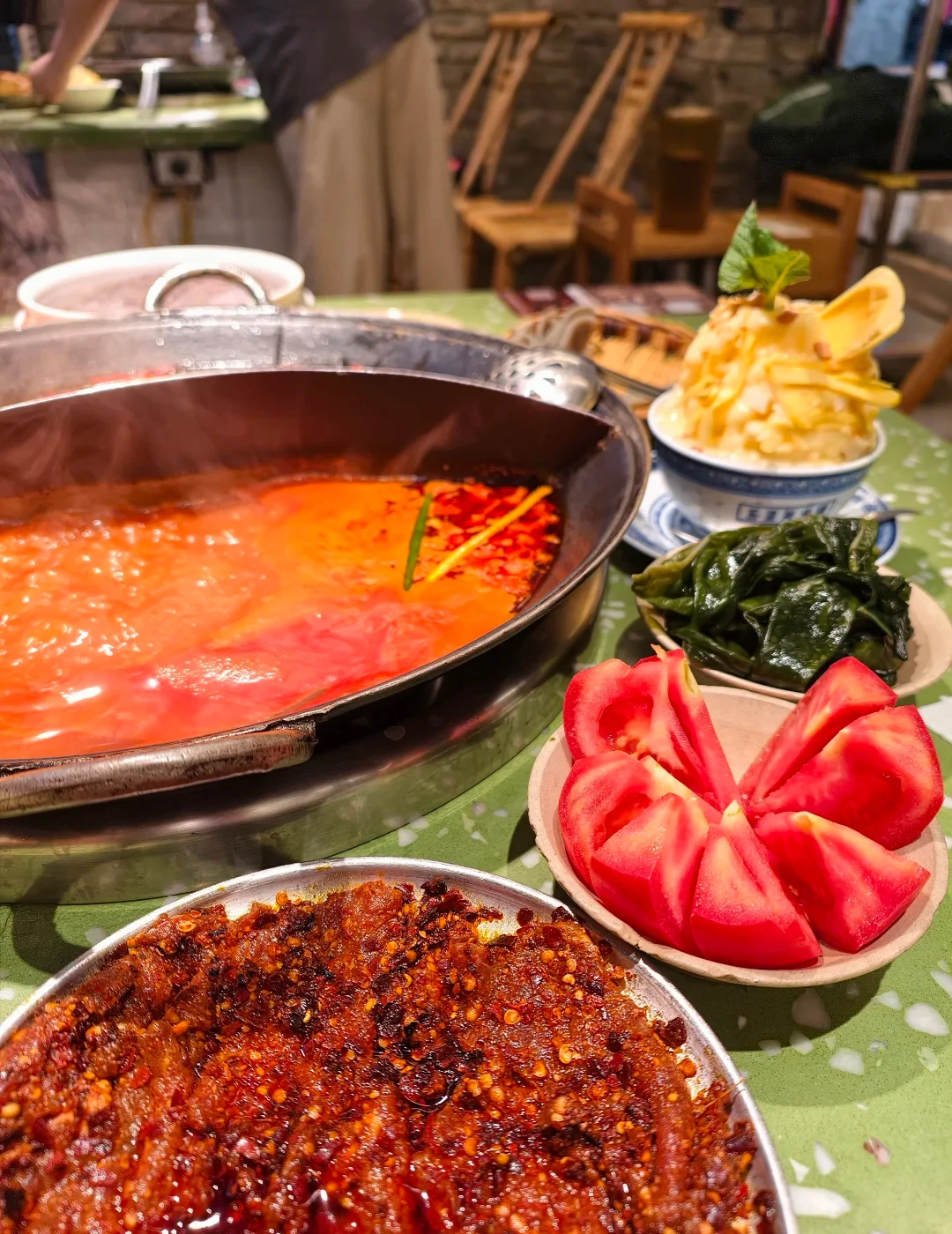
The broth is not the only source of chilli in a hotpot meal. This plate of hulà beef · 糊辣牛肉 is already heavily coated with a red seasoning before cooking.
The author distinguishes it from the unseasoned beef they had ordered on earlier visits. That distinction matters if someone is choosing a milder side of the pot mainly to avoid heat.
For a first meal with uncertain spice tolerance, my preference would be a less heavily seasoned meat option. I would choose a plate like this when the extra seasoning is part of what I want.
The visible coating is the useful clue. Moving a seasoned ingredient to a different broth does not make the seasoning disappear.
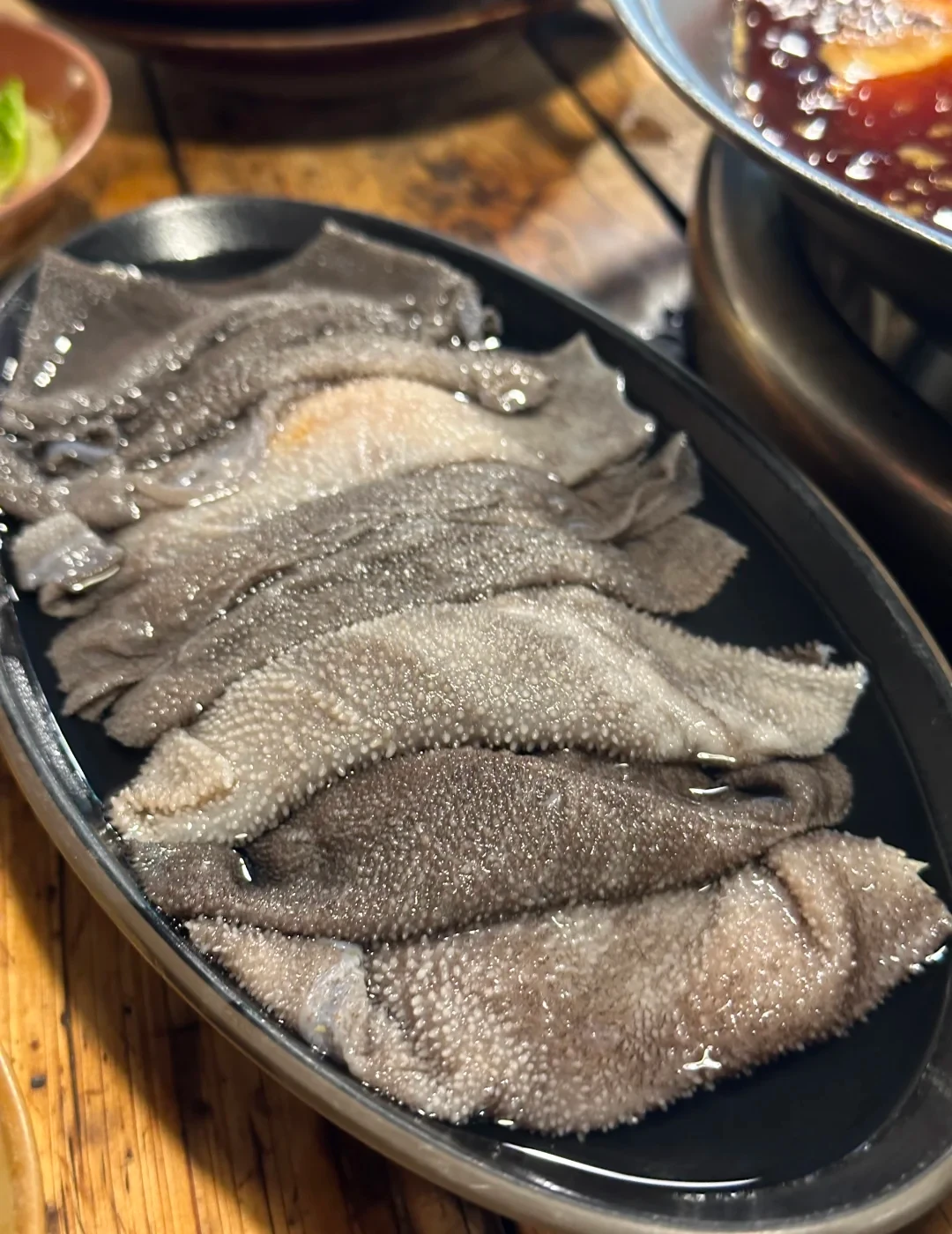
Maodu means tripe, with a deliberately textured surface
A very different choice is maodu · 毛肚, a type of tripe from the cow’s stomach. CCTV’s food explainer identifies it as part of the stomach, rather than ordinary sliced muscle meat.
The photograph below shows the uncooked grey-brown sheets with their dense, raised texture. This is the appearance that can surprise someone who has only seen cooked food on an English menu.
I would treat it as an optional texture-led choice for a first meal. Someone curious about offal may enjoy trying a plate; someone who dislikes the idea can build the meal around beef, tofu and vegetables instead.
A popular phrase about dipping tripe “seven times up, eight times down” is not a universal safety timer. The regulator’s cooking advice below is more important than copying that shorthand.
Yachang means duck intestines, not noodles
Another name that deserves a clear translation is yachang · 鸭肠: duck intestines.
The uncooked serving below consists of glossy pink ribbons. It is easy for a first-time visitor to mistake a photograph like this for some kind of wide noodle, especially when the English menu is incomplete.
This account names duck intestines among its hotpot dishes. I would choose it for someone who specifically wants to try offal and its texture, rather than add it by default to an unfamiliar group’s first order.
There is no need to prove that you “really ate local food” by choosing every unfamiliar ingredient. A first hotpot meal can be worthwhile with a much smaller selection that everyone actually wants.

A vegetable choice can be more interesting than an afterthought
This Chengdu meal includes shredded garlic stems · 蒜苔丝, shown as long, bright green strips in a shallow bowl.
The author specifically calls this a dish they had not tried before. It is a useful example of how the vegetable part of a hotpot order can add a different shape and texture, rather than simply fill a spare plate.
For my first selection, I would include a vegetable alongside the meat and any optional offal. The menu above also shows potato and mushroom choices, although availability varies by restaurant.
The photograph makes the garlic-stem dish recognisable. It should not be confused with noodles just because the strips are long and thin.

Tofu is another useful part of the first selection
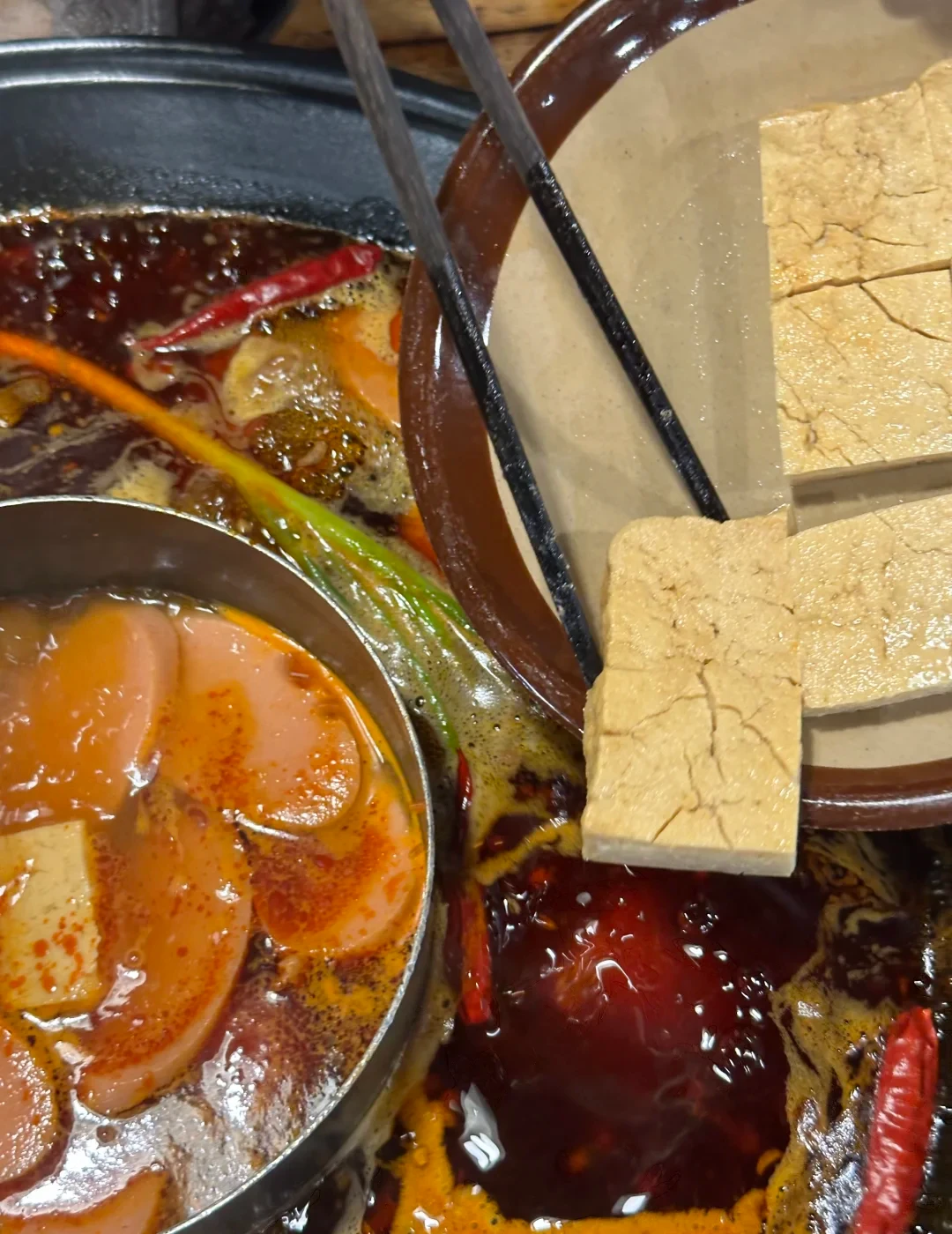
The same account includes crisp tofu · 脆豆腐. Its photograph shows pale tan rectangular slices, with a visibly porous surface, beside the pot.
For a group whose first order would otherwise consist only of meat and offal, I would consider tofu as another option.
This is the restaurant’s named preparation. The look and full recipe can differ from another tofu dish, so I would keep the Chinese name with the picture rather than translate every beige rectangle as the same thing.
The pictured slices are shown going toward the pot. They are part of the hotpot ingredient selection, not a photographed promise that the whole plate is ready to eat as served.
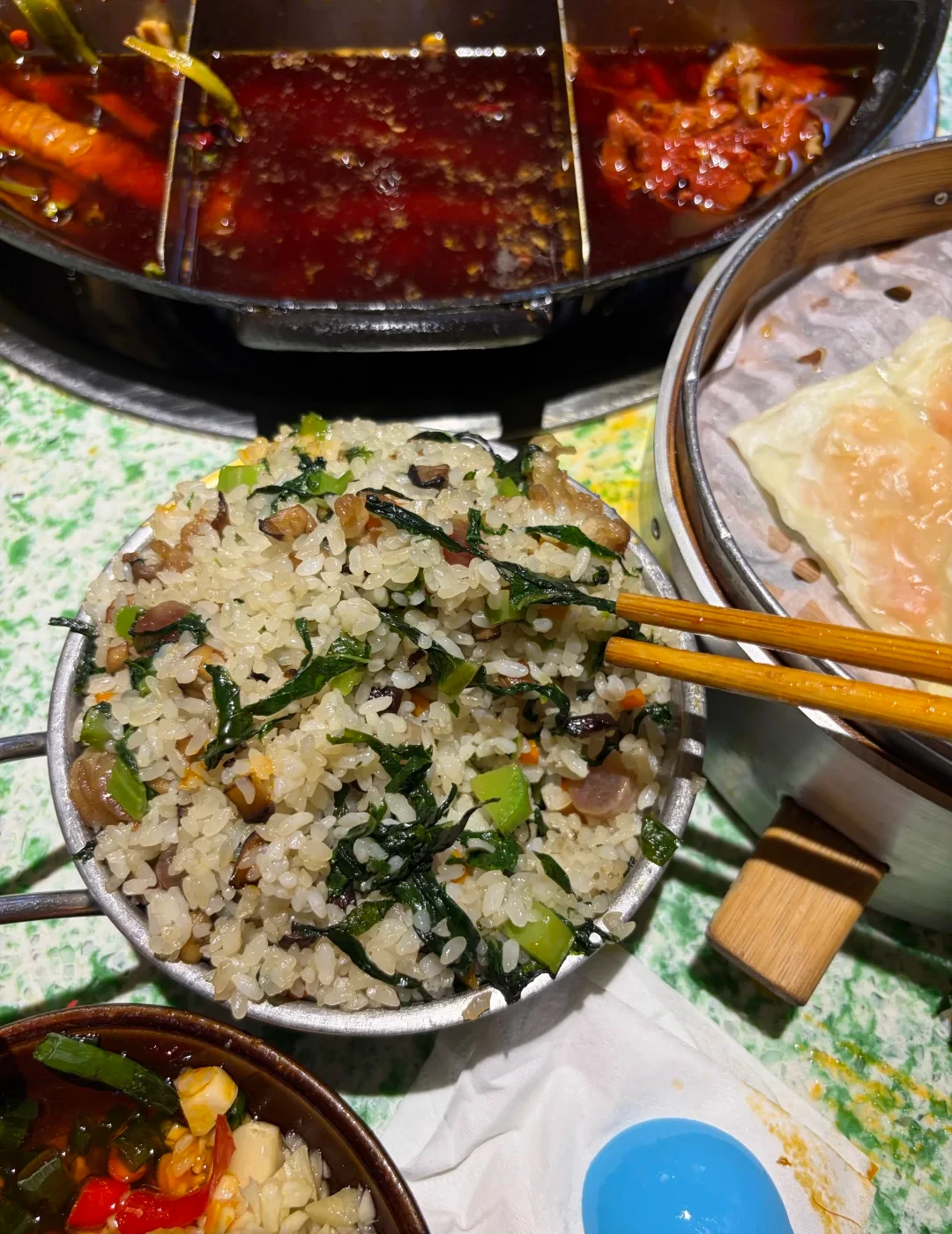
A rice dish can keep the first order familiar
Hotpot restaurants may offer cooked side dishes as well as ingredients for the pot. This Chengdu account specifically recommends its egg fried rice · 蛋炒饭.
The photograph shows a small metal bowl of rice with mixed chopped ingredients, beside the red pot. It is a different part of the meal from the uncooked beef and offal plates above.
For a first group meal, I like having a rice option alongside the shared pot. It gives someone who prefers familiar food another choice.
“Egg fried rice” is a dish name rather than a complete ingredient list. The visible mixture here contains more than rice alone; I would not present it as a guaranteed vegetarian or allergen-free dish.
A dessert can be part of the meal without being a cure for the heat
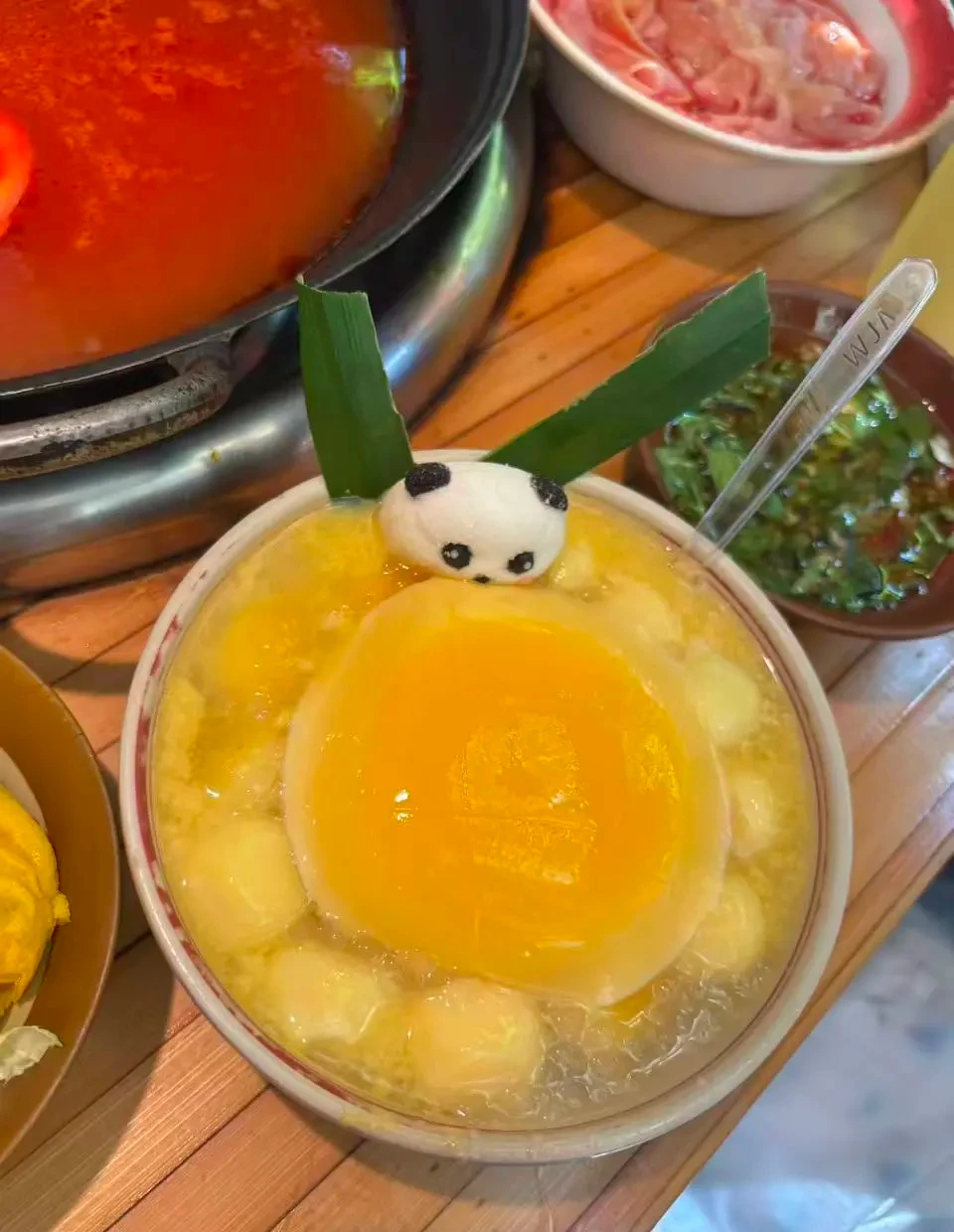
The first divided-pot account also shows this yellow dessert with large pale pearls and a small panda decoration.
The author calls the dessert large-pearl lianggao · 大珍珠凉糕, with mango-pomelo-sago-style and chocolate versions available during that visit. The photograph shows the yellow version.
For someone who enjoys a sweet finish, this is an appealing contrast to the pot’s savoury dishes. I would choose it because I want dessert, rather than make a claim that it neutralises chilli or treats discomfort.
The presentation and flavours belong to that restaurant visit. They are not a standard dessert automatically included with every Chengdu hotpot order.
The cooking point I would not replace with a social-media shortcut
The raw plates above need proper cooking. The Hunan market regulator’s hotpot guidance, supplied by its product-quality inspection institute, makes three relevant points in the original excerpt below.
Raw-food handling utensils and eating utensils are separate. The guidance specifically warns against handling uncooked food with the chopsticks used for eating.
Food needs to be thoroughly cooked. It explicitly cautions against too-short cooking even when a restaurant or social post uses the familiar “seven up, eight down” phrase for tripe.
After fresh broth is added, boiling needs to resume before cooking continues. These are general food-safety principles, not a single cooking time for every thickness, quantity or pot temperature. The national market regulator’s meat-consumption guidance also emphasises separate utensils and thoroughly cooked meat.

A real bill explains why “cheap plates” are only part of the total
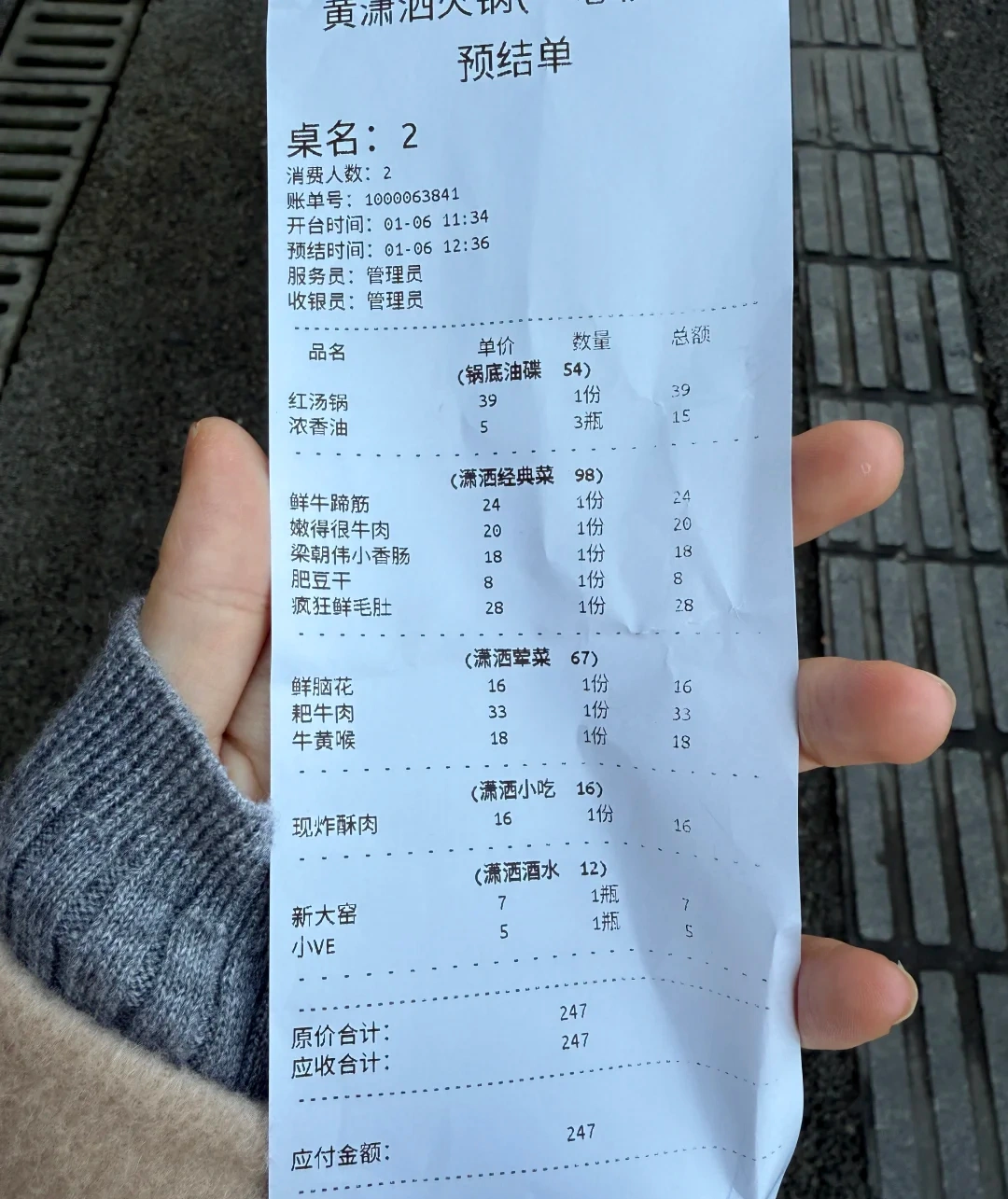
This photographed pre-bill · 预结单 is for two diners. Its printed total is CNY 247, equivalent to CNY 123.50 per diner for this particular order.
The top section is especially useful: 红汤锅 is CNY 39, while 浓香油 is three bottles at CNY 5, adding CNY 15. Together, the broth-and-oil subtotal is CNY 54. Meat, other dishes, snacks and drinks make up the rest.
The author’s surprise was that extra oil cost more; they had expected it to be included. This is a useful warning about assumptions, not a city-wide price rule. The paper is dated 6 January, with no year printed in the visible date, and is a pre-bill rather than proof of completed payment.
My first selection would be a red-and-tomato or red-and-mushroom divided pot, one beef dish, tofu, a vegetable and a rice option, with tripe or duck intestines only if the group wants them. That is a starting selection whose portions depend on the restaurant and appetites. The useful result is a pot choice and a short list of foods everyone recognises, with broth and dipping charges understood separately.
My first choice is flexibility: a divided pot, a few recognisable dishes and a clear understanding of the extras. There is plenty of interest in the meal without ordering every kind of offal or choosing the hottest broth.
A useful finished selection names both broths, identifies the dishes in Chinese and English, and distinguishes raw ingredients from cooked side dishes. The menu and pre-bill show why the pot and dipping options deserve a place in the budget.
For more first-meal ideas around China, see the photo guide to Chinese meals. For the table’s shared serving utensils, the serving-chopstick guide explains a different part of dining.
Checked 20 November 2026. Food photos come from identified visitor accounts. Menus and the pre-bill are dated examples, and ingredient names do not disclose a restaurant’s complete recipe. This is a broth and menu guide, rather than a personally tested cooking-time or payment walkthrough.


Questions and updates
Comments may be reviewed before they appear.
Your comment and chosen name may be published. We store your IP address and browser details to help moderate comments.